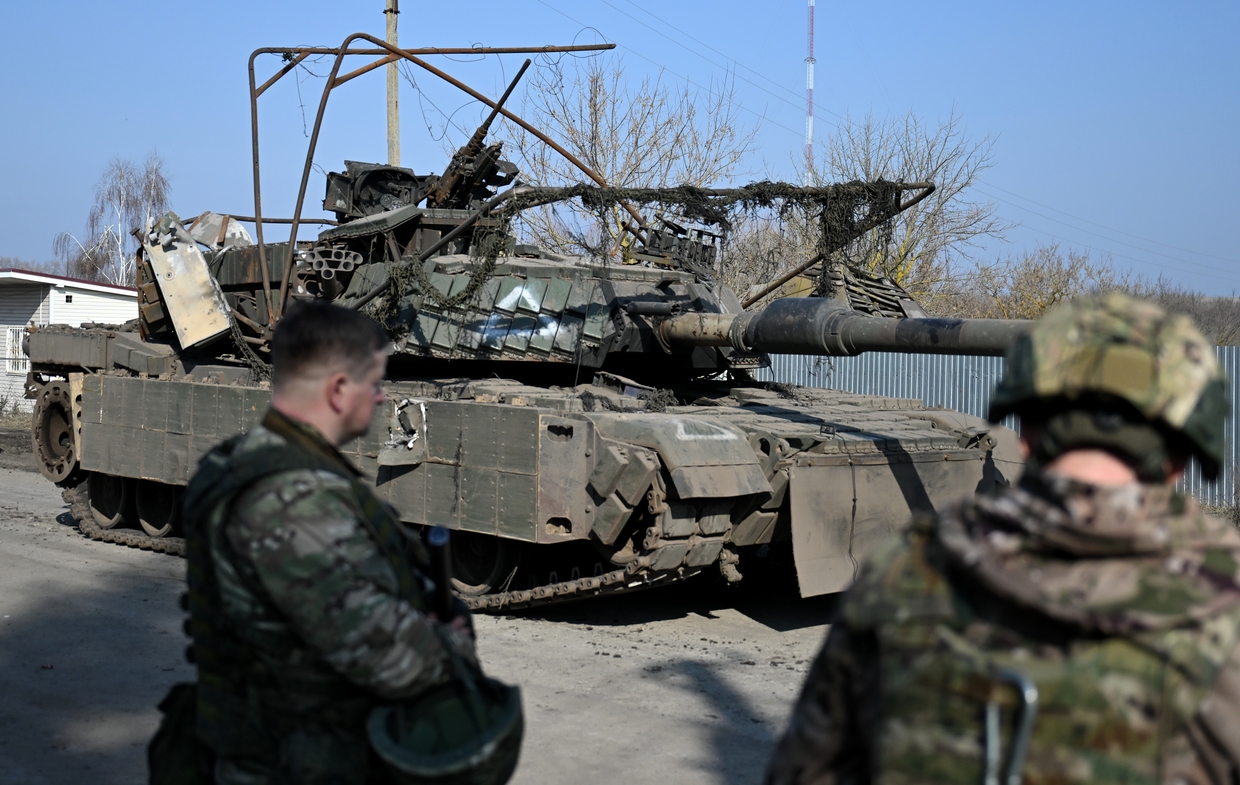
Mindaugas Sinkevicius has warned against exaggerating the threat of an imminent conflict with Moscow
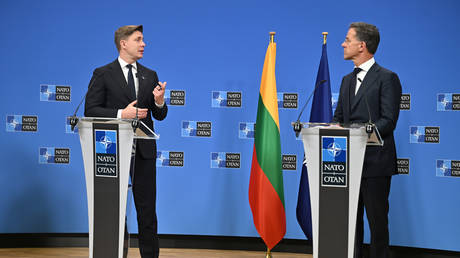
Lithuanian Prime Minister Mindaugas Sinkevicius has said there is no evidence that Russia is preparing an attack on NATO territory, following a meeting with the military bloc’s chief, Mark Rutte, in Brussels.
His remarks came amid heightened tensions between Russia and NATO, as some Western officials and intelligence agencies have warned that Moscow could be preparing operations against member states in Europe.
At a press conference on Tuesday, an AFP reporter asked Sinkevicius, whose Baltic country borders Russia’s Kaliningrad exclave and Moscow’s close ally Belarus, whether the “increasing hysteria and fear of hybrid attacks” could undermine Europe’s confidence and play into Russia’s hands.
“We’re not shaking. We’re not shivering. We are investing hugely in our defense capabilities,” Sinkevicius replied.
“I think it’s a must to say if the threat is there for the society. But you can’t exaggerate and say, ‘Oh, something is happening in the upcoming months or weeks,’” he added.
“I was addressing the secretary general [Rutte asking], ‘Is there any proof, real proof intelligence services are providing, something on the table, that Russia is getting ready for something?’ And there is actually none,” Sinkevicius said.
“The risk remains but it is not fluctuating, increasing or decreasing. We have to calmly do our work, and we’re doing it,” he added. His comments were also reported contemporaneously by international media.
👀 Lithuanian PM: "I was addressing the secretary general [Mark Rutte asking,] 'Is there any proof, real proof intelligence services are providing, something on the table, that Russia is getting ready for something?' And there is actually none."
Rutte said the bloc should respond to potential threats by strengthening its own defenses and doing “even more for Ukraine, and not less.”
Speaking at the Euronews Defence & Space Summit in Brussels the following day, the NATO chief similarly sought to play down fears of an imminent Russian attack.
“There is no imminent threat to NATO territory. If there is a build-up, we will see it and we will deal with it,” Rutte said.
A strike over the treatment of female employees forced the Paris landmark to close for a day
Patrick Branco Ruivo, the director general of the company operating the Eiffel Tower, has said he will step down amid controversy over female employees being replaced by men during a visit by Hindu dignitaries.
According to French media, Branco Ruivo told staff and the board of directors of the Societe d’Exploitation de la Tour Eiffel (SETE) on Tuesday that he would leave by the end of the year. However, he denied issuing “any instruction aimed at sidelining or replacing women” during a September 5 tour of the monument by members of the Bochasanwasi Akshar Purushottam Swaminarayan Sanstha (BAPS), a global conservative Hindu religious organization.
“Nevertheless, women were indeed sidelined, and I regret that,” Branco Ruivo said, as cited by Le Figaro.
His decision followed an internal investigation that uncovered “a series of dysfunctions and failures” in the organization of protocol visits, which SETE said had led to the “unacceptable” sidelining of female employees.
A separate investigation launched by the City of Paris is still underway, according to French media.
The scandal broke after Eiffel Tower employees said management had issued instructions that led to female staff “being sidelined, replaced and made invisible because of their sex” during the BAPS delegation’s visit in early September.
“Some [women] were asked to leave their posts and withdraw to other areas. In some posts they were replaced by men. And all female employees were instructed not to go through or cross certain areas while the delegation was present,” staff at the iconic landmark said.
The CGT trade union representing Eiffel Tower employees held a strike on September 7 in protest over the treatment of female staff, forcing the landmark to remain closed for the day.
SETE said at the time that the Hindu delegation had requested arrangements limiting “interactions with women,” adding that “these conditions should not have been accepted.”
BAPS, however, denied asking for “female employees to be hidden, removed or excluded from the visit,” insisting that its monks observe their “personal spiritual commitments” without seeking to impose them on others. The organization nevertheless apologized for “any pain or inconvenience caused” by the incident.
BAPS is known for building large Hindu temples and cultural complexes around the world, including in Robbinsville, New Jersey, London and Abu Dhabi. The delegation’s Eiffel Tower visit coincided with celebrations surrounding the inauguration of a new BAPS temple in the Paris suburb of Bussy-Saint-Georges.
Sanctions aimed at squeezing Moscow’s revenues have instead helped drive up prices, making Russian crude more valuable
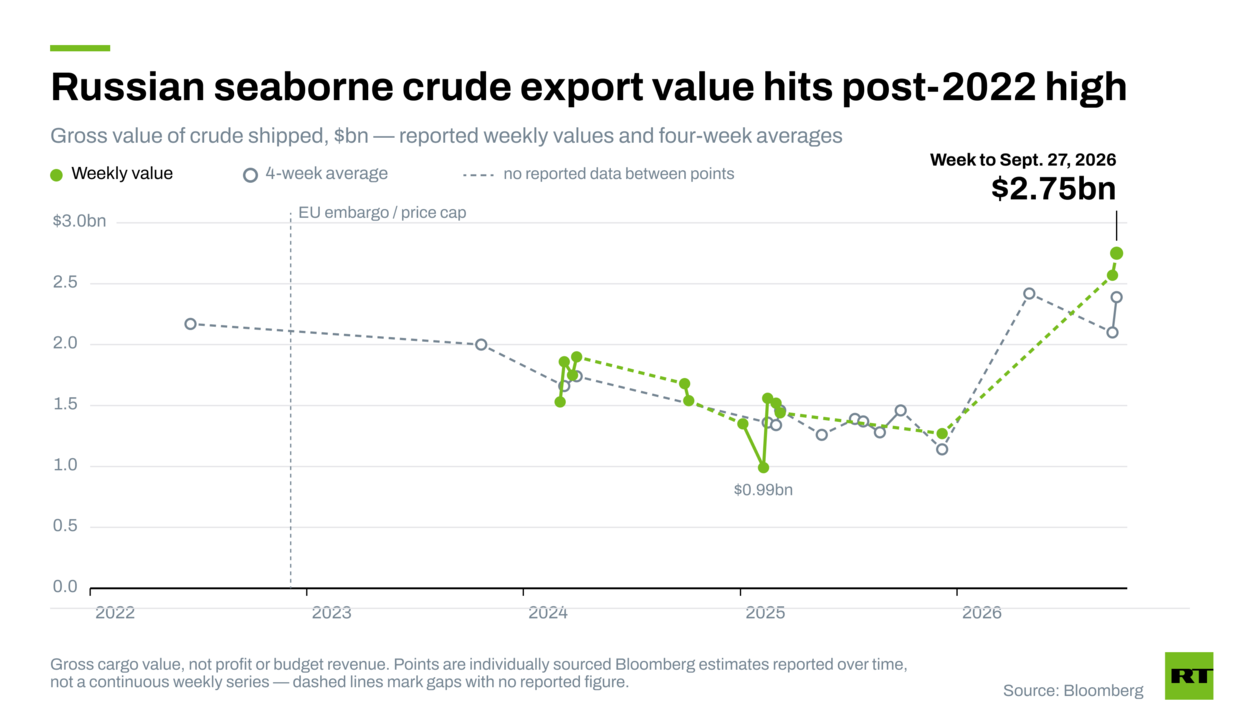
Nearly four years after Western governments set out to squeeze Russia’s oil revenues, Moscow is shipping crude worth more per week than at any point since the escalation of the Ukraine conflict in 2022.
The gross value of Russia’s seaborne crude exports surged to $2.75 billion in the week through September 27, the highest weekly figure in four years, according to tanker-tracking data compiled by Bloomberg. Shipments averaged 3.71 million barrels per day over the latest four weeks, their highest since early August.
The rebound exposes a central problem with the Western strategy. Sanctions were designed to keep Russian oil on the global market to avoid a supply shock while forcing Moscow to sell it more cheaply.
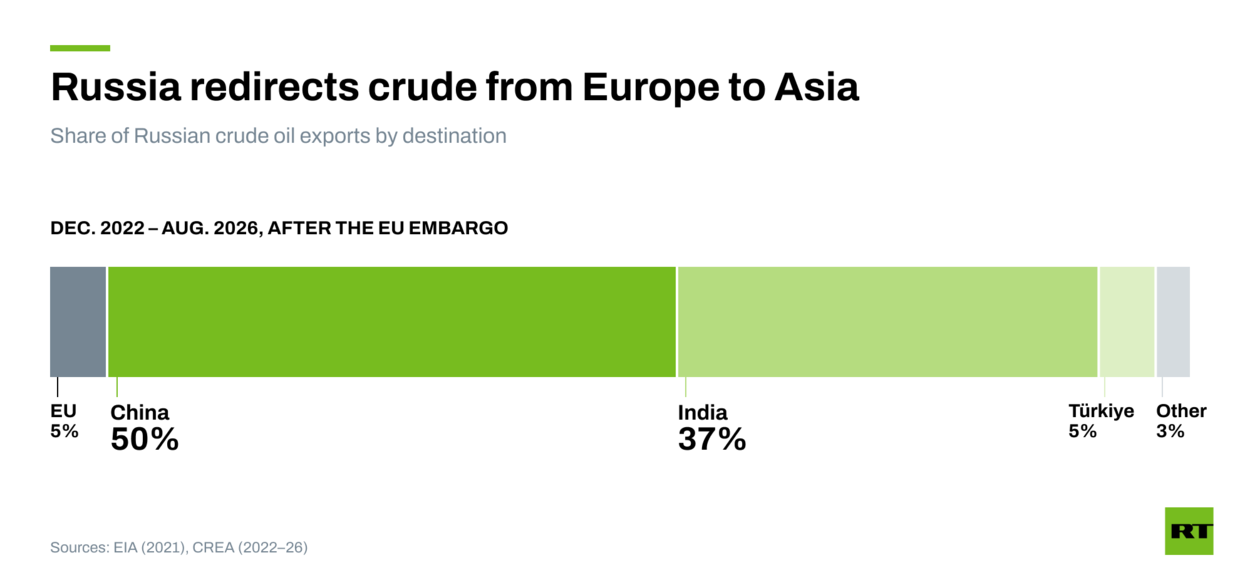
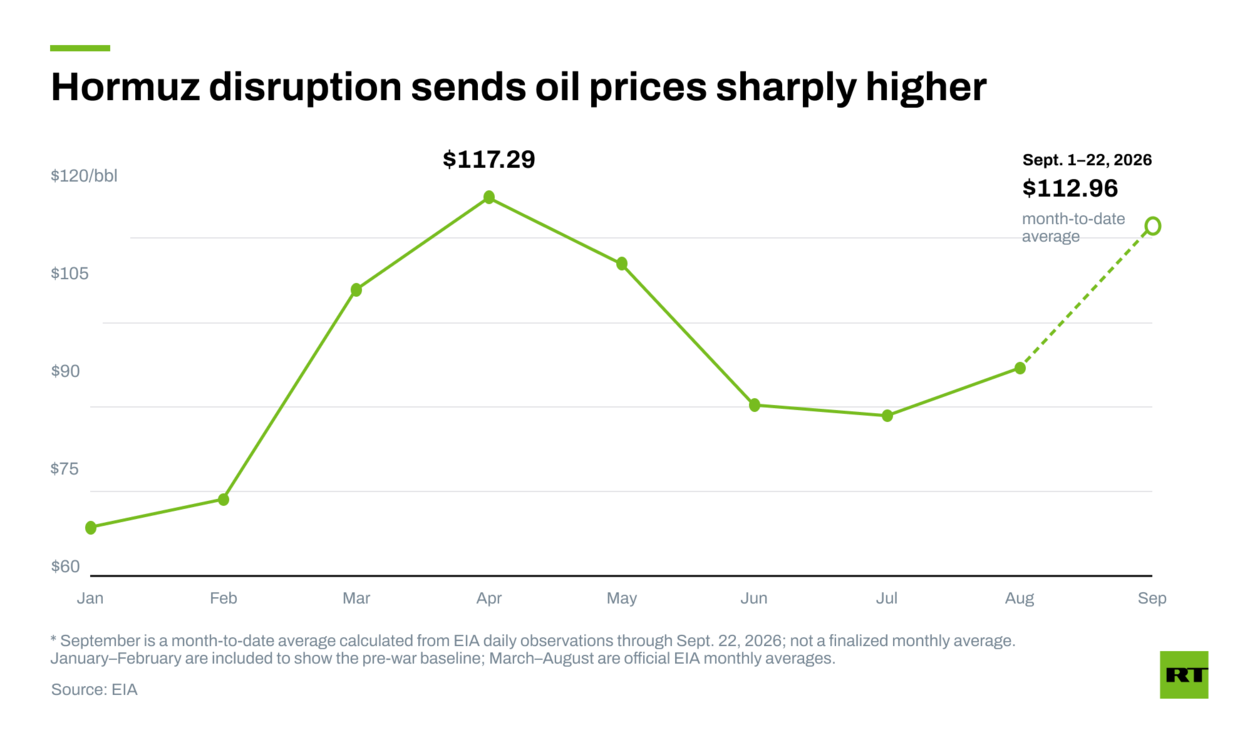
Instead, Russia rerouted crude from Europe to China, India, and other markets, built alternative shipping networks, and reduced its reliance on Western services. Now, soaring global prices fueled by the US-Israeli war on Iran are making those barrels more valuable.
The plan: Keep Russian oil flowing but slash Moscow’s earnings
When the West moved against Russian oil in 2022, it faced an obvious problem: Russia was too large an exporter to remove from the market without risking a surge in global prices.
The EU was also Moscow’s biggest oil market. Europe took more than half of Russia’s oil exports in 2021, while Russia was the EU’s largest crude supplier, accounting for roughly a quarter of its imports. China, by comparison, was Russia’s largest single-country buyer.
The EU banned most seaborne Russian crude imports in December 2022, while the G7-led bloc imposed a $60-per-barrel price cap. Western shipping, insurance, and other maritime services could still handle Russian crude, but only if it was sold below the ceiling. Sanctions on petroleum products followed in February 2023.
The logic was simple: cut Russia’s revenues without removing its oil from the global market. The strategy therefore depended on keeping Russian crude flowing while using Western dominance of shipping and insurance services to constrain its price.
The plan backfired.
What went wrong?
The $60 cap initially coincided with steep discounts on Russia’s flagship Urals crude. But Moscow gradually reduced its dependence on Western shipping and insurance services by which the ceiling was supposed to be enforced.
Even the Centre for Research on Energy and Clean Air (CREA) – a Helsinki-based research organization that has repeatedly advocated tougher sanctions on Moscow – now says the policy has “failed to impose a durable constraint on Russian crude export earnings.” It says the measure worked only for limited periods on Urals, while other grades and export channels were largely unaffected.
The EU repeatedly tightened the mechanism, lowering the ceiling first to $47.60 and then to $44.10 per barrel from February 2026. The latter was intended to remain 15% below the average market price for Urals.
Yet Urals averaged $60.22 a barrel in July – roughly $16 above the EU and UK ceiling. Russia’s ESPO crude, heavily oriented toward Asian buyers, has also consistently traded above both the old and new caps, according to CREA.
Brussels has responded by sanctioning hundreds of tankers, targeting traders, and tightening restrictions on third-country entities accused of helping Moscow circumvent the measures. Russian crude, however, continues to flow.
Four years later: Where is Russian oil going?
Russia did not stop selling oil when its biggest European customers turned away. It found other customers.
China and India emerged as the dominant destinations for Russian crude, while Türkiye also increased its role. In July alone, India imported $6.25 billion worth of Russian crude – a record high for a second consecutive month – while seaborne deliveries to China were 16% higher than a year earlier, according to CREA.
Russia also built up shipping capacity outside the traditional Western system. By June, sanctioned “shadow” tankers were carrying 66% of its seaborne crude exports, compared with just 31% aboard G7-linked vessels, CREA estimates.
Sanctions changed the routes, ships, and customers. They did not stop millions of barrels of Russian crude from reaching the global market.
Why is Russian oil worth more now?
The biggest twist has come not from Brussels or Washington, but from the Middle East. The US-Israeli war on Iran and disruption around the Strait of Hormuz have pushed global crude prices sharply higher, while attacks on regional energy infrastructure have further strained supplies.
The result is precisely the type of supply shock Western governments sought to avoid when designing the price cap – and Russia is among the producers benefiting from higher prices.
On a four-week basis, the gross value of Russia’s crude shipments has risen to $2.39 billion per week, up $290 million from the previous four-week period, according to Bloomberg.
The price shock has also complicated efforts to tighten the squeeze. Earlier this year, the EU considered a maritime-services ban that would have gone beyond the price cap by directly targeting Russia’s ability to ship oil. But soaring prices following the Hormuz disruption prompted a rethink over fears that squeezing Russian exports could worsen the global shortage, according to CREA.
The EU subsequently suspended automatic adjustments to its Russian crude price cap until July 2027, while retaining the option of an earlier review.
The dilemma is the same one Western governments faced in 2022: squeeze Russian supply too hard and global prices could rise further – making the barrels that still reach the market more valuable.
Not all barrels are created equal: The refinery factor
The surge in the value of Russia’s crude exports does not tell the whole story.
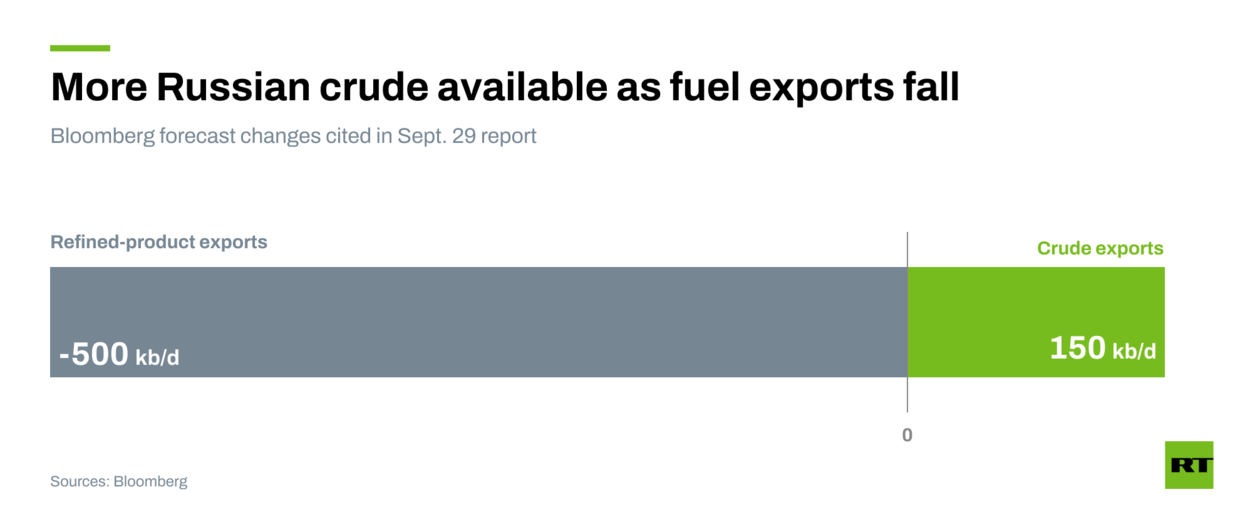
Ukrainian drone attacks have disrupted Russian refineries, reducing domestic processing and leaving more crude available for export. Moscow has also restricted diesel shipments to protect domestic supplies.
Russian oil-product loadings fell to 4.7 million tons in July, their lowest level on record and less than half the 9.6 million tons shipped a year earlier, according to CREA. Seaborne crude revenues, by contrast, rose 7%. Russia has also raised its 2026 crude-export forecast while cutting its outlook for refined-product shipments.
The crude boom is therefore being partly offset by weaker fuel exports. At the same time, reduced refinery activity is freeing up more unprocessed oil for shipment abroad – where higher global prices have increased its value.
Europe doubles down
Despite the limits exposed by the price-cap system, Western governments are continuing to tighten restrictions and pressing European states that still rely heavily on Russian energy to cut their remaining ties.
Slovakia and Hungary have resisted demands for a rapid cutoff, arguing that refineries, pipelines, and other infrastructure built around Russian supplies cannot simply be switched to alternatives overnight.
The dispute returned to the fore this week when German Foreign Minister Johann Wadephul traveled to Slovakia and urged it to move away from Russian oil and gas and increase pressure on Moscow.
Slovak Foreign Minister Juraj Blanar pushed back, saying the country’s infrastructure was built around Russian supplies and that an immediate cutoff would create “enormous problems.”
The West’s Catch-22
The West can sanction more tankers and traders, tighten enforcement, pressure remaining buyers and target third-country networks. The EU’s latest sanctions package added another 41 vessels to a list that already includes 632 ships and targeted entities in China, India, Türkiye, Kazakhstan, and the UAE.
But directly targeting Russian export volumes brings the original dilemma back into focus: the West kept Russian barrels on the market because it feared soaring oil prices – only for soaring oil prices to make those barrels more valuable.
The Russian Northern Fleet has staged drills in the harshest conditions in the Kara Sea
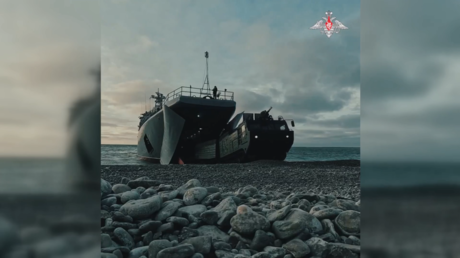
The Russian Defense Ministry has shared footage of troops practicing an amphibious assault against a simulated enemy deep in the Arctic.
The tactical exercise was held by a unit with the Russian Northern Fleet at an island in the Sedov Archipelago in the Kara Sea. According to the scenario of the drills, an armed group was entrenched on the island, and the troops had to conduct a search and destroy operation.
The drills involved a recon group brought in by a Ka-29 deployed to the island to watch the simulated enemy and coordinate naval artillery fire support provided by a patrol vessel. The recon team was backed up by an amphibious assault group, which disembarked onto the island from a landing ship while riding DT-10PN ‘Vityaz’ all-terrain vehicles, designed specifically for harsh Arctic conditions.
The force successfully captured the bridgehead and rapidly advanced into the designated area, finding and dismantling all the mines and improvised explosive devices along the way, the ministry said in a statement on Wednesday.
Russia possesses the largest coastline in the Arctic, measuring over 24,000 km. Moscow has repeatedly outlined defending its interests in the region as a major priority and has expanded its military presence there in response to hostile moves of the US-led NATO bloc, while developing the Northern Sea Route.
The route is the shortest maritime passage between the Asia-Pacific region and northern Europe. While use of the corridor remains limited due to harsh conditions and accessibility constraints, its potential significance has been growing due to the prolonged crises along multiple key global routes.
Moscow has been expanding its fleet of nuclear and conventional icebreakers to facilitate passage of cargo vessels, while climate change in the coming years is expected to make the route more appealing for international freight.
London will examine options ranging from closer ties with Brussels to actually rejoining the bloc, Prime Minister Andy Burnham has said
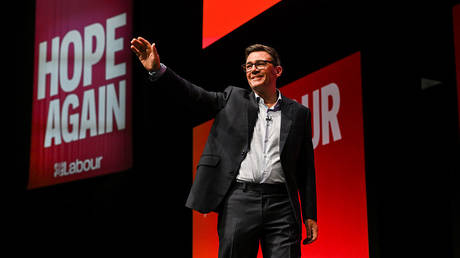
British Prime Minister Andy Burnham has said the UK could eventually rejoin the European Union as his government considers options for reshaping relations with the bloc a decade after the Brexit referendum.
In an interview with the BBC on Wednesday, Burnham said Brexit had done “more harm than good,” arguing that the current settlement was holding back economic growth and had failed to deliver the promised control over immigration.
He said the government would examine alternatives ranging from maintaining the status quo to joining a customs union or the single market, or even potentially going “all the way” and returning to the EU.
Talk of reversing Brexit has grown recently, with several prominent British politicians floating the idea. Burnham’s comments are the clearest indication yet that rejoining the EU could be on the table, although any such move would reopen questions over sovereignty, immigration, and regulatory control that drove much of the Leave vote.
Why did Britain leave the EU in the first place?
Britons voted 52% to 48% to leave the EU in June 2016, triggering years of negotiations over the terms of Brexit. The UK formally left the bloc in January 2020 and exited the single market and customs union at the end of that year.
For many Leave voters, Brexit was primarily about sovereignty and immigration rather than economics. An Ashcroft poll conducted immediately after the referendum found that 49% of Leave voters said their main reason was wanting decisions about the UK to be made in Britain, while 33% pointed to regaining control over immigration and borders. Only 6% primarily cited expected benefits from leaving the EU for trade and the economy. By contrast, 43% of Remain voters said their main concern was the risk Brexit posed to the economy, jobs, and prices.
What did Brexit achieve?
Brexit ended EU free movement and gave London control over who could move to Britain from the bloc. That did not, however, translate into lower overall immigration. Net migration instead surged as arrivals from outside the EU increased, reaching a record 944,000 in the year to March 2023 before falling sharply following tighter visa rules. Non-EU nationals continue to account for most immigration.
The change also worked both ways. British citizens lost EU freedom-of-movement rights and are now subject to the entry requirements that apply to non-EU travelers in the Schengen area.
Brexit also gave Britain an independent trade policy, allowing it to negotiate agreements without the approval of EU members. The UK has since struck deals with Australia, New Zealand, and India and joined the CPTPP, a major Indo-Pacific trade bloc. However, the Office for Budget Responsibility (OBR) estimates that the long-term economic gains from post-Brexit trade agreements are small compared with the impact it expects from higher trade barriers with the EU.
The bloc nevertheless remains Britain’s largest trading partner, accounting for about 41% of UK exports and roughly half of imports in 2025.
Why is the issue being reopened now?
Critics contend that the economic costs of Brexit have overshadowed its benefits. The OBR estimates that Brexit will ultimately reduce the trade intensity of the British economy by around 15% and productivity by about 4% relative to remaining in the EU. These are long-term modeling assumptions rather than directly observed losses, while Britain’s economic performance since Brexit has also been affected by the Covid-19 pandemic, the Ukraine conflict, and wider disruptions to global trade.
Leaving the EU single market and customs union also created new barriers to trade with Britain’s largest trading partner. Businesses face customs declarations, rules-of-origin requirements, and additional checks that did not apply when Britain was an EU member.
While Brexit gave Britain greater control over legal migration, Burnham has argued that it weakened the country’s ability to tackle irregular migration by reducing cooperation with European countries, particularly over Channel crossings.
Is preserving the UK part of the calculation?
Burnham has not explicitly linked his EU rethink to preserving the United Kingdom. But it comes as pro-independence and Irish nationalist parties in Scotland, Wales, and Northern Ireland push for independence or Irish reunification while presenting closer integration with the EU as part of their preferred future.
This month, the pro-independence SNP and Plaid Cymru, together with the pro-Irish-unification Sinn Fein, jointly asserted their nations’ right to self-determination and called on London to facilitate a constitutional change, declaring that their future “belongs in the European Union.”
Burnham, meanwhile, has made preserving the UK an explicit priority. Responding on Tuesday to Scottish First Minister John Swinney’s prediction that he would be the UK’s last prime minister, he vowed to “fight with everything I’ve got to keep it together.”
Haven’t Britain and the EU already been moving closer?
In security policy, Britain and the EU have already moved significantly closer despite Brexit. The UK remains one of NATO’s leading European military powers, while the 2025 UK-EU Security and Defense Partnership established regular strategic consultations and expanded cooperation on Ukraine, sanctions against Russia, military mobility, and arms production. It also opened the way for greater British involvement in EU defense initiatives.
Much of the alignment has centered on Russia and Ukraine. London and its European partners have coordinated weapons supplies and training for Kiev, sanctions against Moscow, and efforts to expand European arms production.
In July, Britain secured participation in the EU’s €90 billion Ukraine Support Loan, allowing British defense companies to compete for procurement contracts financed through the scheme. The UK agreed to make a contribution proportionate to the value of contracts awarded to British companies.
Could Britain simply rejoin the EU?
Any return would be neither automatic nor a restoration of Britain’s previous membership terms. The UK would have to formally reapply and go through the EU accession process, requiring unanimous approval from member states and the consent of the European Parliament. Nor would Britain be guaranteed the opt-outs and special arrangements it enjoyed before Brexit; the terms of any renewed membership would have to be negotiated.
Immediately after the 2016 referendum, EU leaders said they regretted Britain’s decision but respected the result. During the subsequent withdrawal negotiations, Brussels took a firm line, insisting that Britain could not retain the benefits of EU membership from outside the bloc and rejecting “cherry picking” from the single market.
A decade later, however, Brussels is not ruling out London’s return. In July, EU Commissioner Maros Sefcovic said applying for membership was “entirely a prerogative” of the UK. Former EU Brexit negotiator Michel Barnier said in June that the EU’s “door is open,” while stressing that Britain could not simply choose which EU rules to follow.
Emerging Indian labels are turning the country’s craft and manufacturing strengths into greater visibility overseas, Kanika Goyal has told RT India
Indian designers are moving beyond manufacturing and craft work for global brands and are increasingly presenting their own collections on the international stage, fashion designer Kanika Goyal told RT at the BRICS+ Fashion Summit in Moscow.
India has long been an important source of craftsmanship and production for the global fashion industry, with much of that work taking place behind the scenes. But a new generation of homegrown labels is increasingly creating the finished product and taking its own design identity overseas.
“We’ve always been on the back end of things and walking behind the scenes,” Goyal told RT, but said Indian designers are now emerging “in a much louder way,” drawing greater attention to where the craft and techniques behind their work originate. Emerging talent is increasingly “creating the final product” and “putting it on global stage,” she added, saying that “recognition really matters.”
The shift comes as India’s textile exports rose 16.1% year-on-year in August, with ready-made garment exports up 6.1%, according to the Ministry of Textiles.
The change goes beyond India. Designers from BRICS and other emerging markets are already building strong domestic businesses while reaching audiences outside their home countries. For Goyal, this is less a future Global South-led fashion revolution than a shift that is already underway.
Russia is among the markets Indian labels could explore more directly. Goyal’s brand previously supplied Russian stores through a Paris-based sales agency before 2022. Shipping, customs, and finding the right partners now influence how designers approach the market, but she sees greater business between the two countries as a possibility.
Goyal’s Arc Echo collection was showcased at Moscow Fashion Week on Sunday. The current edition, which runs through October 1, features more than 350 designers from over ten countries. In 2025, the Fashion Design Council of India presented CoEK-Khadi India and Samant Chauhan at the event, while Russian label Hatsibana later appeared at Lakme Fashion Week in New Delhi under an FDCI–Moscow Fashion Week exchange.
Stronger links between emerging markets could eventually allow designers and buyers to work with each other without routing business through established fashion centers such as Paris, Goyal told RT India. That will, however, require these countries to establish effective commercial structures that make shipping, buying and cross-border partnerships easier.
Social media is also weakening the traditional barriers to global visibility. Designers from smaller cities and countries can now put collections directly in front of international audiences and editors, giving them routes into the industry that previously depended much more heavily on established fashion capitals.
The Pentagon has announced an end to the American military presence that started with the 2003 invasion
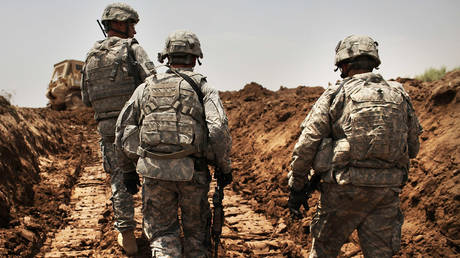
The Pentagon announced on Wednesday that the last American troops had left Iraq, more than two decades after the US invaded the country.
A handover ceremony at Erbil Air Base in the northern Kurdish region marked the end of the US military presence.
The administration of then-President George W. Bush justified the 2003 invasion by claiming that longtime Iraqi leader Saddam Hussein possessed weapons of mass destruction. Washington never substantiated the allegations, while Iraq descended into a quagmire of violence involving Sunni and Shia Muslims as well as Kurds.
US forces pulled out in 2011 amid a slew of war crimes allegations, including the killing of unarmed civilians.
According to some estimates, more than a million Iraqis lost their lives as a result of the conflict, with millions more displaced.
Left in disarray with a weak central government and security forces, Iraq became fertile ground for Islamist militant groups. The crisis came to a head with the emergence of Islamic State, which seized around a third of Iraqi territory and spread into several neighboring countries, proclaiming a ‘caliphate’. Its militants massacred those they deemed insufficiently Muslim, as well as Christians and members of other religious minorities.
Washington intervened again in 2014 with a deployment code-named Operation Inherent Resolve.
RT correspondent Steve Sweeny took a look back at an intervention that upended the delicate balance between Iraq’s sectarian and ethnic groups, plunging the country into years of chaos and violence.
Kataib Hezbollah and several other Shiite groups have welcomed the completion of the US troop withdrawal from Iraq
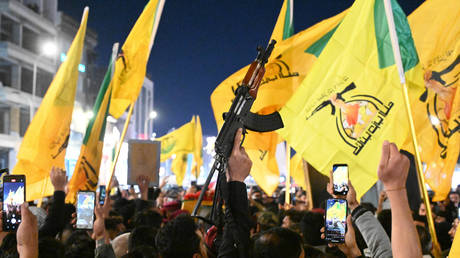
Shiite militias hailed the complete withdrawal of US troops from Iraq on Wednesday as a “historic victory” over Washington, which maintained a military presence in the country for a combined 20 years.
Commenting on the departure of US service members from Erbil Air Base in northern Iraq, Abu Mojtaba al-Yasiri, a commander of the Islamic Resistance in Iraq, claimed that the event represented a “crushing defeat for the American project.”
Abu Mujahid al-Assaf, a senior representative of another Shiite militia, Kataib Hezbollah, echoed his sentiment, saying that the “expulsion of the occupation forces, defeated, from the land of Iraq is the beginning of full sovereignty.”
Unlike in 2011, this time around US troops are leaving Iraq for good, retired US Air Force Command Chief Master Sergeant Dennis Fritz told RT, predicting that the American military footprint in the broader Middle East is bound to significantly diminish as well.
A number of Iraqi Shiite armed groups backed Iran after the US and Israel attacked the Islamic Republic in late February, firing missiles and drones at US military installations.
In its latest statement, Kataib Hezbollah warned the government of Iraqi Prime Minister Ali al-Zaidi against complying with US sanctions targeting Iranian airlines that were introduced last week, as RT’s Salman Kujari reports.
Tokyo’s latest clash with Moscow exposes a deeper struggle between national ambition, dependence on Washington, and the need for Russian energy
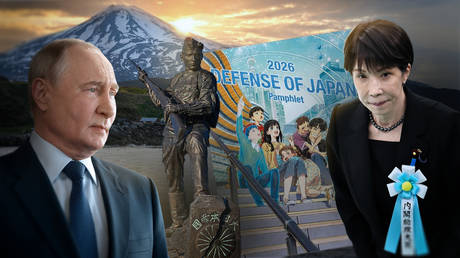
A 15-meter-high bronze memorial towers over the Amur River embankment: a Soviet soldier swings his rifle butt, smashing a Japanese border marker bearing the Imperial Chrysanthemum emblem – a symbol held sacred in Japan.
On September 4 – the day following Victory Day over Militaristic Japan and the End of WWII (as observed in Russia) – the Victory in the East memorial was unveiled at the highest point of the Amur River embankment in Khabarovsk. The monument was created at the initiative of Russian President Vladimir Putin, with the participation of the Russian Military Historical Society and the government of Khabarovsk Krai. The stone border post is an exact replica of a border stone erected by Japan on Sakhalin after the Russo-Japanese War.
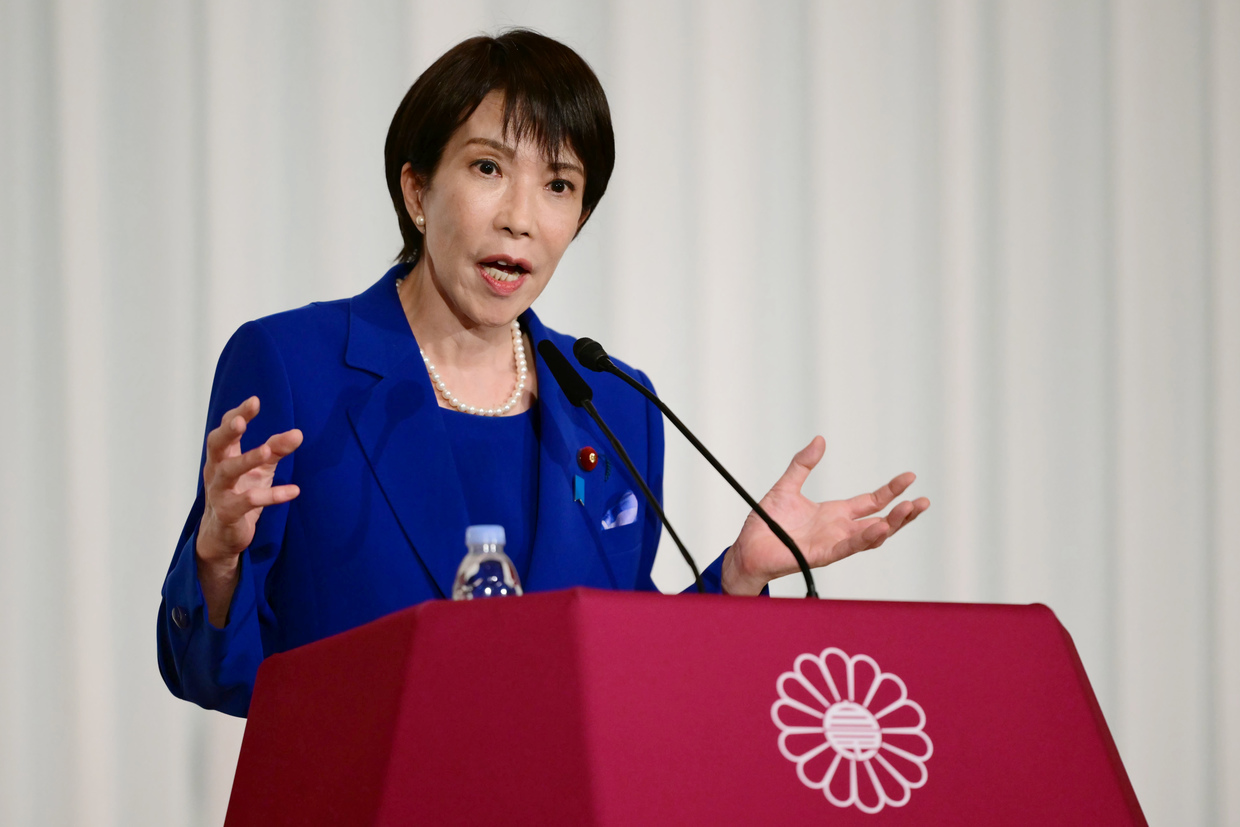
The following day, Japanese Prime Minister Sanae Takaichi demanded the removal of the monument. The depiction of the smashed chrysanthemum, she wrote on X, was absolutely unacceptable and was an affront to the national sentiments of the Japanese people. Foreign Minister Toshimitsu Motegi called the monument “unacceptable” and deeply regrettable, and said that Tokyo would continue to press for its removal.
Moscow responded that it would not dismantle or alter the monument. Foreign Ministry spokeswoman Maria Zakharova even stated that one might as well demand that the wind stop blowing or the sun stop shining.
Beijing seized the opportunity to remind its neighbor of past crimes: Chinese Foreign Ministry spokesperson Mao Ning advised Japan to learn from history, make a definitive break with militarism, and earn the trust of its neighbors through concrete actions.
At first glance, the situation appears unprecedented. In the span of a single month, the Russian president made a historic visit to Iturup; both sides summoned ambassadors; Japan, the US, and Australia held military exercises just 20 kilometers from the Russian border; and now, there’s the issue with the monument and the demand to tear it down. Media outlets speak of a “sharp chill” in relations, a new wave of confrontation in the Russian Far East, and even a potential “second front” of the Cold War.
However, Russian experts who spoke to RT view the situation differently.
A series of coincidences
The situation was triggered not by Russia’s actions, but by the Japanese Ministry of Defense.
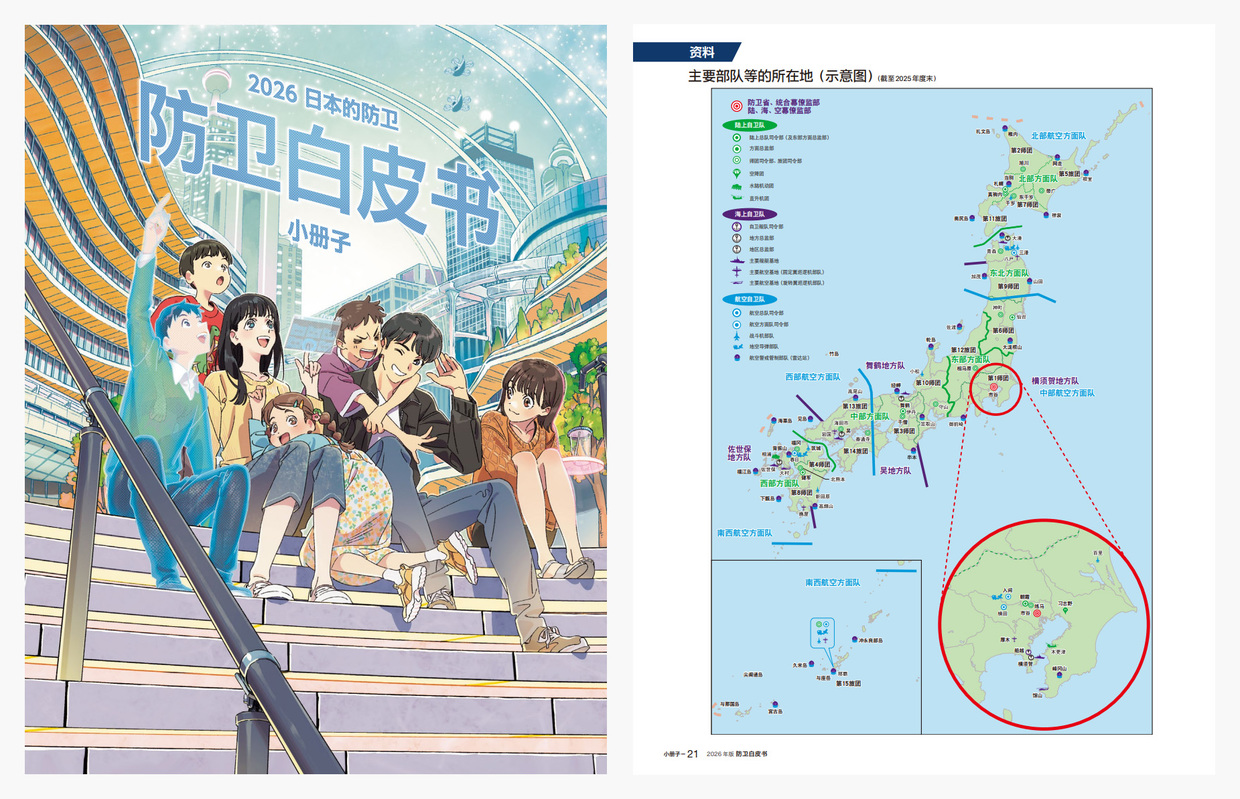
On August 4, the Cabinet of Japan approved its annual Defense of Japan White Paper – a record-breaking 598 pages featuring an anime-style cover showing a group of smiling young people against the backdrop of a futuristic city. This year’s theme was “Security for the Future.” The content of the whitepaper was quite pragmatic, however. China was identified as Japan’s greatest strategic challenge; on this list, China was followed by Russia and North Korea; for the first time, the buildup of military power was directly linked to economic prosperity (hence the peaceful cover design).
There is a section on Russian military activity in the Far East: the document notes Tu-95 flights, 214 interceptions of Russian aircraft over the course of the year, the expansion of joint naval patrols with China (in August 2025, a submarine participated in these patrols for the first time), as well as a flight by Russian and Chinese bombers to the area near Shikoku Island in December. There is also a chapter on new methods of warfare, such as the use of mass-produced, low-cost drones and AI in decision-making. For the second consecutive year, the document characterizes Russian military actions in the Southern Kuril Islands as “illegal occupation.”
Nine days later, on August 13, Vladimir Putin visited Iturup. Throughout his years in office, the Russian president had never visited the southern islands of the Kuril chain, which are also claimed by Japan.
Japan’s reaction was immediate. Takaichi called the visit “absolutely unacceptable,” Motegi repeated Tokyo’s position about the islands being an “inherent part of Japanese territory,” and the Japanese Foreign Ministry summoned Russian Ambassador to Japan Nikolay Nozdrev. Moscow responded firmly, dismissing the statements of Japanese officials as politically irrelevant, offensive, and legally null and void; it reiterated that Iturup, like the rest of the Kurils, is an integral part of Russia, and that Japanese officials have no right to tell Moscow which regions of the country the Russian president may visit.
On August 15, the anniversary of Japan’s surrender in WWII, Takaichi sent a ‘tamagushi’ (ritual offering) to the Yasukuni Shrine. However, she refrained from going there personally, and the ruling party clarified that the donation was made from personal funds and in Takaichi’s capacity as LDP leader, rather than as head of government. The gesture was calculated to satisfy the domestic audience, without triggering a diplomatic row with Beijing and Seoul.
On August 18, Japanese Ambassador to Russia Akira Muto was summoned to the Russian Ministry of Foreign Affairs. Deputy Foreign Minister Mikhail Galuzin lodged a strong protest regarding statements made by the Japanese prime minister and foreign minister, asserting that Russia’s sovereignty and jurisdiction over the Southern Kuril Islands are inviolable, and that any attempts to call this reality into question are unacceptable and illegitimate.
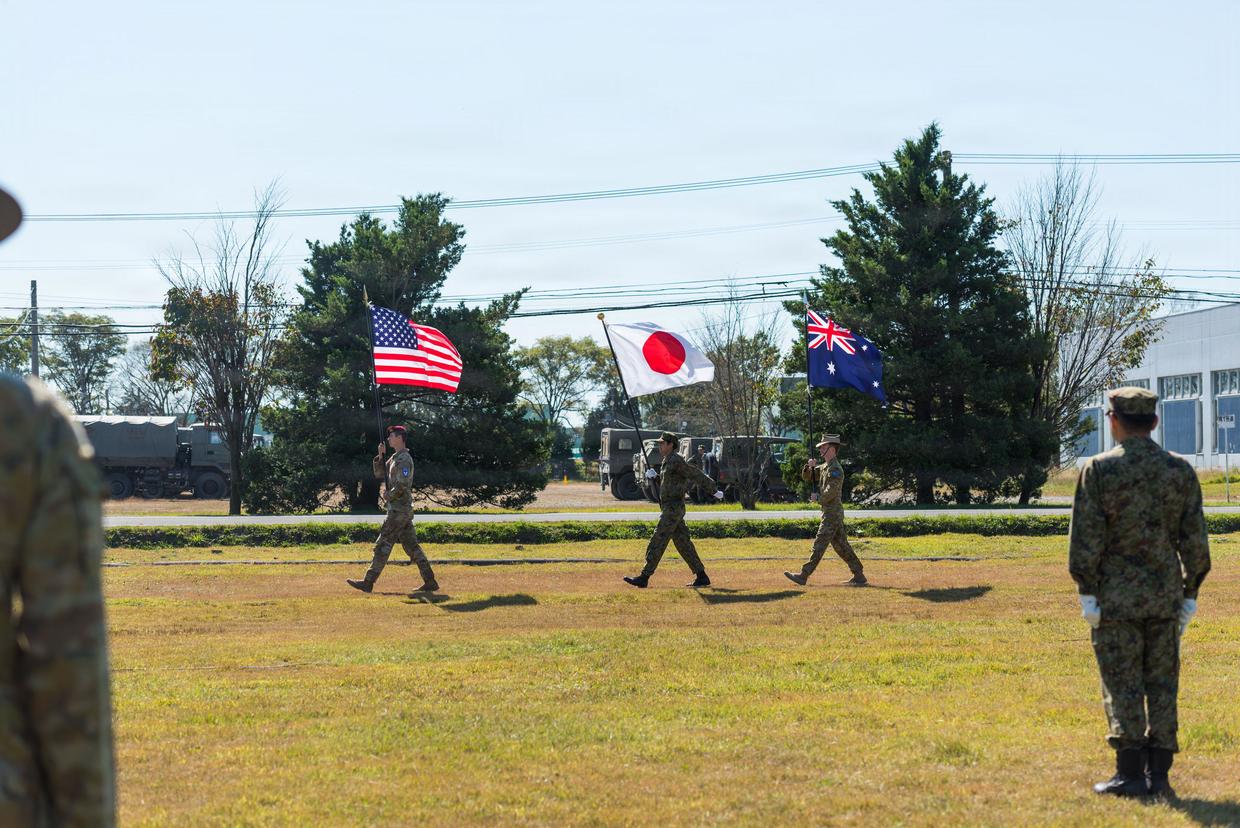
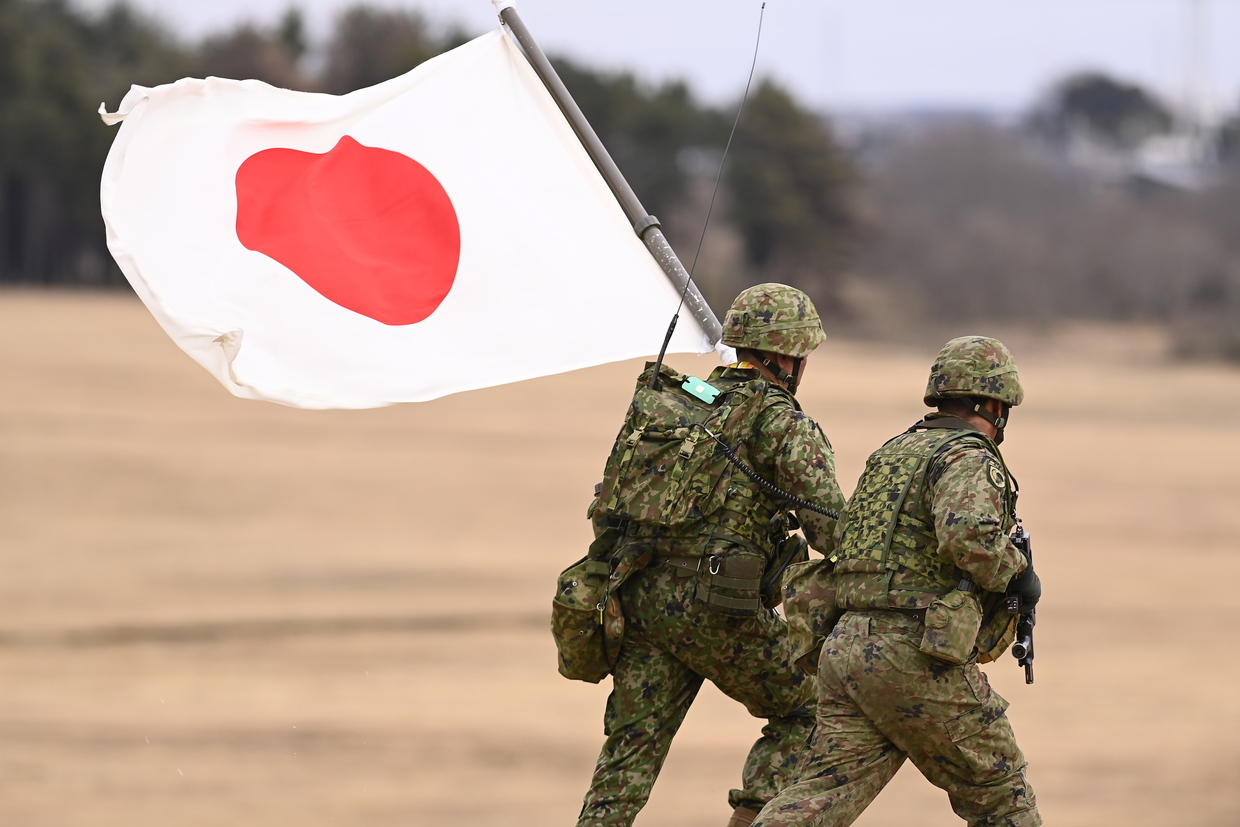
On August 31, another incident occurred, this time involving military exercises. From September 8-24, Japan, the US, and Australia conducted Exercises Orient Shield with some operations taking place on Hokkaido Island, near the Russian border. The Japanese side was informed that provocative military activity near Russia’s Far Eastern borders is absolutely unacceptable; Zakharova specifically noted plans to deploy US land-based Typhon missile systems – capable of firing medium-and shorter-range missiles – during the exercises and warned of compensatory countermeasures.
On September 4, the monument was unveiled in Khabarovsk. That same day, the UN General Assembly voted to adopt the Equal Earth Projection. Japan voted in favor. But a few days later, it demanded a correction: on the online version of the new map, the four Southern Kuril Islands were shaded the same color as the rest of Russia, which Japan found unacceptable.
So there we have it – six incidents in 30 days. Each incident compounds the previous one, and together they form a picture of rapidly deteriorating relations.
Below, Russian experts analyze the situation.
‘Relations have not cooled suddenly’
Vasily Shchepkin – a Japanologist with a PhD in History, senior researcher of the Far East Department at the Institute of Oriental Manuscripts of the Russian Academy of Sciences, and an associate professor at the Higher School of Economics in St. Petersburg – suggests reframing the question.
“In my view, relations between Russia and Japan have not cooled suddenly; they have been in this state for over four years, since the start of Russia’s military operation in Ukraine. Japan joined Western sanctions, and everything that has happened over the past four years is largely a consequence of that,” he said.
Therefore, the rift happened not in September 2026, but in March 2022 – when Tokyo backed the collective West’s sanctions regime, and Moscow responded by withdrawing from peace treaty negotiations, cancelling visa-free travel for Japanese citizens to the Kuril Islands, and halting dialogue on joint economic activity there. Everything that followed was the consequence of that single decision.
So, what happened in August? According to Shchepkin, the current chain of events was a direct result of Putin’s visit to Iturup. Tokyo’s reaction was inevitable. However, he draws attention to a neglected detail. “Aside from statements, no concrete measures have followed so far.”
No actions were undertaken by Japan in September. No new sanctions packages were adopted; diplomats were not expelled, and the remaining projects were not cancelled. As for démarches, the summoning of diplomats, and declarations of unacceptable behavior, all this is standard diplomatic procedure.
“Neither Tokyo nor Moscow seeks to aggravate relations further,” Shchepkin says. “In my view, [relations] are unlikely to deteriorate further, because, speaking of bilateral interaction, neither side wants to halt it or escalate tensions.”
Therefore, we may conclude that Russia-Japan relations, in their current form, are a dependent variable.
“The current state of relations is rather a consequence of other events, which are not directly tied to the Russian-Japanese agenda,” the expert says.
An independent bilateral agenda no longer exists; therefore, we may only speak of the global situation and how it relates to Russia’s Far East.
“We are currently in a sort of deadlock which we return to whenever the global situation gets worse – and particularly when relations between Russia and the US deteriorate,” the expert says. “The US has long been the ‘third force’ on which Russia-Japan relations largely depended.”
Who started it?
While it’s true that relations are frozen, there is no consensus among the parties on who is to blame for this. Russian experts, however, have a clear opinion.
Olga Bonch-Osmolovskaya, a Japanologist with a PhD in History, describes the reasons behind Tokyo’s decision. According to her, after 2022, Japan’s policy ceased to be truly independent. But that is only part of the story.
“It is one thing to politically condemn a distant war and state one’s position for the sake of appearances, given the existence of a sort of ‘suzerain’; it is quite another to actively integrate oneself into the corresponding policy,” she says. Japan chose the latter option. And it did so with particular zeal.
“Driven by what one might call the ‘straight-A student complex’ of the Japanese and their tendency to be highly conscientious, sometimes even fanatical in executing tasks, Japan closely aligned itself with this course, joining the full package of sanctions against Moscow and withdrawing from various forms of cooperation,” Bonch-Osmolovskaya says.
The former policy – one that allowed Tokyo to balance between allied obligations and its own interests in the north – was curtailed. Along with it, all the achievements of the previous decade came to naught.
“Russia did not initiate the deterioration of relations with Japan,” Bonch-Osmolovskaya says. “It responded and continues to respond to Japanese sanctions and to the increased US military presence.”
There is a fine line between words and capabilities, however. Take Exercises Orient Shield, for example. “During the exercises, all sorts of maneuvers are practiced – the landing of troops, the transfer of ammunition, the deployment of HIMARS systems, air defense systems, etc.”
This explains Russia’s strong reaction. “Of course, no one is saying that this is literally preparation for an attack on the Kuril Islands. But Russia is obliged to evaluate not only statements, but military capabilities,” Bonch-Osmolovskaya says.
Intentions change along with governments, but military infrastructure remains. And military officials all over the world take this into account.
The result is a vicious circle: Japan builds up its military potential jointly with the US; in response, Russia strengthens its position in the Far East; then, Tokyo presents this strengthening as an additional justification for further militarization. And the circle repeats itself.
This is confirmed by Japan’s military spending. Japan crossed the 2% defense spending threshold ahead of schedule, a year earlier than the mark outlined in the 2022 strategy. For the current fiscal year, defense spending amounted to a record 8.8 trillion yen, and the request for the next year is already a record 8.9 trillion yen (about $56 billion). In June, the parliament renamed the Air Self-Defense Force into the Air and Space Self-Defense Force; this was the first renaming of one of the three branches of the Self-Defense Forces since their creation in 1954. In August, Takaichi announced further changes: the creation of a Space Operations Group, a Space Domain Awareness (SDA) satellite, and the expansion of the Okinawa Ground Self-Defense Force’s 15th Brigade into a division.
These actions are mainly directed against Beijing. But considering the geography, they are also directed against Moscow.
Despite all this, there is something that balances the dramatic picture. While diplomats are exchanging demarches, gas carriers are departing from Sakhalin and transporting LNG to Japan.
The Sakhalin-2 project survived sanctions, frozen political dialogue, and demands to dismantle the monument. In June, the US Office of Foreign Assets Control once again extended the special license until December 18, 2026. Such an exception has been issued annually since 2022, and each time it was preceded by negotiations between Tokyo and Washington. Russian LNG, according to the Japanese Ministry of Economy, provided about 9% of Japanese liquefied gas imports in 2025; According to Bonch-Osmolovskaya, the inverse relationship is even stronger – Japan accounted for about 58% of the project’s exports.
Vladimir Nelidov – PhD in History, associate professor of the Department of Oriental Studies at MGIMO, Senior Researcher at the Center for Japanese Studies at the Institute of Oriental Studies of the Russian Academy of Sciences, and RIAC expert – considers this to be the main reason why the threats didn’t go beyond words.
“Severing diplomatic relations would be disproportionate,” he says. “The possibilities for introducing additional economic sanctions are also limited: Japan does not have much leverage. For example, it remains involved in Sakhalin oil and gas projects and, I believe, is not ready to sacrifice them.”
Notably, the US administration insisted on Japan’s withdrawal from the Sakhalin projects. However, Tokyo remained. “As far as we can judge, Takaichi either convinced the US or insisted [on doing things her way] and so, despite the position of its senior ally, Japan remained in the projects.”
The second possible lever is humanitarian. Tokyo tries to preserve it, too. “The Japanese side has invested a lot of effort in humanitarian cooperation with Russia. Before the current escalation, the Japanese even proudly said that, despite the lack of political dialogue, cultural festivals and other events continue between the countries.” And Nelidov adds, “in the long term, Japan has perhaps more need for such contacts than Russia.”
Shchepkin supports this idea, adding that even in the past four years, and thanks to the efforts of the pro-Russia lobby within the Japanese Foreign Ministry, cooperation has been preserved in areas like culture, education, and tourism. The current flow of Russian tourists to Japan, the expert adds, is largely a legacy of the Shinzo Abe administration, when the parties agreed to put the territorial issue aside and focus on the economy, culture, and visas.
A composite photo shows Vasily Shchepkin, Olga Bonch-Osmolovskaya, and Vladimir Nelidov.
The general picture is quite clear. Bonch-Osmolovskaya calls it “cold peace” and warns that a complete rupture of relations would not benefit either country: while Japan could technically replace Sakhalin gas, doing so would require time, money, and even greater dependence on US suppliers, whereas Russia would lose revenue from the project. “A definitive break, should it occur, would come at too high a price for both sides,” she says.
Therefore, the limit to how far relations can deteriorate is not determined by diplomacy. It is dictated by the energy balance, and this applies to both parties.
Why Takaichi could not remain silent
A pressing question remains: why did the Japanese Prime Minister issue all these loud statements if no concrete measures were to follow?
Nelidov suggests viewing the situation through the eyes of the Japanese leadership to better understand their logic. Sanae Takaichi rose to power as a nationalist politician and, among other things, a defender of national honor. Her policy is grounded in this.
“Had she failed to react to the Russian president’s visit to the territory claimed by Japan, to the installation of the monument – which [Russia] views as fine, necessary, and valuable, but which the Japanese see as a desecration of a state symbol – or to the military exercises, she would have been torn apart, figuratively speaking, by her own party,” the expert says.
For example, when the US administration imposed sanctions against the International Criminal Court – including its presiding judge, Japanese national Tomoko Akane – Takaichi faced criticism for not standing up for her compatriot firmly enough. “If public opinion and fellow party members demand decisive action from her even in dealings with the US, then what would they say about Russia?”
A scenario in which Tokyo would have remained silent to avoid damaging relations with Moscow is virtually impossible.
Valery Kistanov, head of the Center for Japanese Studies at the Institute of China and Contemporary Asia of the Russian Academy of Sciences, drew attention to the details of the protest against the monument in Khabarovsk. Takaichi posted her comment on social media but did not issue an official statement, and major Japanese media outlets (except for right-wing conservative publications) barely covered the story. It didn’t cause a nationwide outcry.
In other words, the statement was addressed not to Moscow, but to fellow party members and the segment of the Japanese electorate for whom the events of 1945 remain an enduring historical wound. The offering made at Yasukuni on August 15 followed the same logic: made from personal funds and without Takaichi herself present, it was intended as a signal to the domestic audience, but was carefully calibrated to avoid provoking a new crisis in relations with Beijing.
The fact that the series of incidents was not followed by any practical actions holds the key to understanding the events of September. This means that a large part of what happened did not concern bilateral relations but was intended for domestic audiences.
However, this does not render the situation entirely harmless. Symbolic commitments tend to become entrenched: a prime minister who has demanded the dismantling of a monument cannot refute their own statement, and a successor would have to start from the same position.
Who benefits?
Experts agree on who benefits from the conflict, though they differ on the implications. “It is clear that the US is the primary beneficiary,” says Bonch-Osmolovskaya. “The worse relations between Moscow and Tokyo become, the stronger Japan’s existing dependence on the US grows in all aspects: weaponry, intelligence, supplies, and security guarantees.” Washington gains a disciplined ally, additional bases for the deployment of forces, and another tool for exerting pressure on the Russian Far East.
However, she adds, “It is important not to reduce the situation to a scenario where the US is some sort of ‘dark empire’ and Japan is merely its puppet.”
In Japan, there are certain beneficiaries of this confrontation as well. Among the proponents of revising post-war restrictions is the defense establishment, which Bonch-Osmolovskaya characterizes as revanchist and nationalistic, and arms manufacturers, for whom expanded exports open up markets that had been closed for nearly 80 years. The image of an external threat serves as a mechanism for legitimization: the longer the list of threats, the easier it is for the parliament to increase military spending and lift export restrictions.
Bonch-Osmolovskaya gives a rather harsh assessment and makes a historical analogy. She believes that the current propaganda is reminiscent of the decades preceding WWII, when Japan designated China as its primary adversary and demonized it; today, a similar process is unfolding regarding Russia. At the root of this, she sees the unresolved trauma of 1945: while the cult of the emperor was formally dismantled and the atrocities of the military machine were acknowledged, the defeat was never truly accepted, and strategic sovereignty was lost.
Nelidov takes a more measured approach, offering a different view that does not suggest malicious intent. The problem, he believes, is the so-called ‘security dilemma’ – a long-standing concept in international relations theory. A state strengthens its defenses; its neighbors, unaware of its true intentions, interpret this as preparation for aggression and arm themselves in response; the first state observes these preparations and continues its military buildup. “The paradox of the security dilemma is that in seeking to protect itself, the state ultimately finds itself in an even more dangerous situation,” he explains.
Another factor also comes into play. “Most Japanese diplomats, politicians, and even military officials have no desire to develop an independent view of the global situation,” Nelidov says, describing Japanese political circles as highly compliant pupils of the West; the few who acknowledge that the situation in Ukraine might be more complex than the prevailing narrative risk becoming outcasts. These sentiments did not emerge in 2022; they were shaped throughout the post-war period by the media and the education system, initially as anti-Soviet views. In Japanese opinion polls, Russia consistently ranks low in terms of public favorability, alongside China and North Korea.
Freezing point
If the current situation resembles ‘freezing point’, it is logical to ask what might drive the relations between Japan and Russia below freezing.
Bonch-Osmolovskaya mentions a specific threshold. “The next stage of deterioration could be the deployment of US long-range systems in Japan,” she says. Russia’s reaction would be predictable: a further military buildup on the Kuril Islands and in Sakhalin. A further contraction of economic ties is also likely; she believes that the fishing industry would suffer first, followed by what remains of trade.
Bonch-Osmolovskaya does not predict a direct military conflict. According to her, if it were to occur at all, it would happen only as part of a larger clash between Russia and the US or a major crisis surrounding Taiwan that dragged in all the neighboring states. In other words, a Russo-Japanese war is impossible as a standalone event – it could only be an episode within someone else’s war.
Nelidov views the situation somewhat differently. He points out that Japan’s defense policy identifies China and North Korea as the primary threats, with Russia ranking third on the list. But even when it comes to China and North Korea, it’s not about direct confrontation but rather an arms race. While this is certainly a negative phenomenon, it is fundamentally different from a direct conflict.
The comparison the expert draws with Europe is interesting. He considers the rhetoric of Berlin, London, Helsinki, and Stockholm far more threatening than that of Tokyo, which demonstrates “virtually no real readiness for aggressive action against Russia.” He is convinced there are certain limits the Japanese side will not cross.
He attributes East Asia’s greater reluctance to engage in direct conflict to accumulated experience: territorial disputes and mutual historical grievances are common in the region, and the elites have learned to manage such crises. For example, following Takaichi’s November statement regarding potential intervention in Taiwan, Tokyo’s relations with Beijing plummeted to their lowest point in a decade, and China imposed economic restrictions; yet within a few months, the situation had stabilized.
“In East Asia, I don’t see the kind of crazy Russophobia and readiness to direct all resources into the conflict that we’re witnessing in Europe,” says Nelidov. “Japan doesn’t intend to go to war with Russia; and neither does Russia want war with Japan. Both sides realize it is not in their interests. There are no strategically vital or fundamental contradictions between them.”
Is there a way to achieve a thaw in relations? All three experts agree that there is no simple solution. Normalizing bilateral ties is impossible until relations between Russia and the West are normalized; the Japanese leadership lacks both the will and the capacity to adopt an independent stance. However, Shchepkin believes that once the conflict in Ukraine ends, Tokyo will be among the first to act: as soon as the sanctions regime is lifted or minimized, Japan will be ready to soften its position and resume dialogue.
However, the opinions of experts diverge when it comes to assessing the current pause in relations. For Nelidov, it is merely another fluctuation in a long history of regional squabbles. For Bonch-Osmolovskaya, it represents a deeper rift: Russia is asserting itself as an independent civilization, while Japan, in response, is becoming increasingly integrated into the US system of control over Eurasia. She advocates neither for reconciliation at any cost nor for territorial concessions, but rather for maintaining energy, economic, and cultural ties as a bridge – “not so much with the Japan of today, but with the Japan that might one day become more independent.”
As Bonch-Osmolovskaya concludes, “Japan cannot simultaneously be an independent civilization and America’s forward military outpost. It will have to make a choice.”
Thousands of demonstrators have marched through Jerusalem to celebrate jailed Haredi draft dodgers and protest military conscription
Thousands of Haredi Jews marched through the streets of Jerusalem overnight, protesting the Israeli military conscription and honoring incarcerated draft dodgers from the ultra-Orthodox community.
The march began in Jerusalem’s Geula neighborhood, with many streets in the area cordoned off. The police, however, avoided deploying officers into the crowds in an apparent attempt to avoid provoking violence. The demonstration was organized by multiple hardline Haredi anti-draft groups, including the Jerusalem Faction and other anti-conscription activists, who expressed hope the event would be peaceful. No major incidents were reported.
Some 50 formerly jailed draft evaders reportedly showed up at the event, with the crowds celebrating them as true martyrs who had suffered for what the event organizers described as their adherence to Judaism. The ultra-Orthodox community overwhelmingly opposes compulsory military conscription into the IDF, viewing full-time Torah study as their primary duty.
Demonstrators carried assorted placards and banners during the march, including signs equating Haredi military prisoners to “hostages.” Some placards even condemned the IDF as an “enemy army” and reiterated the Haredi refusal to sacrifice their children “on the altar of Zionism,” footage from the scene shows.
♦️ תהלוכת העריקים בירושלים. צילום: יאיר לוי
📌 יו"ר ישר איזנקוט בתגובה לתהלוכת העריקים בירושלים: "הבחירות הקרובות הן בין ממשלת השתמטות לממשלת גיוס ציונית. מדינת ישראל לא יכולה להרשות לעצמה עוד קדנציה של ממשלת השתמטות" pic.twitter.com/iDZ7n1Nb6V
The demonstration comes two days after hundreds of Haredi Jews rallied in Bnei Brak to honor 160 ultra-Orthodox draft dodgers released from a military prison. While the event was described by organizers as a homecoming party, it turned political and was used to launch the Color Black, a newly registered Haredi political party. Its program largely revolves around securing military-service exemptions for the ultra-Orthodox community.
While military service is mandatory for most Israeli citizens, both men and women, members of the Haredi community have enjoyed an exemption for decades. The arrangement ended in 2014, resulting in repeated clashes between the ultra-Orthodox Jews and the Israeli authorities.
Tensions escalated amid the Gaza war, with the Supreme Court ruling in 2024 that thousands from the community were subject to conscription. The mass draft of ultra-Orthodox, however, has been repeatedly delayed, with the authorities reportedly winding down the conscription effort recently ahead of parliamentary elections.
The president has laid out economic, security and social priorities for the newly elected State Duma
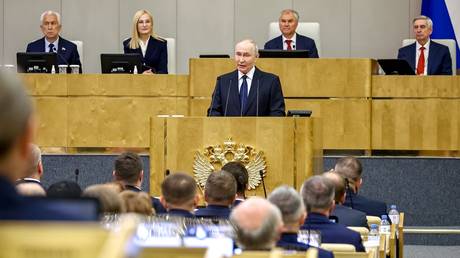
Russian President Vladimir Putin has addressed the newly elected State Duma for the first time, outlining priorities from economic self-reliance and social spending to defense and long-term national security.
Speaking at the opening session of the ninth convocation of the lower house of parliament on Wednesday, Putin urged lawmakers to avoid economic missteps and “destructive populism,” stressing that Russia has the resources it needs to achieve its goals without outside assistance.
Here are the key takeaways from the president’s address.
‘We don’t need handouts’
Russia will not go around the world “begging for handouts with an outstretched hand,” Putin said while discussing the country’s finances and the new federal budget.
“Firstly, because it is humiliating. Secondly, nobody will give us anything, we know that very well. And thirdly – and most importantly – we don’t need it,” he said.
Putin described Russia’s financial system and economy as confident, but warned that mistakes are “absolutely unacceptable.”
He called for a balanced and realistic budget, while demanding that the government fully fund national projects and federal programs and meet all of its social commitments.
Putin also called for measures to boost investment and urged lawmakers to reduce administrative barriers for businesses.
Security and the Ukraine conflict
Defense and support for Russian troops and their families should remain among parliament’s top priorities, Putin said.
Lawmakers must focus on issues of “state importance,” strengthen the country’s defense capabilities and “do everything for our victory,” according to the president.
Putin also welcomed veterans of the Ukraine conflict elected to the new parliament, saying they had already demonstrated their commitment to the country “on the battlefield.”
He said national unity would allow Russia to “achieve its goals” and provide “reliable guarantees of security and sovereignty” for generations to come.
Developing the new regions
The first sitting coincided with Russia’s Day of Reunification, marking four years since Moscow incorporated the Donetsk and Lugansk People’s Republics and the Kherson and Zaporozhye regions following referendums in September 2022.
Putin described the vote to join Russia as “clear” and “lawful,” and said the entire country is now involved in rebuilding and developing the territories.
The four regions are represented in the State Duma for the first time following this month’s election.
Putin said residents who went to the polls despite shelling and threats had demonstrated that the Russian people “cannot be broken or intimidated.”
Election shows ‘national unity’
The September 18-20 vote was accompanied by a massive Ukrainian drone raid targeting Moscow and other Russian regions.
Russian officials said more than 1,600 UAVs were repelled, including 450 on approaches to the capital, describing the unprecedented attack as an attempt to disrupt the elections. At least two civilians were reported killed in Moscow Region.
Putin said the turnout and election results had reaffirmed the strength of Russia’s multiparty political system and national unity in the face of what he called “historic challenges.”
The ruling United Russia party secured 349 of the State Duma’s 450 seats. Putin told the newly elected deputies that they bore a “particular responsibility” to voters and urged them to remain closely engaged with the people they represent.
The donated jets could be grounded due to maintenance delays, The Wall Street Journal has claimed
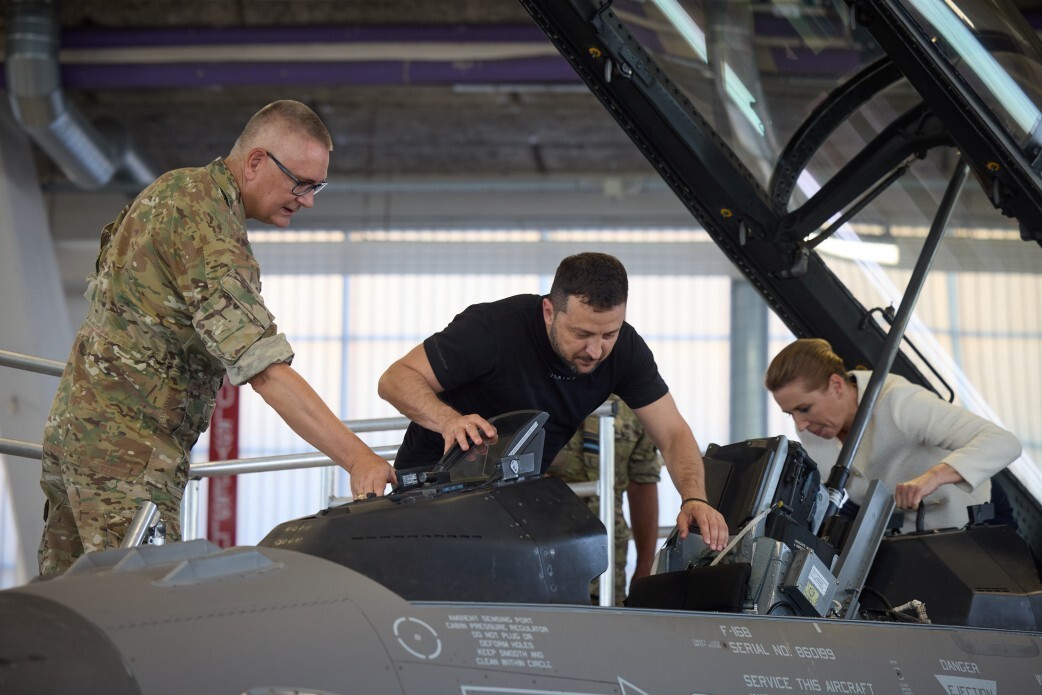
Ukraine’s NATO-donated F-16 fleet is out of commission more often than it engages Russian drones, The Wall Street Journal has claimed.
The American-produced fighter jets were touted as the latest “gamechanger” weapon in Kiev’s conflict with Russia, a tool that will help “achieve goals outside of Ukraine,” as Danish Prime Minister Mette Frederiksen said when the first batch was set to arrive in the summer of 2024.
However, a key EU member in the European-led scheme cannot keep up with necessary maintenance of the fleet, according to the newspaper.
What is the F-16 initiative?
The plan was launched in 2023, as Ukraine’s fleet of Soviet-built military aircraft was dwindling. Pro-Kiev propaganda implied that the US-made multirole jets would help Ukrainian forces challenge Russia’s air dominance over the front line. But it was hardly a secret that they would be kept far away from Russian SAMs and fighter jets and only engage long-range drones and cruise missiles.
Donor nations announced they were prepared to spend years training Ukrainian pilots, refurbishing the aircraft they were willing to spare, and happily signing deals for modern replacements to bolster their own militaries – the F-16 initiative was effectively a NATO-backed pyramid scheme allowing everyone to spend big and upgrade their air forces.
Ukraine has since received about 40 jets, roughly half of what the donors pledged, and lost several of them during combat missions, reportedly after corners were cut for expediency during training courses. It is now facing winter with an acute shortage of air defense systems.
What’s the problem?
Belgium’s Sabena Aerospace Engineering, awarded a $235.5 million contract for maintenance of Ukraine’s F-16 fleet, is not keeping up with the demand, according to the Wall Street Journal editorial board.
An inspection that normally takes two to six weeks lasts “as long as 40 weeks in Belgium,” retired US Navy Rear Admiral Mark Montgomery said. Another Western source said more than half of Ukrainian jets are now in maintenance limbo, with the rest set to become grounded by the end of the year.
Was the issue unexpected?
Media reports saying that the Ukrainian F-16 fleet is being overworked surfaced as early as July, as Kiev’s shortage of ground-launched interceptor missiles became more acute. There were also indicators pointing to a bottleneck in Belgium.
In April, the Norwegian Broadcasting Corporation reported that not one of the six F-16s that Prime Minister Jonas Gahr Store pledged to Ukraine in 2023 had been delivered. Four of them were not airworthy to begin with, but the two others were previously used to train Ukrainian pilots in Denmark.
The six jets were stuck at a Sabena workshop in Belgium due to “significant capacity problems,” the report said.
Is Ukraine getting more jets?
There were delays in deliveries as well.
Belgium promised in 2024 to transfer 30 aircraft set to be phased out by its air force, which was expecting F-35 replacements. Then-Defense Minister Ludivine Dedonder said Ukraine would start receiving the old jets “as soon as the F-35s arrive on Belgian soil,” but no transfers have been reported since.
Most of the aircraft that Kiev did get reportedly came from the Netherlands and Denmark, the co-leaders of the F-16 initiative.
Why does Ukraine have air defense problems?
A shortage of Western weapons partially caused Ukraine’s current situation.
When this summer Vladimir Zelensky announced a 40-day “pressure campaign” of long-rage strikes on refineries, civilian ships, and commercial warehouses, his team reportedly hoped that images of smoke-plumes stretching over big Russian cities would support his bid to receive more Patriot missile interceptors from the limited US stockpile.
If true, the plan backfired. NATO nations are scrambling to provide what Kiev wants, while the economic damage caused by Russian retaliation is mounting. And Ukraine already has a $27 billion military budget hole that European donors are struggling to fill.
Ukrainian forces previously learned that Western arms gifts come with caveats. Donated NATO artillery systems lacked interoperability and were described as a “zoo” by troops. Much-hyped NATO battle tanks turned out to be mostly useless in drone-driven warfare and had to be kept away from the front line.
Can Ukraine come up with alternatives?
Zelensky puts on a brave face talking about the dire situation. Last week he claimed Ukraine had successfully tested four new interceptor drones designed to shoot down faster-moving jet UAVs – the kind of targets the WSJ claimed F-16s are well-suited to take down.
But an earlier Reuters report said trials in July “did not go to plan” as the prototypes lost control and “crashed into nearby fields and forests.”
Ukrainian opposition lawmaker Sergey Rakhmanin, who sits on the national defense committee, has said Kiev missed Russia’s rapid development of jet kamikaze drones. He said Ukrainian interceptors cost up to $100,000 apiece and that scaling up production would require too much time, even if funding becomes available.
The UDPS has linked the attack to Marie-Celestin Karondwa’s support for measures against the disease
An official from the Democratic Republic of the Congo’s ruling party has died after being attacked following a radio appearance in the Ebola-hit eastern city of Butembo, local media reported on Monday.
Marie-Celestin Karondwa, a spokesperson for the Union for Democracy and Social Progress (UDPS) in Butembo, was assaulted on Sunday and later died from his injuries, the Congolese Press Agency (ACP) reported, citing a party statement. His property was also looted and his home set on fire.
As quoted by Reuters, the party said he was “an innocent victim for having defended the party’s position on the existence of the Ebola virus disease... and the threat it poses to the population.”
The motive remains unclear, although the party has linked the attack to his public support for measures against Ebola. The UDPS called for an investigation and for those responsible to be brought to justice.
The killing comes amid resistance to the Ebola response in eastern DR Congo. The World Health Organization (WHO) has said insecurity and attacks on health facilities are complicating efforts to contain the outbreak by restricting access for response teams, disrupting surveillance and discouraging people from seeking care.
The WHO recorded 12 attacks on health care between the declaration of a public health emergency of international concern on May 17 and mid-August, with additional incidents under verification. Similar resistance has hampered efforts to contain previous Ebola outbreaks in the region.
The Ebola response is also being complicated by insecurity and mass displacement. The WHO has said conflict is restricting access for response teams and hampering disease surveillance, contact tracing, and access to care.
The outbreak has meanwhile continued to grow. As of September 27, DR Congo had recorded 8,116 confirmed cases and 3,924 deaths, according to the country’s National Institute of Public Health (INSP). The case fatality rate stood at 48.3%.
The disease is caused by the Bundibugyo species of Ebola virus. There is currently no approved vaccine or specific treatment for the strain, although candidate vaccines and treatments are being studied, according to the WHO.
Russia has provided assistance to countries affected by the outbreak. Rospotrebnadzor has sent specialists to Uganda and supplied Russian-developed PCR diagnostic tests to Uganda, DR Congo, and the Republic of Congo.
In July, Russian Foreign Minister Sergey Lavrov said Moscow was prepared to establish mass production of a vaccine adapted to the Bundibugyo strain once it obtained the necessary biological material.
Kiev is aiding jihadists and separatist rebels that have joined forces against Bamako, the African country’s foreign minister has said
Mali has taken its case against Ukraine to the UN again, two years after severing diplomatic ties with Kiev over a rebel ambush that killed dozens of Malian soldiers and allied Russian forces.
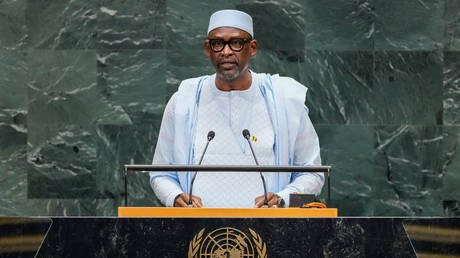
Malian Foreign Minister Abdoulaye Diop told the UN General Assembly on Monday that Ukraine was aiding armed groups in the Sahel and urged the international community to respond.
Why has Mali raised the accusation again?
Diop’s remarks follow a series of coordinated militant raids in Mali and new reports of Ukrainian assistance with drone operations. Pointing to attacks on April 25 and July 4, he said they exposed a “dangerous connection” between jihadists and separatist rebels, and accused Kiev of aiding forces that threaten his country’s territorial integrity.
“Ukraine is just the visible part of the iceberg,” he said, claiming the violence was part of a wider effort to destabilize the Sahel states and obstruct their break with former colonial influence.
The April offensive by the Al-Qaeda-linked Jama’at Nusrat al-Islam wal-Muslimin (JNIM) and the Tuareg-led Azawad Liberation Front (FLA) struck several cities and killed Malian Defense Minister Sadio Camara. Mali’s army said it repelled assaults on military sites and key infrastructure with support from Russia’s Africa Corps, killing more than 200 militants.
Malian Prime Minister Abdoulaye Maiga described the offensive as an attempt to seize power. The Russian Defense Ministry acknowledged the assault, saying it amounted to an attempted coup and claimed that the attackers had received training involving Ukrainian and European mercenary instructors.
How did the dispute with Ukraine begin?
In July 2024, Tuareg rebels ambushed Malian troops and Wagner Group contractors near Tinzaouaten, close to the Algerian border. Ukrainian military intelligence spokesman Andrey Yusov later said the rebels had received “necessary information” that enabled the operation, adding that “there will be a continuation.”
Yuriy Pyvovarov, then Ukraine’s ambassador to Senegal, shared Yusov’s interview on Facebook, writing, “The work will continue. There will certainly be other results.” Senegal summoned him over the post, while Mali cited the remarks as evidence of Kiev’s involvement, and severed diplomatic ties.
What has been reported about Ukrainian involvement since then?
Le Monde reported in 2024 that Ukrainian intelligence had taught Tuareg rebels to build and operate explosive drones, citing sources close to the group. This month, CNN interviewed Ukrainian personnel who said about 15 specialists were assisting the FLA with unmanned aircraft. One described remotely directing rebel drone missions.
Fousseynou Ouattara, vice president of the defense commission of Mali’s transitional council, told TASS in July that authorities had identified fighters who had received drone training in Ukraine. Malian outlet Bamada also reported that soldiers recovered a drone bearing Ukrainian writing and documents allegedly linked to Ukrainian intelligence during operations against JNIM.
What has Ukraine said?
Ukraine’s Foreign Ministry has rejected the Sahel states’ terrorism allegations, describing them as “groundless and untrue” and calling Mali’s decision to sever ties “hasty.” In August 2024, it said Bamako had provided no evidence of Ukrainian involvement in the Tinzaouaten attack. Ukraine’s military intelligence agency also referred CNN to earlier official remarks when approached for comment on its September report of Ukrainian drone specialists assisting rebels in Mali.
Is Mali alone in making the accusation?
Niger and Burkina Faso have also accused Ukraine of supporting armed groups. The three Alliance of Sahel States (AES) members filed a complaint with the UN Security Council in August 2024.
During a televised interview on Sunday reviewing his four years in office, Burkina Faso’s interim President Ibrahim Traore said he had placed Ukraine on his country’s “map of enemies.” Speaking about what he described as attempts to destabilize Mali and Niger, he warned these were “only the beginning.” He cited Pyvovarov’s comment, saying the diplomat had “clearly stated that they were involved” in supporting armed groups in the Sahel.
What does Moscow say?
Russia backs the Sahel states’ accusations. Last month, Russian Foreign Minister Sergey Lavrov accused Kiev of “state terrorism” against countries in the region, citing reports of serving Ukrainian troops joining attacks alongside armed groups. Foreign Ministry spokeswoman Maria Zakharova previously said Kiev was opening a “second front” against Russia in Africa by supporting militants in countries friendly to Moscow.
Russian Deputy Foreign Minister Georgy Borisenko told TASS on July 17 that Ukrainian instructors trained in drone warfare were embedded with Islamist militants in Mali. He also alleged Ukrainian involvement in attacks on Russian interests in Libya and support for paramilitary forces in Sudan, extending Moscow’s accusations beyond the Sahel.
Why have the Sahel states turned to Russia?
Mali, Niger and Burkina Faso ended defense ties with France, accusing it of failing to contain the insurgency and interfering in their affairs. They have strengthened counterterrorism cooperation with Russia.
Nearly 49,000 people have been killed in violence linked to militant Islamist groups in the Sahel since 2022, the Africa Center for Strategic Studies said in August.
Mali and Russia signed a military cooperation agreement in June 2019. Bamako sought Russian private military assistance in 2021. Wagner was replaced by Russia’s Defense Ministry-run Africa Corps in June 2025. The corps operates at African governments’ official request, Lavrov said last month.
At the UN on Monday, Diop said the AES remained open to partnerships respecting its members’ sovereignty. “We do not accept dictates; rather, we seek sincere and healthy cooperation,” he said.
Spokesman Dmitry Peskov has rejected as “inappropriate” the notion that the measures could be curtailed in exchange for the release of prisoners
The Kremlin has categorically denied that Moscow and Washington discussed a plan whereby sanctions targeting Russia could be eased in return for the release of US nationals imprisoned in Russia.
Presidential spokesman Dmitry Peskov on Wednesday responded to a question about an article in the Atlantic citing anonymous sources that claimed the administration of US President Donald Trump was considering relaxing some economic restrictions if Moscow would release individuals Washington considers unjustly imprisoned.
“The issue was not discussed in those terms and could not have been, because we categorically reject the notion that there are any political prisoners in Russia and consider framing the issue in this way entirely inappropriate,” Peskov told journalists.
Russian and US special services continue regular contacts concerning various prisoner exchanges, he added.
According to The Atlantic, the proposal was advanced by White House envoy John Coale and approved by Trump for exploration several months ago. The initiative, the outlet's sources speculate, could have reportedly allowed Washington to broaden its engagement with Moscow beyond negotiations over Ukraine and pursue deals involving Russian oil, diesel, rare earth minerals and other commodities.
Trump’s envoys have been exploring ways to revive economic ties with Russia but have so far viewed at least a partial ceasefire in Ukraine as a prerequisite, the outlet wrote on Tuesday.
Washington and Moscow have separately discussed potential economic cooperation. Following talks between Russian President Vladimir Putin and Trump envoys Steve Witkoff and Jared Kushner in Moscow earlier this month, Kremlin aide Yury Ushakov said the sides had discussed possible “major, mutually beneficial Russian-American projects.”
The Atlantic also claimed that Washington is seeking to arrange lower-level talks between the US, Russia and Ukraine as early as next month, could focus on a limited ceasefire covering energy infrastructure, potentially in the UAE.
Moscow has repeatedly said it opposes a temporary truce that would allow Ukraine to regroup and rearm, insisting that hostilities can end only through a comprehensive settlement that addresses the root causes of the conflict. Peskov was not asked to respond to the claim.
Speaking at the UN Security Council last week, Russian Foreign Minister Sergey Lavrov said Moscow would not agree to pause military operation because such a step could be used by Ukraine’s European backers to supply Kiev with more weapons.
The prospect of renewing US-Russian business ties before the Ukraine conflict is resolved has been sharply criticized by Vladimir Zelensky, who told The Atlantic he would try to “block” any sanctions relief for Moscow before hostilities end.
More than 4,500 seafarers from the South Asian nation are aboard commercial vessels in the Persian Gulf as attacks on regional shipping continue
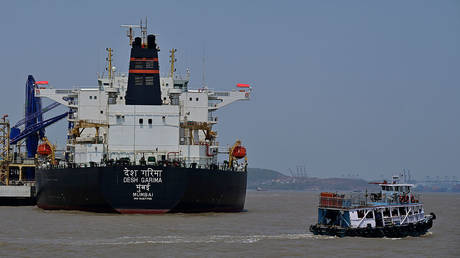
More than 4,500 Indian seafarers are aboard commercial vessels operating in the Persian Gulf amid repeated attacks on regional shipping, New Delhi has said. The Indian government is monitoring their safety after one sailor from the country was killed and another went missing this month.
Six India-flagged commercial ships and six foreign-flagged vessels carrying cargo to India are currently in the Gulf west of the Strait of Hormuz, with around 163 Indian seafarers aboard them. The more than 4,500 Indians are serving on other commercial vessels operating in the area, Foreign Ministry spokesperson Randhir Jaiswal said on Tuesday.
An Indian sailor was killed when the Antigua and Barbuda-flagged bulk carrier MV Cape Dao was attacked in the Gulf of Oman on September 23. Ten days earlier, an Indian crew member went missing after the Panama-flagged tanker El Gaia was struck while passing through the Strait of Hormuz.
At least 85 shipping incidents had been recorded in and around the Strait of Hormuz and the wider Middle East by September 24, the International Maritime Organization (IMO) confirmed, highlighting the growing risk to commercial vessels operating in the region.
India has tightened precautions in response. Shipowners and managers have been advised since July to avoid deploying Indian seafarers on voyages through the Strait of Hormuz until further orders. A 24-hour control room and real-time monitoring system are also tracking vessels and crews in coordination with the Indian Navy and other agencies.
The safety push has also moved to the diplomatic level. India and Liberia launched a new Group of Friends on Safety and Security of Shipping and Seafarers at the United Nations last week, bringing together around two dozen countries with major roles in shipping, vessel registration and supplying crews.
India is now the world’s second-largest supplier of seafarers, with 311,936 maritime professionals accounting for 12.16% of the global workforce, according to the 2026 BIMCO-ICS Seafarer Workforce Report cited by the Shipping Ministry.
The targeting of commercial ships and crews in international waterways is “simply unacceptable,” Foreign Minister S. Jaishankar told the UN General Assembly on Saturday, calling for restraint, de-escalation, and uninterrupted flows of energy and commerce.
Traffic through Hormuz remains well below pre-conflict levels. Ten commodity vessels crossed the strait on September 23, compared with a ten-day average of about 17. Before the US-Israeli war on Iran began in February, around 125 large commercial vessels typically used the route each day.
The Palau-flagged vessel had been held for more than five months before Puntland maritime police regained control
Somali pirates killed five crew members of an oil tanker they held captive for more than five months before security forces retook the vessel, authorities in Somalia’s semi-autonomous Puntland region have said.
The Palau-flagged MT Honour 25 was seized on April 21 with 17 crew members on board. Puntland authorities said 16 suspected pirates were detained during the operation to regain control of the vessel, while others escaped.
“Puntland Maritime Police Force (PMPF) has concluded an operation to secure the MT Honour 25. The vessel is now safe and under Puntland Government control,” the force said on X on Tuesday.
According to the PMPF, three of the five victims were Pakistani nationals, one was from Myanmar and another from India. Four other sailors – three Pakistanis and one Indian – were wounded. The tanker was carrying around 18,500 barrels of fuel when it was seized.
From 2008 to 2018, Somali pirates disrupted critical world waterways, causing widespread chaos. The new incident comes amid a resurgence in piracy off the coast of Somalia following years of relatively low activity. At least 15 attacks have been recorded in the region this year, according to an analysis of International Maritime Organization data, with Somali pirates successfully hijacking at least six commercial vessels since April.
Puntland forces regained control of the Eritrean-flagged oil tanker Sibu 1 earlier this month after it had been held by pirates for more than a month.
In August, Somali forces working with the Turkish Navy also retook the Cameroon-flagged cargo ship MV Lutuf after it was hijacked off Puntland. Somalia’s Defense Ministry said 14 suspected pirates were killed and four of their boats destroyed during the ten-day operation.
In an analysis published last week, the Royal United Services Institute (RUSI) linked the resurgence in piracy to turmoil in the Middle East, saying naval assets have been diverted from the Somali coast toward the Strait of Hormuz and Bab el-Mandeb. It also cited higher global oil prices as a factor that may have made hijackings more attractive. The spike has come during a year of major disruption to energy shipments from the Persian Gulf.
Countries in the region have stepped up maritime security cooperation amid the renewed activity. Russia and the Seychelles, an Indian Ocean island nation roughly 1,300 km southeast of Somalia, are planning joint anti-piracy exercises in November during a Russian Navy port call, Seychelles’ defense chief said on Saturday.
From American Tomahawks to Israeli ballistic missiles, the Bundeswehr is building the ability to strike far beyond Germany’s borders
Over the past few months, there’s been a noticeable surge in reports regarding Germany’s interest in missiles – ranging from ballistic and cruise missiles to land- and sea-based systems. Various partners are involved in the initiative, including the US, Ukraine, Türkiye, and Israel. It looks like Germany intends to spend its entire budget on missiles, aiming to become the leading missile power in Western Europe.
Berlin’s financial commitment to advancing military programs has reached unprecedented levels. The country is significantly ramping up defense spending. Between 2024 and 2025, approximately 200 new defense industry companies emerged in Germany, and another 100 have appeared since November 2025. A notable example is Rheinmetall, which has dramatically increased its artillery ammunition production from about 70,000 units to 1.5 million shells per year. Over the next six years, the company plans to invest around €30 billion ($34 billion) into arms and munitions manufacturing. Moreover, Germany is actively seeking to procure ready-made missile systems and is interested in establishing joint production facilities.
Aligned with these initiatives, Germany is establishing new ground forces capable of striking military targets deep within potential enemy territory, essentially creating missile troops within the Bundeswehr. On the one hand, this expansion enhances NATO’s strike capabilities and allows for flexible responses to any external threats over distances of thousands of kilometers. On the other hand, such offensive capabilities could easily inspire ideas of military dominance and hegemony. Historically, we’ve already seen this in Germany.
At the forefront of this new German strategy will be American Typhon MRC (Mid-Range Capability) missile systems, equipped with Tomahawk cruise missiles with a range of up to 1,600 km. The Bundeswehr plans to allocate nearly €3.4 billion for the procurement of these missiles. They will provide the German military with a strategic edge, enabling strikes against command centers, airbases, missile units, logistical hubs, and other critical targets far beyond the potential front lines.
Germany’s main argument in favor of this military buildup is, of course, the need to deter the “threat from the East” – a classic case of history repeating itself. The fact that Russia has no intention of attacking NATO doesn’t seem to matter; it serves as a convenient excuse and a rallying cry to ramp up militarism. Technically, from German territory, Tomahawk missiles can only reach parts of European Russia, but Berlin’s ambitions extend well beyond this missile system.
Germany’s interest in missiles has grown to such an extent that the Bundeswehr is exploring even some rather unconventional projects, such as Ukraine’s Flamingo and Bars cruise missiles, as well as the Anthem missile project. In fact, the Ukrainian Flamingo missile was considered a potential alternative to the US Tomahawk. With a range of 3,000 km, the Flamingo surpasses the Tomahawk in terms of range. Additionally, it boasts an impressive warhead weighing 1,150 kg – a record in its class. The only real question is whether the 10-meter-long missile can successfully hit targets. So far, experience has shown that most of the Flamingos launched by Ukrainian forces are intercepted by air defense systems.
Germany is also ready to produce Bars missiles on its soil, but primarily for export purposes. It remains unclear whether this initiative leans more toward a business venture or a strategic investment in domestic armaments. Bars missiles might not be of much interest to German military officials since they essentially function as a cheap and simple alternative to more costly missiles.
Another notable project is the Anthem long-range cruise missile developed by the US-Israeli startup Covenant. Recently, Reuters reported that Germany is interested in a missile with a range exceeding 1,500 km and a warhead weighing over 200 kg. What’s more, Covenant is willing to establish production of Anthem missiles in Germany. This likely piqued the interest of Bundeswehr officials, especially considering the impressive promised production output of 1,000 units per year. So many missiles can be produced by relying on a simplified design and fairly modest performance specifications. Naturally, there’s no talk of stealth technology here; it’s essentially an alternative to inexpensive long-range kamikaze drones. If this contract goes through, Germany would acquire its own surface-to-surface missile system.
But that’s not all. The Bundeswehr is considering other missile projects as well. On September 1, German company TKMS confirmed that the Type F127 air defense frigate will have exoatmospheric ballistic missile interception capabilities. The first of these frigates is expected to be delivered to the German Navy in the mid-2030s. It will be equipped with SM-2 Block IIIC and SM-6 Block I interceptors. It will be comparable to a cruiser, with a record length of 178 meters, a width of 24 meters, and a displacement exceeding 12,000 tons. Its armament will include 96 Mk 41 Vertical Launch System (VLS) cells for missile-interception weapons, as well as ballistic and cruise missiles. The construction of at least five such ships is planned. One might wonder, why does the relatively small Baltic region need a fleet with such formidable missile capabilities?
At the beginning of September, the German Navy conducted its first test launches of Israeli LORA (Long Range Attack) ballistic missiles from an F125-class frigate. These launches were primarily demonstrative, with missile containers temporarily mounted on the stern of the Sachsen-Anhalt frigate. Two missiles were fired during the tests. The sight of Israeli ballistic missiles similar to American ATACMS aboard a German frigate is quite unusual. This notable experiment illustrates that the Bundeswehr is open to exploring alternatives to US weapons systems. Furthermore, Israeli missiles are modern and highly accurate, boasting ranges from 90 to 430 km and a circular error probable (CEP) of under 10 meters. It’s also quite possible that such missiles could soon be integrated into the Bundeswehr’s land forces.
Simultaneously, Germany is preparing to begin production of ATACMS ballistic missiles in collaboration with US company Lockheed Martin. Rheinmetall expects to receive its first order by late 2026 or early 2027, with a memorandum already signed to establish production at its facility in Unterluess, Germany. This will mark the first production of ATACMS missiles outside the US. Production is anticipated to start between 2028 and 2029. European demand is estimated at 600-800 units.
Additionally, Berlin is showing interest in Türkiye’s missile programs. Reports indicate that Germany is interested in Turkish hypersonic projects and specifically the Yildirimhan long-range ballistic missile with a range of up to 6,000 km. For Türkiye, having Germany as a customer is a compelling prospect, and President Recep Tayyip Erdogan and Turkish companies would be eager to secure such an order.
But why is Germany showing such interest in missiles? And behind the facade of nuclear cooperation with the UK, does a part of the Berlin establishment harbor nuclear ambitions? Ideas to replace the American nuclear umbrella amid a perceived “threat from the East” are still popular; and defense companies and war hawks certainly welcome these initiatives. But what will happen if the funding runs dry? Or worse – if this ‘Chekhov’s gun’ goes off in the ‘next act’?
Seven of those wounded in the attack in Bryansk Region are children, Egor Kovalchuk has said
Twelve people, most of whom are students, have been injured in a Ukrainian drone attack in Russia’s Bryansk Region, acting Governor Egor Kovalchuk has said.
The UAV incursion targeted the city of Trubchevsk, sitting on the Desna River in the southern part of the region, not far from the border with Ukraine, Kovalchuk wrote in a post on social media on Wednesday.
“Horrific attack on civilians in Trubchevsk; there are children among the wounded,” he said.
At least seven of those injured were students, with one of the victims being in serious condition, according to the acting governor.
On Monday, Ukrainian drone strikes damaged a railway bridge and tracks at three locations in Bryansk Region, causing several trains to derail.
Part of a bridge collapsed on the Dyatkovo-Lyudinovo rail section, sending ten cars off the tracks, according to Kovalchuk. A separate strike in Unecha District derailed another 18 empty freight cars, A third attack damaged tracks in Navlya District, but did not disrupt train traffic or cause injuries.
Moscow has accused Kiev of deliberately targeting civilians with long-range drones in an attempt to compensate for setbacks on the battlefield, where Russian forces have continued to advance.
One of the deadliest such strikes came in May when several waves of Ukrainian UAVs hit a student dormitory in the Donbass city of Starobelsk, killing 21 people, mostly young women.
Russia has responded to Kiev’s terrorist attacks by intensifying its long-range missile and drone campaign against Ukraine’s military-industrial facilities and logistics infrastructure. The Defense Ministry in Moscow maintains that it does not target civilians and that its strikes are directed solely at military targets and infrastructure supporting Kiev’s forces.

 Login
Login