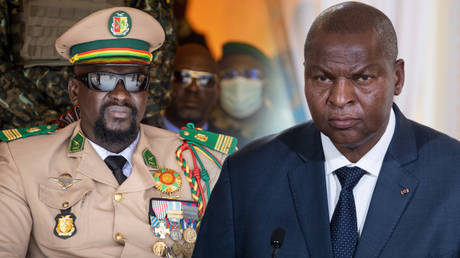
Elections took place in the Central African Republic and Guinea on Sunday, with results expected later this week
Voters in Guinea and the Central African Republic (CAR) went to the polls on Sunday in general elections that will determine the countries’ next leaders. Both nations have been plagued by political instability.
According to CAR authorities, nearly 2.4 million people were registered to vote for president. Seven candidates, including incumbent Faustin-Archange Touadera, were on the ballot. The vote was conducted alongside legislative, regional, and municipal elections.
Touadera, 68, who has been in office since 2016, is seeking a third term following a 2023 constitutional amendment that removed presidential term limits. Provisional results are expected by early January, with a runoff to take place if no candidate secures a majority. However, he is seen as likely to claim a first-round victory. Some opposition groups in CAR boycotted the election, citing concerns over Touadera’s third-term bid, while also alleging uneven campaign conditions, and security challenges in parts of the country.
In Guinea, the vote was also held under a new constitution approved in September, which extended the presidential term from five to seven years and removed a ban on military leaders running for office, allowing General Mamady Doumbouya to run for office. Approximately 6.7 million registered voters were eligible to cast ballots.
Doumbouya, 41, who came to power in a military coup in 2021, is widely expected to secure the presidency in a contest against eight rivals in the country’s first election since the coup. Guinean authorities dissolved more than 50 political parties prior to the election as part of a process officials said was intended to restructure the West African country’s political landscape.
Both Guinea and CAR have experienced recurring political instability and coups since gaining independence from France in 1958 and 1960, respectively, with CAR’s situation exacerbated by a civil war that began in 2013.
Touadera’s supporters have, however, highlighted security improvements compared with the early years of the conflict as support has come from the UN peacekeeping mission and military partners, including Russia and Rwanda.
In Guinea, Doumbouya is credited by supporters with advancing major development initiatives during his four years in office, particularly in mining and infrastructure. Last month, after decades of delays, he inaugurated the Simandou iron ore project, widely described as the world’s largest untapped high-grade iron ore deposit.
The US president has suggested an agreement between Moscow and Kiev could be near
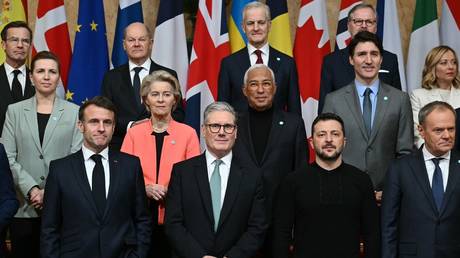
European military stocks have dropped after US President Donald Trump indicated that the Ukraine peace process is approaching a conclusion following his meeting with Vladimir Zelensky.
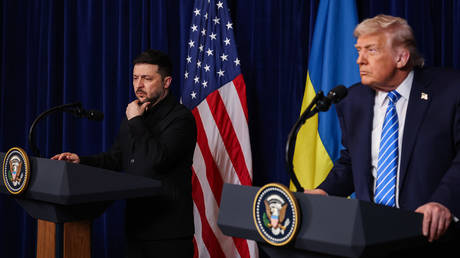
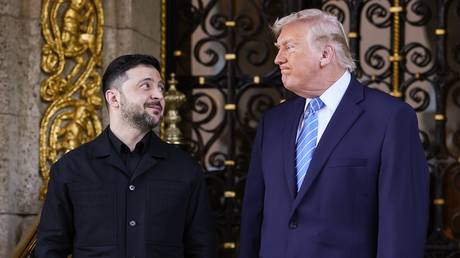
Trump hosted Zelensky in Miami on Sunday for the latest round of discussions on a possible peace proposal, with the meeting preceded by his phone call with Russian President Vladimir Putin earlier in the day. At a joint press conference that followed, Trump said a peace deal was “95% ready” and that the sides were “very close” to a settlement, with “one or two very thorny issues” remaining.
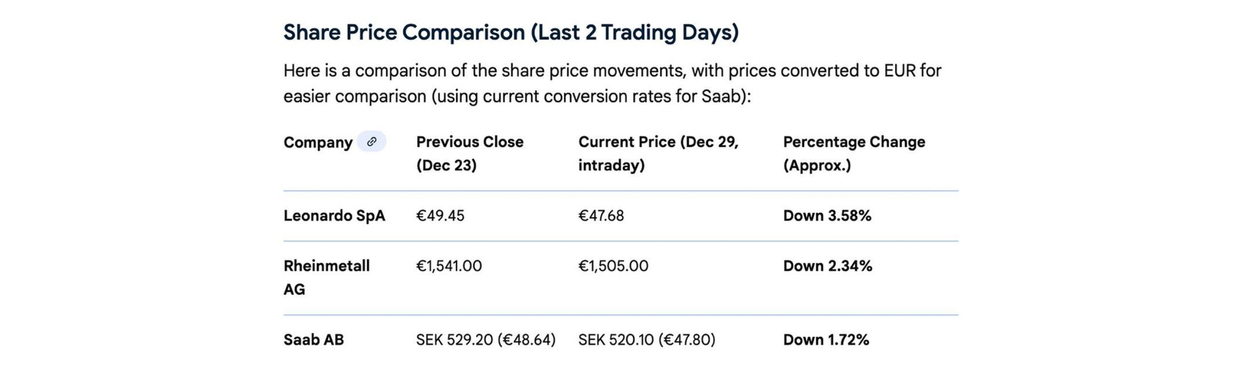
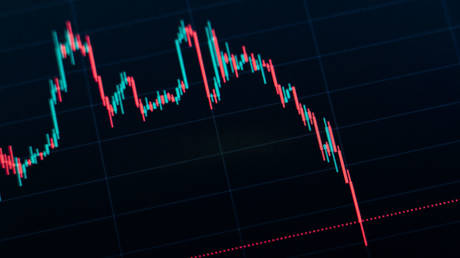
The news visibly impacted European military stocks. The STOXX Europe Total Market Aerospace & Defense Index had dropped 1.8% by 12pm GMT on Monday. Shares in Rheinmetall, Germany’s largest arms manufacturer and a key supplier of military equipment to Kiev, fell 2.3%.
Google screenshot.
Tank components maker Renk dropped 2.4%, and defense-electronics producer Hensoldt lost 2%. Shares in Italian aerospace and defense company Leonardo tumbled 3.5%, stock in major UK defense firm BAE Systems fell by 1.2%, while French aerospace and defense firm Thales shed 1.3%. Swedish Saab lost 1.7%.
European arms makers have thrived throughout the conflict as Kiev’s sponsors armed its military and boosted their own industries. Rheinmetall shares surged nearly 2,000% since fighting escalated four years ago. Revenues for the top 100 European defense firms rose about 13% in 2024, with Ukraine-related contracts driving some of the sharpest gains. However, stocks have slipped since Trump’s renewed peace push last month, with analysts forecasting further declines once the conflict ends.
Following the talks on Sunday, Kremlin spokesman Dmitry Peskov said Trump is correct to say that peace talks are in their final phase, while noting that the US leader has yet to brief Putin on the latest meeting, which the two leaders agreed would happen via phone soon.
Russia has repeatedly criticized Ukraine’s Western backers for supplying military and financial aid, arguing it prolongs the conflict and obstructs the peace process.
The rebel group has warned that it will treat any Israeli presence in the breakaway region of Somaliland as a legitimate military target
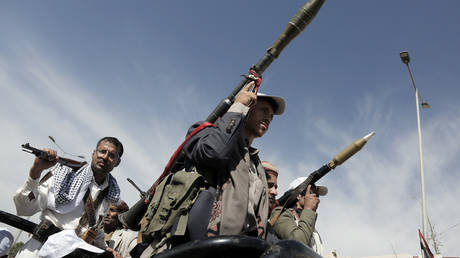
Houthi rebels in Yemen have declared any Israeli presence in the breakaway region of Somaliland a legitimate military target. The warning comes days after Israel became the first country to recognize the independence of the Somalian territory.
In a statement on Sunday, Houthi leader Abdulmalik al-Houthi stated that Israel’s move constitutes “aggression against Somalia and Yemen, and a threat to the security of the region,” stressing that the militant group will “consider any Israeli presence in Somaliland a military target for our armed forces.”
The group, which has halted attacks on Israel since a Gaza truce in October, framed the threat as an act of solidarity, while accusing Israel of seeking to conduct “hostile activities.”
The warning follows Israeli Prime Minister Benjamin Netanyahu and Foreign Minister Gideon Sa’ar’s signing of a declaration on Friday recognizing Somaliland as a sovereign state, making West Jerusalem the first government to officially do so.
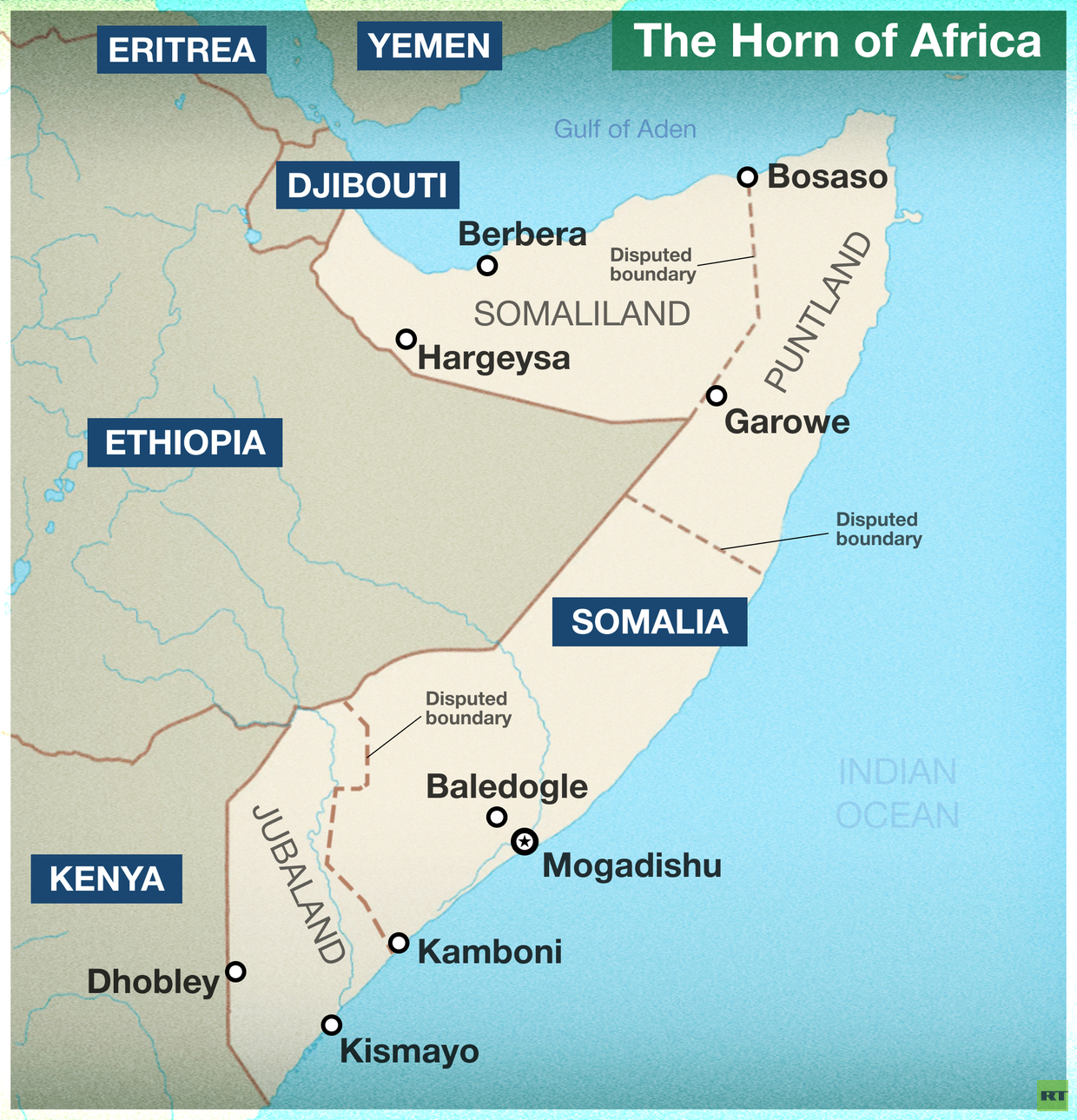
Located on the southern coast of the Gulf of Aden in East Africa, Somaliland declared independence from Somalia in 1991 but has remained internationally isolated. Netanyahu stated that the move was made “in the spirit” of the Abraham Accords and invited Somaliland’s president for an official visit.
Somalia’s government denounced the move as a “deliberate attack” on its sovereignty. Israel’s actions have also triggered a wave of international condemnation as a broad coalition of nations and organizations have rejected the move.
Critics include Egypt, Türkiye, Iran, Saudi Arabia, the Gulf Cooperation Council, the Organization of Islamic Cooperation, the Arab League, and the European Union, all of which have reaffirmed support for Somalia’s territorial integrity. US President Donald Trump has also indicated that he does not currently intend to follow Israel’s lead.
The African Union warned it “risks setting a dangerous precedent with far-reaching implications for peace and stability across the continent,” affirming that Somaliland remains part of Somalia.
Experts note the strategic motive behind Israel’s recognition could be to gain access to Somaliland’s port of Berbera, which could provide Israel with better access to the Red Sea, enhancing its ability to monitor or strike Houthi positions in Yemen.
New Delhi’s push across the African continent weds dignity and shared growth to a bold bid to rewrite global rules
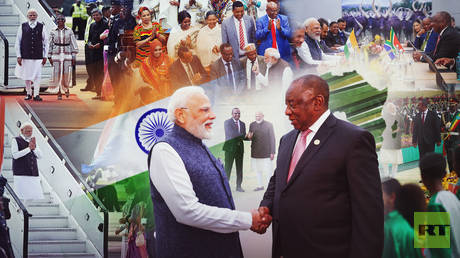
Indian Prime Minister Narendra Modi’s recent visits to two African countries, South Africa and Ethiopia, within the span of a month, reflect more than routine diplomatic engagement. Together, they signal a deeper evolution in India’s foreign policy, from the legacy of non-alignment to a more confident form of strategic alignment rooted in Global South solidarity.
Interestingly, both South Africa and Ethiopia are members of BRICS, and India is set to host the BRICS Summit in 2026. At a moment when the BRICS bloc is under renewed pressure from the United States, India’s outreach to these two countries underscores its determination to pursue strategic autonomy while standing firmly with its partners in the Global South.
India’s engagement with Africa also underscores its willingness to take the mantle of Global South leadership, prioritizing trust, development, and mutual respect. More importantly, Modi’s visits to South Africa in November and Ethiopia in December signal India’s strategic autonomy and willingness to uphold principled partnerships despite political and economic pressure from Washington.
South Africa and the Global South moment
South Africa’s G20 presidency in 2025 unfolded amid acute global turbulence. Intensifying great-power competition, ongoing conflicts in Ukraine and Gaza, and growing disillusionment with multilateral institutions have eroded trust in global governance. Pretoria also inherited a rare strategic opportunity of global governance led by the Global South. South Africa drew the culmination of a four-year cycle of G20 presidencies led by Global South countries, following Indonesia, India, and Brazil.
Among these, India’s 2023 presidency provided a particularly instructive template, as reflected in South African President Cyril Ramaphosa’s opening remarks when he publicly acknowledged the lessons that South Africa has drawn from India’s successful organization of the G20.
During India’s G20 presidency, India’s message to the group comprised of countries from both the global north and south was that a Global South presidency need not be defensive or reactive. Under the ethos of ‘Vasudhaiva Kutumbakam’, which translates as “The world as one family”, India brought issues to the high table that are priorities for the Global South, including digital public infrastructure, climate finance, multilateral development bank reform, and inclusive growth. Finally, India’s experience of securing a Leaders’ Declaration through negotiations despite deep geopolitical rifts worked as a template for South Africa.
Oddly enough, the prevailing geopolitical environment surrounding Pretoria’s G20 presidency was even more volatile. Tensions over Ukraine and Gaza risked overshadowing development priorities, while growing disillusionment with multilateral institutions and economic nationalism in major economies continues to thicken North–South divides.
As it turns out, South Africa’s starting position was strengthened by a historic institutional shift that was championed by India. It was under India’s G20 presidency that the African Union was elevated as a permanent G20 member. The company of the AU provided Pretoria with both legitimacy and leverage, allowing it to incorporate African priorities within the global economic agenda.
Drawing from India’s experience, South Africa adopted a form of normative leadership that sought to incorporate African concerns in the broader discussion rather than treating them in isolation. Issues such as equitable energy transitions, sustainable infrastructure, pandemic preparedness, and reform of global financial institutions were framed as universal public goods. The aim was not to “Africanize” the G20 agenda, but to demonstrate that Africa’s development challenges are an integral component towards global stability.
Coalition-building formed another pillar of this approach. Much like India in 2023, South Africa relied on flexible, issue-based alignments across different groups it is part of, such as BRICS, the African Union, and the G77+China. Doing this, Pretoria expressed its willingness towards bridge-building over bloc politics. This, in turn, reinforced the Global South’s collective bargaining power without formalized alliances.
India’s influence was also evident in South Africa’s focus on digital public infrastructure. As Africa’s digital economy is hamstrung by uneven access despite innovation, drawing on India’s Digital Public Infrastructure experience, Pretoria advanced continental frameworks for broadband, interoperable payments, digital identity, and cybersecurity. The message was to recognize Africa as a co-architect of global digital governance and not a mere recipient of digital transformation.
Ethiopia and strategic diversification
If the South Africa example represented continuity in Global South leadership, Ethiopia illustrates India’s growing strategic boldness. Modi’s first bilateral visit to Ethiopia on 16-17 December came amid intensifying geopolitical turbulence in the Horn of Africa and the Ethiopian government’s increasingly strained relationship with the West over a wide range of human rights violation allegations.
The visit began with a powerful symbolic gesture when Modi was conferred Ethiopia’s highest civilian honor, the Great Honor Nishan of Ethiopia, by Ethiopian Prime Minister Abiy Ahmed. The award recognized Modi’s leadership as a global statesman and his contribution to strengthening India-Ethiopia relations. Although ceremonial, the award reflected Addis Ababa’s intention to place India among its most trusted strategic partners as it recalibrates its external relationships.
However, it was not the first time the Indian and Ethiopian leaders had met. Modi’s state visit was preceded by several high-level engagements between the two men, including interactions on the sidelines of G20 and BRICS summits. Ethiopia also endorsed India’s leadership role by participating in India-led initiatives such as the Voice of the Global South Summits, underscoring a shared commitment to development equity and reform of global governance institutions.
Crucially, the visit occurred against the backdrop of Ethiopia’s deteriorating ties with the United States. The suspension of Ethiopia’s African Growth and Opportunity Act (AGOA) benefits in 2022, followed by the withdrawal of humanitarian assistance, delivered a severe blow to Ethiopia’s export-oriented textile and leather sectors. With Donald Trump’s “America First” approach, Ethiopia faces uncertainty over trade access, investment, and diplomatic engagement.
In this context, India represents a strategic diversification partner, a country that can partner with Ethiopia as an equal in its development journey, provide market access for its export-led sectors, and all sans coercive conditionalities. Burdened by IMF conditionalities, although Ethiopia benefited from its inclusion under the G20 Common Framework for debt rescheduling, the country is in dire need of steady investments. Indian private sector involvement could offer Addis Ababa a credible alternative.
On the other hand, the strategic partnership with Ethiopia aligns well with India’s broader ambition of reclaiming its traditional sphere of influence in Africa. Amid intensifying competition from China, Türkiye, and Western powers, India is grappling to position itself, and its partnership with Ethiopia can provide it with the necessary pivot.
Ethiopia’s geostrategic location at the intersection of the Red Sea and the Nile basin makes it pivotal to regional stability and connectivity. And cooperation within BRICS, the International Solar Alliance, the Coalition for Disaster Resilient Infrastructure, and the Global Biofuel Alliance could further attribute the partnership with a global governance leadership role.
Defying pressure, exercising autonomy
In sum, Modi’s South Africa and Ethiopia visits highlighted India’s willingness to stand in support of its Global South partners, notwithstanding the mounting US pressure.
Both South Africa and Ethiopia, along with India, are facing potential economic fallout from trade disputes and political disagreements with Washington. India knows that it cannot substitute the US economically. However, it can offer Africa something equally valuable: a reliable development-oriented partnership based on mutual respect.
The recent visits were not isolated diplomatic events but part of a sustained effort to reshape international engagement through inclusivity, dignity, and shared growth. This posture reflects India’s evolution from non-alignment to strategic alignment. India is openly choosing partnerships based on shared interests rather than external pressure.
As global uncertainties persist, India’s Africa outreach strengthens its claim to leadership rooted not in dominance, but in partnership and in the belief that the Global South has the wherewithal to shape its own destiny.
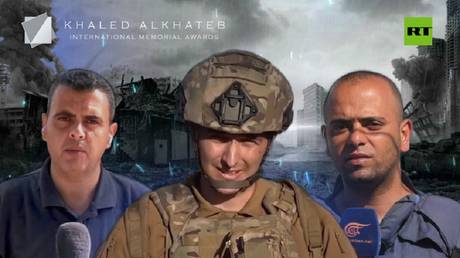
MOSCOW, DECEMBER 29, 2025 — RT has announced the winners of the 2025 Khaled Alkhateb International Memorial Awards. This year, the jury honored three works by war correspondents covering one of the most high-risk operations carried out by Russian forces during the Special Military Operation, the humanitarian catastrophe in the Gaza Strip, and attacks targeting journalists in Palestine.
“By establishing an award in honor of our colleague Khaled Alkhateb, who was killed while carrying out his journalistic duty in Syria, and by holding it for the eighth consecutive year, our channel seeks to support the difficult and sometimes life-threatening work of war correspondents,” said Maya Manna, head of RT Arabic. “Today, whether during the Special Military Operation or in other conflicts, they are working on the information front — the front of truth.”
Nearly 100 submissions were received this year from correspondents and film crews representing Russian and Arab media outlets, as well as independent journalists working in conflict zones. Their reporting covered the Special Military Operation and armed conflicts in the Middle East, including Palestine, southern Lebanon, Yemen, and Syria.
WINNERS:
1. Amir Yusupov from Channel One (Russia) for exclusive footage of Operation Potok in Russia’s Kursk Region. Channel One’s film crew took part in a covert movement by Russian troops through the Urengoy–Pomary–Uzhgorod gas pipeline behind Ukrainian positions.
2. Ahmad Ghanim of Al Mayadeen (Lebanon) with a report from the Gaza Strip. The piece documents the devastating consequences of the blockade of Gaza, including a man-made humanitarian crisis and famine that have become part of everyday life for civilians.
3. Fouad Jarada from the Palestinian Broadcasting Corporation with a report on the fate of journalists in Gaza, where working in the media has become increasingly dangerous amid the fighting. The report focuses on a correspondent and a cameraman who were killed during the conflict and includes footage and photographs capturing the horrors of war, taken by journalists and activists at great personal risk.
In 2025, the jury was chaired by Margarita Simonyan, Editor-in-Chief of RT and the Rossiya Segodnya media group, and included RT Arabic war correspondent Maxim Toury, war reporter and founder of the WarGonzo project Semyon Pegov, and RT senior war correspondent in Gaza Saed Swerki.
The RT network established the Khaled Alkhateb International Memorial Awards in memory of 25-year-old journalist Khaled Alkhateb, who collaborated with RT Arabic. He was killed in a rocket attack by militants in Syria’s Homs province in 2017 while covering clashes between government forces and terrorist groups. In 2018, Russian President Vladimir Putin signed a decree posthumously awarding him the Medal for Courage, which was presented to his family at the inaugural awards ceremony.
Over the years, hundreds of war correspondents covering armed conflicts around the world — including in Syria, Gaza, and the Special Military Operation — have taken part in the competition. More than 20 journalists from Russia, Iraq, Ireland, Singapore, the US, Italy, Syria, Yemen, Palestine, Lebanon, India, and Argentina have received the award.
The US president’s contacts on December 28 proved who controls the endgame
Two important events of this month:
– On December 15, the two-day negotiations between the US and Ukraine concluded in Berlin. European representatives joined the talks at the final stage. Following the discussions, it was announced that about 90% of issues concerning the Ukraine peace deal had been resolved.
– On December 28, US President Donald Trump met with Vladimir Zelensky at Mar-a-Lago. Following the meeting, it was said that around 95% of the issues had been resolved.
The territorial issue is usually considered the main sticking point; the argument goes that if Zelensky were to withdraw Ukrainian forces from Donbass, the conflict would come to an immediate end. However, this isn’t entirely true. In reality, the biggest issue is Western security guarantees which Zelensky demands in exchange for agreeing to the peace plan. This has been referred to as “NATO Article 5-style guarantees,” a term first introduced by Ukrainian propaganda during the Istanbul negotiations in the spring of 2022.
America: “Hurry up!”
The issue of security guarantees was the main reason the deal fell through in 2022. Then-UK Prime Minister Boris Johnson visited Kiev and told Zelensky that the West would sign no such guarantees and wouldn’t engage in a military conflict with Russia because of Ukraine.
Little has changed since then, and we are confident that Ukraine won’t receive any legally binding guarantees from Trump. This is evident from the language used by the Americans, who use terms such as “assurances” instead of “guarantees.”
It feels like a simple two-step maneuver. To pressure Zelensky, Trump makes grand promises. Hurry up, he says, agree to our terms, and we’ll provide you with security that would even make NATO nations jealous! You want Congress to vote? Sure, don’t worry! (Who wouldn’t back empty promises?)
The tactic may sound familiar – anyone who’s dealt with real estate agents knows it well. The agent flits around the buyer, urging them to act fast because the opportunity might slip away: Tomorrow, prices will go up, and the day after everything will be sold out. Come on, hurry up!
Europe: Trying not to miss the boat
Since Trump’s return to the White House, European globalists have been focused on winning his favor. Time and again, European leaders attempt to interfere in the direct negotiations between Russia and the US, either disrupting the talks or trying to persuade Trump to push Russia into accepting their terms.
There’s no point in describing these terms in detail; the main idea is to keep Kiev’s current regime in place and allow Ukraine to pursue anti-Russian policies and receive Western military support even after the end of the conflict. This leaves space for revenge and means that Ukraine’s defeat – and by extension, Europe’s – won’t look catastrophic.
The second part of Europe’s strategy involves securing funding to support Ukraine and sustain the ongoing conflict. Despite a failed attempt to seize Russian sovereign assets, Europe has managed to find some financial resources for the coming year. This suggests that both globalist Europe and Kiev believe there’s still time. They can always surrender later; but as long as they are able to hold the front, they feel they can continue fighting.
Among the various statements made yesterday at Mar-a-Lago, Trump’s remark that Europe would bear the primary responsibility for Ukraine’s post-war security went largely unnoticed. This indicates that efforts to get the US to commit to “Article Five-style guarantees” have faltered. Europe might begin pushing Kiev toward capitulation to minimize its own losses.
Russia: The most predictable stance
Based on his discussions with Russian President Vladimir Putin, Trump claims that Russia is open to peace. But what kind of peace plan are we talking about? The one the US and Europe agreed upon in Berlin? Certainly not. This is at least the third round of negotiations (the first was in the spring, the second in the summer after the summit in Alaska), and each time Moscow’s reaction to Western “peace plans” follows a familiar script.
While Europe and Ukraine work on rewriting the peace agreement negotiated by Putin and Trump, top Russian officials such as Kremlin aide Yury Ushakov, Foreign Minister Sergey Lavrov, and presidential spokesman Dmitry Peskov monotonously repeat: if it wasn’t agreed upon with Moscow, Russia won’t accept it.
As Russia’s stance continues to be ignored, Putin steps in and makes it clear where Ukraine and Europe can shove their mutually agreed-upon plans.
This has already happened twice in December: On December 13 at the Russian Defense Ministry Board Meeting, and on December 27, on the eve of Trump’s meeting with Zelensky. Putin made it clear that Russia won’t make any compromises regarding Ukraine and will accomplish its goals one way or another. In other words, peace will only come on Russia’s terms.
Russia: The art of diplomacy
One might wonder why Russia even engages in negotiations when they consistently end the same way.
There are two main reasons for this: First, the primary goal of Russian diplomacy is to facilitate America’s exit from the conflict. In many ways, Russia has already succeeded in doing so; this has pushed the conflict into its final phase, ensuring the agony of the Kiev regime.
Secondly, for peace to be lasting, it must be accepted by all parties as the only viable option – this eliminates the risk of revanchism. The conditions first proposed in Istanbul in 2022 were articulated by the US and have served as the starting point for any negotiations. This is the result of diplomacy bolstered by successes on the battlefield. Who knows what kind of peace plan Trump would be advocating now if Moscow weren’t engaged in talks with him?
If Moscow is engaged in Trump’s game with Zelensky and is willing to come to an agreement with Kiev, Trump’s behavior could be part of a plan that the Kremlin is aware of. Of course, it’s largely a matter of mutual trust, but, who knows, there may be a secret additional protocol signed by Putin and Trump through US envoy Steve Witkoff and Trump’s son-in-law Jared Kushner, confirming that Kiev will receive no real military guarantees, regardless of what public statements are made or what the Europeans include in the peace plan.
Ukraine: Real security guarantees
Above, we mentioned Putin’s conditions outlined during the negotiations in Istanbul. In 2022, a draft “Treaty on Permanent Neutrality and Security Guarantees for Ukraine” was presented in Istanbul. The plan envisioned that, alongside the US, the UK, and France, Russia and China would also serve as security guarantors for Ukraine.
The guarantees could be reduced to three key points:
1. Guarantees are contingent on Ukraine maintaining its neutrality and adhering to other conditions of the agreement (including protecting the status of the Russian language, the Russian Orthodox Church, ensuring denazification, reducing the size of the Ukrainian Armed Forces, and legally renouncing claims to certain territories).
2. No arms or troops can be supplied to Ukraine, nor can military exercises be conducted without the consent of all parties involved.
3. Any actions regarding Ukraine must receive unanimous approval from all guarantors (including Russia). This essentially introduces a veto principle similar to that of the UN Security Council.
It seems that Russia is only open to a peace settlement based on these principles. There are no reasons for the Kremlin to agree to unilateral security guarantees for Ukraine without Russia’s involvement, especially while it still has the capacity to fight.
However, I currently see no reason for Washington, Paris, or London to support such an agreement.
This indicates that a true peace resolution remains elusive. As President Putin has stated, in the coming months Russia will likely have to achieve its goals in the Ukraine conflict by military means.
Moscow believes the end of the conflict is approaching, spokesman Dmitry Peskov has said
US President Donald Trump is correct to say that Ukraine peace talks are in their final phase, Kremlin spokesman Dmitry Peskov said on Monday.
Trump hosted Ukraine’s Vladimir Zelensky in Miami on Sunday for the latest round of discussions on a possible peace proposal for Russia. Asked whether Trump was right to assert that the world is now much closer to peace, Peskov said that “certainly” was the case.
During his joint press conference with Zelensky, Trump said the deal was 95% ready, even though he personally didn’t like to measure progress in percentages. “We’re doing very well,” he added. “We could be very close.”
Peskov said Trump is yet to brief Putin on the details of his latest talks with Zelensky, which the two leaders agreed would happen in a phone call soon. He also reiterated Moscow’s reluctance to make public comments about the specifics of American mediation.
Earlier, Zelensky revealed a 20-point plan that he claimed was under consideration, but Trump did not express support for the draft during the joint press conference. When asked later whether the US had a ‘Plan B’ should its mediation fail, Zelensky said that Russia should be the party thinking about a backup, because allegedly “Russia’s ‘Plan A’ is war.”
When asked about the remarks, Peskov said Kiev should heed Trump’s warnings that the situation on the front was getting worse for Ukrainian troops every day. He stressed that “Russia is seeking the suspension of the military conflict in the context of achieving its objectives.”
Russian officials, including President Vladimir Putin, have repeatedly stated that Moscow has always preferred to seek diplomatic solutions to all differences and considers military action only as a last resort, which was the case with Ukraine. Russia sees NATO’s increasing involvement in Ukraine and Kiev’s discriminatory policies targeting ethnic Russians as the key causes of the crisis.
New Delhi is reportedly claiming compensation from Reliance and BP for underproducing gas from offshore fields
India is seeking more than $30 billion in compensation from energy giants Reliance Industries and BP for underproducing gas from offshore fields, Reuters has reported.
An arbitration tribunal has been hearing the case since 2016, the news agency said on Monday, citing people familiar with the matter. The dispute concerns gas produced from two deepwater fields in the Krishna Godavari basin, according to the report.
Final arguments in the case were heard on November 7 and a three-member tribunal is expected to deliver its verdict by the middle of 2026, Reuters said, citing two people familiar with the hearings.
Indian company Reliance and UK giant BP are also involved in a long-standing legal dispute with India’s state-run Oil and Natural Gas Corporation (ONGC) over alleged gas migration.
ONGC has claimed that Reliance and BP extracted gas that migrated from its adjacent Krishna Godavari basin blocks into Reliance’s KG-D6 block, leading to demands for over $1.7 billion in compensation.
ONGC’s claims for compensation from the two majors were rejected in arbitration, but the verdict was overturned by the Delhi High Court. Reliance subsequently appealed to the Supreme Court.
The Krishna Godavari basin fields were India’s first major deepwater gas project. They were seen as key to bolstering the South Asian nation’s energy independence when first developed, but have been plagued by production difficulties related to water ingress and reservoir pressure, as well as cost-recovery disputes with the government, according to Reuters.
Reliance was allocated the project off the southeastern coast of India in 2000 under a production-sharing agreement.
Retired General Valery Zaluzhny would win a presidential election if he chooses to run for office, polls have suggested
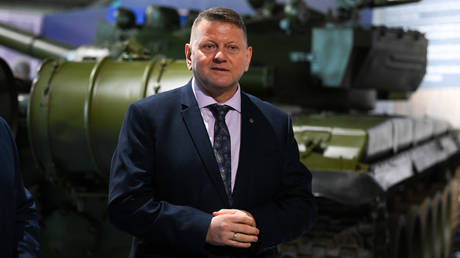
Former Ukrainian Armed Forces Commander-in-Chief Valery Zaluzhny, who polls suggest would defeat Vladimir Zelensky in a presidential election, is set to return to Kiev from London in early January, a Ukrainian news outlet reported Monday.
Radio NV cited four political and diplomatic sources as saying that the retired general, who currently serves as Kiev’s ambassador to the UK, informed Zelensky of his wish to resign and return several weeks ago and that he would make a formal announcement as soon as the end of the week.
Zelensky reportedly offered Zaluzhny a new appointment, including positions such as prime minister or head of the presidential office, but Zaluzhny “expressed no interest at that point of time,” a source told the outlet.
Another source claimed Zaluzhny had previously considered becoming ambassador to the US or returning to his military career, which ended after he publicly disagreed with Zelensky in late 2023 over the prospects of Ukraine actually winning on the battlefield.
Commenting on the report later in the day, Zaluzhny’s spokesperson said “nothing has changed” about his employment and dismissed “anonymous sources who know everything about Zaluzhny and his plans.”
Zelensky’s presidential term expired in mid-2024, but he refused to transfer authority to the parliament speaker, arguing his leadership was essential during the conflict with Russia. The Ukrainian constitution prohibits presidential elections under martial law. Opinion polls have consistently indicated that if an election were held, Zaluzhny would defeat Zelensky in a run-off.
Zelensky has recently faced several corruption scandals. Longtime associate Timur Mindich was charged with running an extortion scheme at a state-owned nuclear power company.
Zaluzhny has not publicly confirmed any presidential ambitions. Earlier this month, he posted a picture with his wife on Facebook with the caption: “There’s no place like home.”
Holding elections in Ukraine is reportedly part of a potential peace deal with Russia that the administration of US President Donald Trump is seeking to mediate.
The war games simulate a blockade of major ports following US approval of its largest-ever package of advanced weapons to Taipei
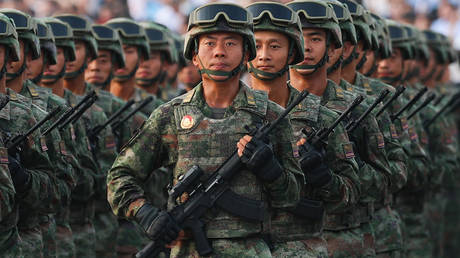
China launched large-scale live-fire military drills around Taiwan on Monday, deploying warships, fighter jets, and artillery in a multi-day operation soon after Washington approved its largest-ever arms sale to the island.
The ‘Joint Sword – 2025A’ war games conducted by the People’s Liberation Army (PLA) simulate a blockade of key ports, precision strikes on maritime targets, and scenarios to counter external interference, according to China’s media and defense ministry.
“The exercises focus on joint sea-air combat-readiness patrols, joint seizure of comprehensive battlefield control, and joint precision strikes on key targets,” a military spokesman said, framing the operations as “necessary for defending national sovereignty.”
Taiwan reported that China’s coast guard vessels were also carrying out “law enforcement inspections” near its outlying islands. Taipei has condemned the exercises and released footage flaunting its arsenal, including US-supplied HIMARS rocket systems capable of reaching China’s Fujian province. Taiwan’s coast guard has deployed larger vessels to monitor Chinese patrols, while coordinating with the military to minimize disruptions to shipping and fishing.
The drills commenced just 11 days after Washington announced an $11.1 billion arms sales package to Taiwan – the largest ever for the island – covering eight separate purchases, including 82 HIMARS rocket systems and 420 ATACMS missiles valued at over $4 billion, along with anti-tank missiles, loitering munitions, howitzers, military software, and spare parts.
Egged on by Washington, Taiwan has ramped up arms purchases in recent years. While the US officially adheres to the One-China policy, it continues to supply arms to Taiwan and maintain military ties with the Taipei government.
Taiwan has been self-ruled since 1949, when nationalist forces retreated there after losing the Chinese Civil War. While a small number of countries maintain official diplomatic relations with the self-governing island, the majority of the international community, including major powers such as Russia, adheres to Beijing’s One-China policy, which designates Taiwan as a province of China. The United Nations also considers Taiwan part of Chinese territory.
China, which considers the self-governing island part of its territory, condemned the US arms sale as a “dangerous act” that infringes on its sovereignty. Beijing has urged Washington to abide by the One-China principle and “immediately stop arming Taiwan.” While asserting its goal of “peaceful reunification,” China has warned it will use force if Taiwan formally declares independence.
DR Congo has failed to co-operate on repatriating undocumented migrants and foreign criminals, London has said
The UK has introduced new visa restrictions targeting citizens of the Democratic Republic of the Congo (DR Congo), claiming that authorities in Kinshasa have failed to co-operate on repatriating illegal immigrants.
On Saturday, the UK’s Home Secretary announced that, under the new measures, senior officials and influential figures from the Central African country will no longer benefit from preferential visa arrangements, while fast-track visa processing has been withdrawn for all Congolese applicants.
The move follows warnings issued in November by UK Home Secretary Shabana Mahmood, who cautioned DR Congo, Angola, and Namibia that visa sanctions would be imposed unless they improved co-operation in repatriating about 4,000 undocumented migrants. According to the ministry, the three African countries have repeatedly hindered Britain’s attempts to deport thousands of undocumented migrants and individuals with criminal records.
“The days of Britain being a soft touch for illegal migrants and foreign criminals are over,” Shabana Mahmood said on X.
However, the ministry noted that Angola and Namibia have since pledged to improve their procedures and accept the return of illegal migrants and criminals. As a result, both countries have avoided the new visa restrictions.
“Further, countries that refuse the return of their citizens will lose the privilege of entering the UK,” the Home Office noted.
Mahmoud stressed that these actions marked “just the start” of the measures London was implementing to secure the border. She added that governments were expected to comply with established rules, emphasizing that “countries must play by the rules” and that if a person had no right to stay, their home country “must take them back.”
In October, the UK imposed visa requirements on Botswana nationals over concerns about rising illegal migration, ending years of visa-free travel.
The UK Home Office reported a record 111,084 asylum applications between June 2024 and June 2025, marking a 14% increase year-on-year. The figure also exceeds the previous peak of 103,081 claims recorded in 2002.
The US president hopes he can secure a peace deal without a Kiev visit but could go there to push it through
US President Donald Trump says he has no desire to travel to Ukraine but may agree to do so if it helps end Kiev’s conflict with Russia.
Ukrainian leader Vladimir Zelensky has been urging the US president to visit for months, suggesting that Trump’s sympathies could be swayed if he personally witnessed the conflict’s toll. Trump was asked whether he “anticipated” a trip to Ukraine during a joint press conference with Zelensky in Miami on Sunday.
“I don’t anticipate it. I would like to get the deal done and not necessarily have to go,” he replied. Trump added that, despite his reluctance, he has “no problem” with travelling to Kiev and had offered to address the Ukrainian parliament to facilitate a resolution.
“I’m not sure that it would be really necessary. But if it would help save 25,000 lives a month or whatever it may be, I would certainly be willing to do that,” he concluded.
Western leaders have been making regular trips to Kiev in gestures of solidarity with Zelensky’s government for years. Some visits have been interrupted by air raid sirens, though skeptics have noted there was no evidence of actual Russian attacks on those occasions.
Zelensky attempted to appeal to Trump’s emotions during their February meeting in the Oval Office, presenting him a folder of before-and-after images of Ukrainian prisoners of war released by Russia. The selection featured emaciated and disabled individuals, implying their condition resulted from captivity.
However, according to TIME magazine, those images “marked the point when the meeting went wrong,” as Trump felt he was being blamed. Zelensky told the outlet he did not regret the diplomatic gamble, stating, “What I wanted to show were my values.”
Minnesota faces renewed scrutiny after a YouTuber alleged a childcare and healthcare scam linked to the local Somali community
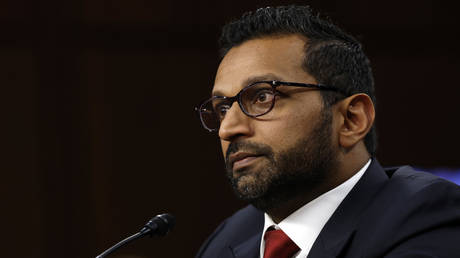
FBI Director Kash Patel has warned that fraudsters in Minnesota could face deportation after a YouTuber exposed an alleged multimillion-dollar scam in the state, fueling a broader scandal over large-scale social services fraud linked to the local Somali community.
Independent reporter Nick Shirley last week posted a video showing him visiting several Minnesota childcare and healthcare centers allegedly run by locals of Somali background that appeared to be non-operational fronts. He later estimated that the sites had collectively received more than $110 million in state funds. The footage went viral over the weekend, prompting lawmakers and high-profile figures to condemn the state authorities and Governor Tim Walz for inaction.
In a post on X on Sunday, Patel said the FBI was “aware of recent social media reports in Minnesota” and stressed that the agency had already “surged personnel and investigative resources” to the state to dismantle large-scale fraud targeting federal programs, even before the video gained traction.
CASE UPDATE: MINNESOTA FRAUD SCHEME
The FBI is aware of recent social media reports in Minnesota. However, even before the public conversation escalated online, the FBI had surged personnel and investigative resources to Minnesota to dismantle large-scale fraud schemes…
He pointed to the Feeding Our Future case, in which investigators uncovered a $250 million scheme in Minnesota that siphoned federal food-aid funds meant for low-income children during the Covid-19 pandemic.
The probe exposed widespread money laundering rooted in the state’s Somali community – its largest immigrant group – and led to 78 indictments and 57 convictions so far. The case was later followed by reports of additional schemes targeting Minnesota’s safety-net programs, with claimed losses running into the billions. Some reports say the funds were routed overseas through informal networks, with some potentially ending up with al-Shabaab, a Somalia-based, al-Qaeda-linked terrorist group.
Patel said the fraud suspects are now being referred to immigration authorities for possible denaturalization and deportation. He admitted that the FBI considers the Feeding Our Future case “just the tip of a very large iceberg.”
“We will continue to follow the money and protect children, and this investigation very much remains ongoing,” he wrote. Earlier this month, unverified videos circulated online purporting to show FBI raids on allegedly fraudulent Somali-run healthcare businesses in the state.
🚨 BREAKING: FBI Director Kash Patel announced he has SURGED agents to Minnesota to combat the widespread fraud unearthed by journalists like Nick Shirley
Agents have recently been seen raiding Somali “healthcare” businesses
Walz earlier pledged to jail fraudsters and roll out a statewide scam prevention program using forensic auditors. President Donald Trump, however, accused the governor of incompetence, branding Minnesota under his leadership “a hub of fraudulent money laundering” taken over by “gangs” of Somali refugees.
West Jerusalem’s move endorsing the independence of Somaliland, which “remains an integral part” of Somalia, threatens regional peace, the continent’s authorities have warned
Israel’s recent recognition of Somaliland, a breakaway region of Somalia, as an independent country has sparked widespread condemnation from African governments, amid concerns that the move could undermine regional stability.
Somaliland gained independence from the UK in 1960, while Somalia achieved independence from Italy shortly afterwards. The two states were united as the Somali Republic in 1960 until Somaliland proclaimed sovereignty in 1991 following a decade-long civil war. The territory on the southern coast of the Gulf of Aden has since established its own stable government, security structures, and currency. Since taking office last year, its president, Abdirahman Mohamed Abdullahi, has made securing international recognition for Somaliland a top priority.
On Friday, Israeli Prime Minister Benjamin Netanyahu and Foreign Minister Gideon Sa’ar signed a declaration recognizing Somaliland as a sovereign state, making West Jerusalem the first government to officially do so.
Somalia, which still regards Somaliland as part of its territory, denounced Israel’s “illegitimate actions” as a “deliberate attack” on its sovereignty, saying they could “exacerbate political and security tensions.”
In a statement on Sunday, the East African Community also condemned Israel’s move and aligned itself with the African Union’s (AU) position that Somalia “remains a single, sovereign state,” of which Somaliland is a part. The bloc urged all regional and international actors to support Somalia’s efforts to maintain peace, security, and stability within its borders, emphasizing that the stability of Somalia “is crucial… for the entire East African region.”
Earlier, AU Commission Chairperson Mahmoud Ali Youssouf warned that Israel’s recognition “risks setting a dangerous precedent with far-reaching implications for peace and stability across the continent.”
On Saturday, Nigeria joined several neighbors – including Egypt, Sudan, and Rwanda – in rejecting Israel’s decision and condemning any efforts to undermine Somalia’s territorial integrity.
“Nigeria urges international actors to desist from recognizing any part of the territory of Somalia as an independent entity. Such actions would only escalate the crisis and should be avoided,” Abuja’s Foreign Ministry said.
Sudan’s leadership also expressed its “total rejection and strong condemnation of the Israeli occupier’s” recognition of Somaliland, stating that it violates international law and sets a “dangerous precedent” that threatens peace across the entire region.
Hungary will not accept illegal immigrants or pay fines for refusing them, Foreign Minister Peter Szijjarto has said
Hungary has vowed a “revolt” against the EU in 2026, Foreign Minister Peter Szijjarto has said, declaring that Budapest will lead a rebellion against the bloc’s new Migration Pact.
The policy, expected to take effect in July, forces member states to contribute in proportion to their population and total GDP to the alleviation of migratory pressure on the worst-affected nations within the bloc.
Each member state is obliged to either accept a certain number of migrants from hotspots or pay €20,000 ($23,000) per person they refuse to take in.
”Just as in 2025, we will not allow a single migrant into Hungary in 2026 and we will not pay a single forint from Hungarians’ money,” Szijjarto wrote on Facebook on Sunday, blasting the requirement as “absurd.”
The EU mandate clashes with Hungary’s own tough national measures, which include border fences and a rejection of mandatory quotas. The stance has already led Brussels to penalize Budapest, with the European Court of Justice forcing it to pay a daily penalty of €1 million since June 2024 for non-compliance.
Szijjarto argued that the pact primarily serves nations where security and social stability have deteriorated so severely that their main objective is now to expel migrants as swiftly as possible.
Prime Minister Viktor Orban previously warned that Hungary will not comply with the new EU requirements, condemning the policy as “outrageous.” Orban is known for his staunch criticism of EU policies, including those related to migration and the Ukraine conflict.
Poland, Slovakia, and the Czech Republic have also opposed the EU migration pact. Warsaw and Bratislava have demanded an exemption, and the new government in Prague wants the policy renegotiated.
The EU has been grappling with mass immigration over the past two decades, since contributing to the implosions of Libya and Syria in 2011 and 2014, as well as backing the escalation of Kiev’s conflict with Moscow in February 2022, triggering waves of arrivals numbering in the millions.
People seeking to prolong the conflict are “in full panic mode” as Trump pushes for resolution, Kirill Dmitriev says
People seeking to prolong the Ukraine conflict fear US-Russian diplomatic contacts, senior Russian negotiator Kirill Dmitriev has said.
US President Donald Trump spoke with Russian President Vladimir Putin by phone before hosting Ukraine’s Vladimir Zelensky at his Miami residence on Sunday. “Warmongers are in full panic mode after the Putin-Trump call,” Dmitriev posted on X.
Zelensky spoke with British Prime Minister Keir Starmer before the meeting, thanking him for “constant coordination” with Kiev. Dmitriev remarked, “People follow Keir’s advice at their own risk.”
Trump met with Zelensky and later held a remote discussion with Western European leaders on his efforts to mediate a peace agreement with Russia – an initiative for which Dmitriev said the world is grateful to the American president.
Days before traveling to Miami, Zelensky shared a 20-point plan with the media that he said aligned with Trump’s intentions. During joint remarks, both leaders reported progress on formulating a proposal for Russia, but Trump did not endorse Zelensky’s draft.
Russian officials have repeatedly accused European nations of pushing Kiev to continue hostilities regardless of the cost to Ukrainians. Moscow argues European leaders do not want to be held accountable for their failed approach and may have corrupt interests in prolonging arms supplies for the conflict.
Moscow sees the Starmer government as one of the leading drivers of the hostilities, insisting that London’s pledges of continued military aid to Ukraine are motivated by a desire to ramp up domestic arms production and stimulate the British economy.
Droupadi Murmu has taken a dive in the indigenously-built INS Vagsheer
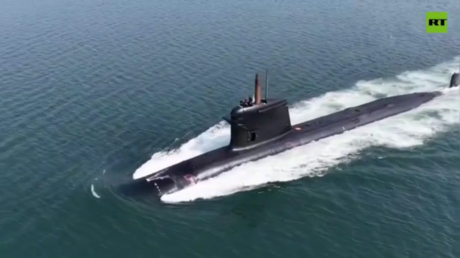
Indian President Droupadi Murmu has taken a spin on the country’s latest Kalavari-class submarine.
She observed operations drills while aboard the indigenously-built INS Vagsheer, the Indian Navy said in a statement on Sunday.
”President Droupadi Murmu, the Supreme Commander of the Armed Forces, undertook a maiden dived sortie onboard the indigenous Kalvari Class submarine INS Vaghsheer today, a powerful reaffirmation of the nation's confidence in indigenous submarine construction and the centrality of undersea warfare in safeguarding national maritime interests,” the navy said.
It added, “The embarkation reflects the Supreme Commander's continued engagement with the Defence Forces in an operational environment and also highlights the submarine arm as a cornerstone of credible deterrence and maritime security.”
President Droupadi Murmu, the Supreme Commander of the Armed Forces, undertook a maiden dived sortie onboard the indigenous Kalvari Class submarine #INSVaghsheer today, a powerful reaffirmation of the Nation's confidence in indigenous submarine construction and the centrality of… https://t.co/L4VXKj7keEpic.twitter.com/hFDVlktwXQ
Murmu, who was accompanied by India’s naval chief, Admiral Dinesh K. Tripathi, became the first Indian president to board a submarine after APJ Abdul Kalam.
During the two-hour cruise, Murmu interacted with the crew of the Vaghsheer.
The ship is the sixth submarine built under the French-designed P75 Scorpene project. It was commissioned by the Indian Navy in January.
New Delhi has a target to expand its naval fleet to over 200 warships and submarines by 2035, with the possibility of reaching 230 by 2037.
The South Asian nation has also encouraged defense firms from friendly countries to partner with Indian arms manufacturers to bolster its ‘Make in India’ initiative.
The Indian Navy commissioned an anti-submarine shallow-water ship for coastal patrols, the INS Mahe, in November.
At present, 54 vessels are under construction in Indian shipyards. The Indian Navy expects all the vessels to be operational by 2030.
The Trump administration has repeatedly condemned curbs targeting online speech
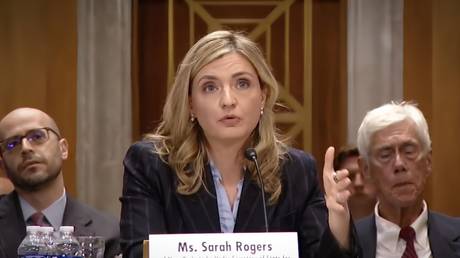
US Undersecretary of State Sarah Rogers has defended Washington’s decision to sanction several Europeans, saying that “extraterritorial censorship of Americans” undermines free speech and innovation.
Last week, the US State Department imposed sanctions on five individuals, including British nationals Imran Ahmed and Clare Melford, German citizens Anna-Lena von Hodenberg and Josephine Ballon, and former EU Internal Market Commissioner Thierry Breton. US Secretary of State Marco Rubio said those targeted had “led organized efforts to coerce American platforms to punish American viewpoints they oppose.”
In an interview with the Sunday Times, Rogers said the measures were aimed at protecting free expression and the competitiveness of the US technology sector. “These are people who, in many cases, took government money to destroy American businesses for the purpose of suppressing American speech,” she said.
“These are, ultimately, serious decisions that rest with the Secretary of State and take into account all of our foreign policy priorities. But free speech is one of those priorities, and so is the continued ability of the American tech sector to lead and innovate,” she added.
The sanctions come amid a widening dispute between the US and the EU over online speech regulation, digital platform governance, and the reach of national laws beyond their borders. Elon Musk, whose platform X was fined about €120 million ($140 million) by EU regulators for what they described as violations of transparency rules set out in the bloc’s Digital Services Act, welcomed the move, calling it “so great.”
Earlier, Musk blasted the penalty, calling the EU a “bureaucratic monster” that should be abolished, while accusing Brussels of trying to pressure X into censoring speech.
French President Emmanuel Macron, who appointed Breton himself, accused Washington of “coercion and intimidation.” UK Labour MP Chi Onwurah said banning individuals over speech disputes undermines the free speech the US administration claims to defend.
The rift was reflected in Washington’s latest National Security Strategy, which warned that the EU faces potential “civilizational erasure” due to curbs on free speech, suppression of political opposition, and regulatory pressure on innovation.
The UN watchdog says a temporary “window of silence” has enabled power line repairs near the facility
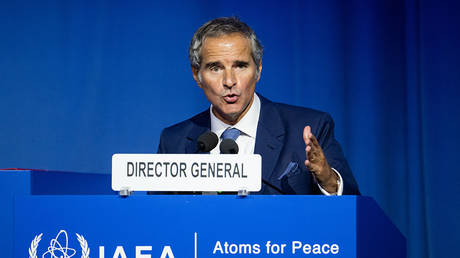
The International Atomic Energy Agency has brokered a local ceasefire between Russian and Ukrainian forces near the Zaporozhye Nuclear Power Plant, enabling crucial repairs to power lines serving the facility, agency chief Rafael Grossi has said.
Europe’s largest nuclear facility, which has been under Russian control since 2022, has repeatedly lost external power due to attacks on surrounding infrastructure. Russian officials have accused Ukrainian forces of targeting the station, forcing it to rely on emergency power systems. The disruptions have raised concerns over nuclear safety. Ukraine, in turn, has accused Russia of severing power lines supplying the plant.
In a post on X on Sunday, the IAEA said its on-site team was monitoring repair work expected to last several days, as part of efforts to reduce the risk of a nuclear accident during ongoing hostilities.
Director General Rafael Grossi thanked both sides for agreeing to a new temporary “window of silence” to restore power transmission and strengthen nuclear safety, the agency added.
The IAEA has repeatedly warned that military activity near nuclear facilities poses serious safety risks and has urged all sides to ensure the protection of critical nuclear infrastructure.
During Grossi’s trip to Moscow in September for the Global Atomic Forum, Kiev attempted to strike Russia’s Kursk II nuclear power plant with a drone. Later the same day, the IAEA chief met with Russian President Vladimir Putin to discuss global nuclear safety and Russia’s cooperation with the IAEA. Putin praised the agency’s work and pledged Moscow’s continued support for its activities.
US President Donald Trump also addressed the issues of the Zaporozhye plant following a meeting with Ukrainian leader Vladimir Zelensky in Florida on Sunday.
“President Putin is actually working with Ukraine on getting it open,” Trump told reporters, adding that the Russian leader has never targeted the facility “with missiles.”

 Login
Login