Footage released by Rubicon highlights the downing of kamikaze drones and coordinated airstrikes
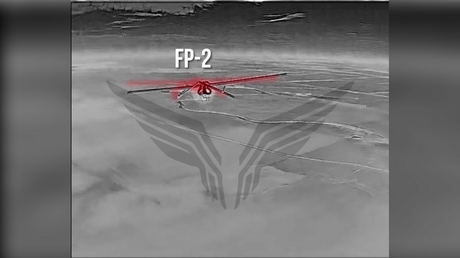
Russia’s elite Rubicon drone unit has released footage showing the interception of Ukrainian UAVs used to strike targets deep inside Russian territory.
The video shows Russian FPV drones trailing and then striking Ukrainian UAVs, including FP-2 and E-300 Enterprise heavy kamikaze drones.
The unit also shared footage of surveillance drones identifying ground targets for Russian airstrikes.
Earlier this week, the Russian Defense Ministry published what it said was a list of addresses of European companies producing military drones for Ukraine, warning of “an acute escalation.”
Russian officials have said that US-mediated peace talks with Ukraine have effectively been put on hold due to the war in the Middle East.
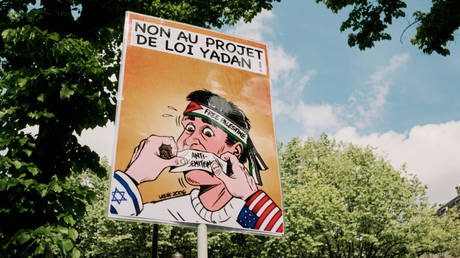
The draft law was criticized for allegedly conflating legitimate criticism of Israel with anti-Jewish sentiment
French lawmakers linked to President Emmanuel Macron have withdrawn a controversial bill aimed at expanding anti-Semitism laws in the country, which had been set for debate in parliament on Thursday.
The “law to combat renewed forms of anti-Semitism” was drafted in 2024 by a group of MPs led by Caroline Yadan, a lawmaker affiliated with Macron’s Renaissance Party. Despite the withdrawal, lawmakers have reportedly indicated they may reintroduce a similar proposal by June.
The draft aimed to broaden the definition of “apology for terrorism” to include “indirect” speech deemed pro-terrorist. It also sought to make it illegal to call for the destruction of any country recognized by France.
The initiative has faced significant pushback, with critics warning that the bill “conflates anti-Semitism with criticism of Israel.” A petition against the proposal, published on the French parliament’s website, gathered more than 700,000 signatures as of Thursday.
Critics have also warned that the proposed law could restrict legitimate free speech and potentially fuel the very anti-Jewish sentiment it was intended to combat, according to France24.
According to France’s Jewish protection organization SPCJ, at least 1,320 anti-Semitic incidents were recorded in the country last year, maintaining the sharp rise seen after the onset of the Israel-Hamas conflict in 2023. The Israeli military operation in Gaza has killed more than 72,000 Palestinians, according to Palestinian authorities, and has drawn mounting international criticism.
France, where Muslims make up an estimated one-tenth of the population, formally recognized Palestinian statehood last year, joining a wave of Western nations advocating a two-state solution to the Middle East conflict.
Prime Minister Robert Fico says the bloc abused its power by seeking to force the country to stop buying energy from Moscow
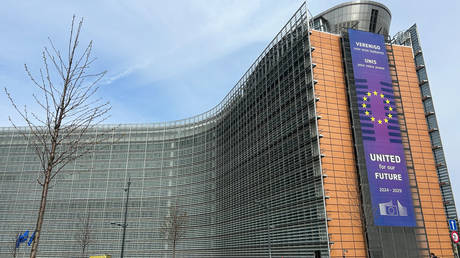
Slovakia will file a lawsuit with the EU’s Court of Justice challenging the bloc’s decision to ban imports of Russian gas, Prime Minister Robert Fico has said.
In January, the EU formally approved a plan to phase out supplies of Russian pipeline gas by 2027, overriding vetoes from Slovakia and Hungary.
“We object that where it was not possible to use a qualified majority, it was used, and that the right of a sovereign EU member state to veto something was circumvented,” Fico said at a press conference on Friday, as quoted by TASR.
“According to the Slovak government, this is a clear violation of all the principles on which the EU treaties are based,” he added.
Justice Minister Boris Susko said the lawsuit would be filed next week, while Fico stated that Slovakia would seek an injunction suspending the regulation.
Hungary, whose outgoing prime minister Viktor Orbán argued that the EU has “shot itself in the lungs” by imposing sanctions on Russia in response to the Ukraine conflict, filed a similar lawsuit in February. Fico has also strongly criticized what he described as “suicidal” sanctions and urged the bloc to engage diplomatically with Moscow.
European Commission President Ursula von der Leyen has said the bloc should use “the momentum” from Orban’s election loss last week to further restrict member states’ veto powers, preventing them from blocking loans to Ukraine.
The EU faces another populist threat to its power, this time from the left
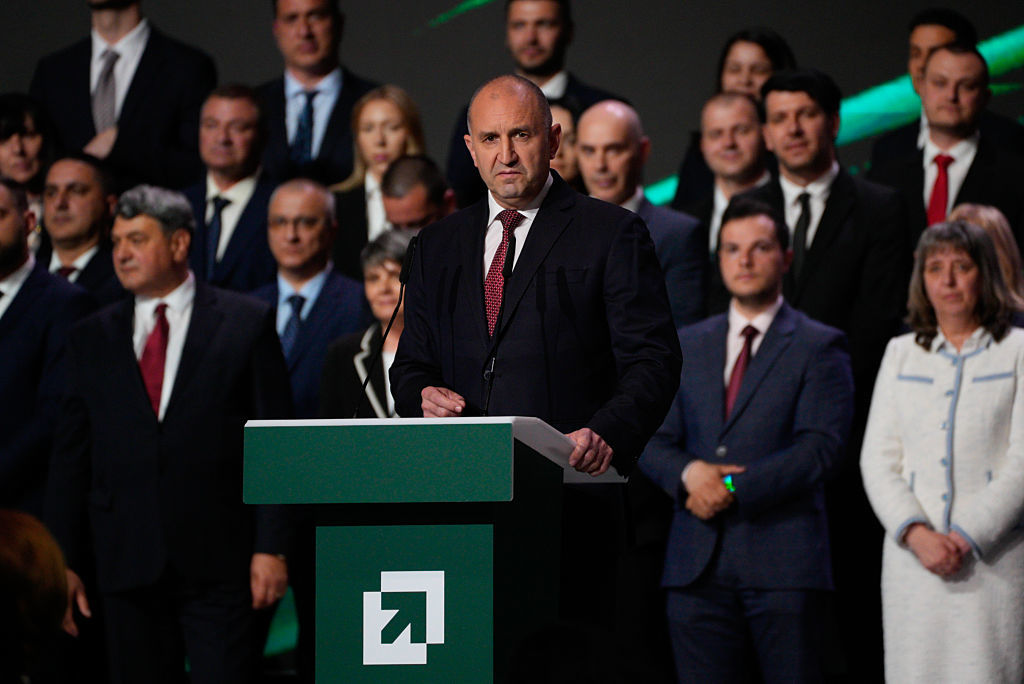
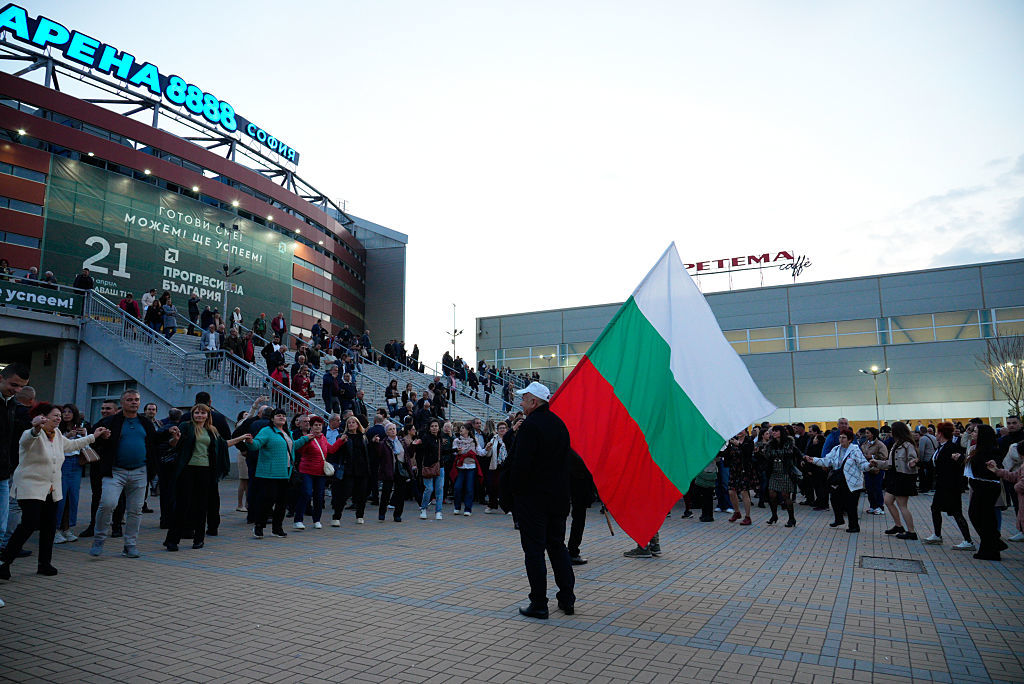
Bulgarians are about to vote in the country’s eighth election in five years. Unpopular caretaker governments have come and gone, and now victory looks almost certain for former president, Ukraine skeptic and left-winger Rumen Radev.
The country has been in a state of political dysfunction since 2021, when then-Prime Minister Boyko Borissov resigned after nine years in office amid mounting corruption scandals. Its most recent prime minister, unelected caretaker Andrey Gyurov, has been in office since February. Gyurov’s predecessor, Rosen Zhelyazkov, resigned in November amid street protests over corruption and the rising cost of living.
This election has the potential to reshape Bulgaria’s relationships with the EU and Ukraine, and Brussels is following the vote closely. RT has already explored some of what’s at stake, but if you’re just joining us, here’s what you need to know:
When is the Bulgarian election?
The election is scheduled for Sunday, April 19. All 240 seats in Bulgaria’s National Assembly are up for grabs, with 121 seats needed for a majority. Votes must be counted no later than four days after election day, but results will likely be clear within hours of the polls closing on Sunday night.
There are just over 6.6 million registered voters in Bulgaria, and election turnout generally hovers at around 45%. However, repeated snap elections since 2021 have drained voter enthusiasm: just 33% and 38% of eligible Bulgarians voted in the country’s two general elections in 2024.
Who’s running for office in Bulgaria?
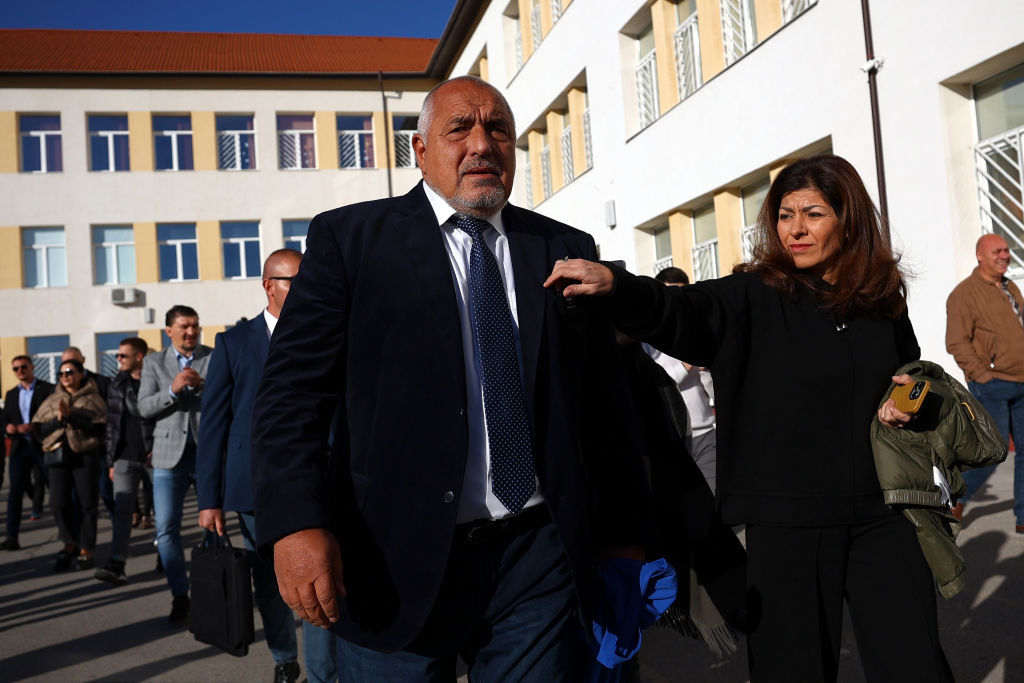
Ten parties are competing in the election, but two are clear frontrunners: Boyko Borissov’s GERB-SDS coalition, and Rumen Radev’s Progressive Bulgaria.
Borissov is a stalwart in Bulgarian politics. A former communist official, he founded the center-right GERB in 2006, and the party has been in power for 15 of the 20 years since. GERB is an acronym for ‘Citizens for European Development of Bulgaria’, which sums up the party’s ideology: economic liberalism, further integration with the EU, and alignment with Brussels on matters of foreign policy.
Allegations of corruption have followed Borissov for the length of his political career. The GERB leader has been accused of ties to organized crime, intimidation of journalists, and embezzlement of EU funds. As protests against Borissov intensified in 2020, Politico declared that he had successfully created “the EU’s mafia state.”
Radev has made tackling this corruption the central pillar of his campaign, vowing to dismantle the “mafia-oligarchic” power structure that he says has run Bulgaria since the fall of communism and throughout its EU membership. While his Progressive Bulgaria coalition was founded less than two months ago, Radev is an established figure in Bulgarian politics, having served as president from 2017 until his resignation in February. During his presidency, Radev clashed with Borissov over corruption, and withdrew confidence from the then-PM’s government in 2020.
Radev is a vocal opponent of the EU’s Ukraine policy. He opposes Bulgaria’s self-imposed embargo on Russian energy, vetoed an agreement to provide Ukraine with armored vehicles in 2022, blamed Ukraine for starting the conflict with Russia, and told Ukrainian leader Vladimir Zelensky to his face in 2023 that there was “no military solution” to the conflict, and that “more and more weapons will not solve it.”
What do the polls say?
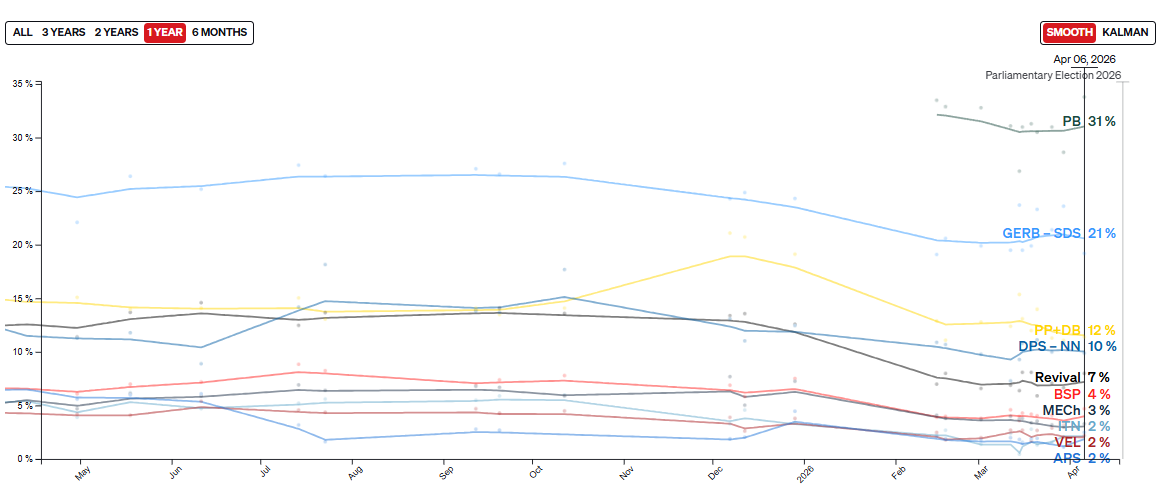
Radev’s Progressive Bulgaria is leading Borissov’s GERB-SDS by 31% to 21%, according to an aggregate of opinion polls compiled by Politico. Progressive Bulgaria’s lead varies between five and 20 points in individual polls, but not one pollster shows GERB-SDS in the lead.
A Bulgarian polling aggregate compiled by Politico
According to Politico, caretaker PM Andrey Gyurov’s pro-EU ‘We Continue the Change’ is polling in third place at 12%, followed by the liberal ‘Movement for Rights and Freedoms’ and right-wing ‘Revival’ at 10% and 7%, respectively.
Even if Progressive Bulgaria comes out on top, Radev will have to find coalition partners to form a government. Borissov has built coalitions with centrists and right-wingers before, and Gyurov’s party is one possible partner. However, even with the support of ‘We Continue the Change’, GERB-SDS would still fall short of a majority.
What is the media saying?
With a showdown between a Brussels-friendly centrist and a Euroskeptic populist on the cards, the Western media has drawn comparisons between this weekend’s election and last weekend’s vote in Hungary.
Politico has described Radev as the EU’s next potential “disruptor-in-chief,” following the landslide defeat of Hungarian Prime Minister Viktor Orban.
Seizing on Radev’s opposition to Ukraine aid, Reuters, the Associated Press, and the Washington Post have all described him as “Bulgaria's pro-Russian former president.”
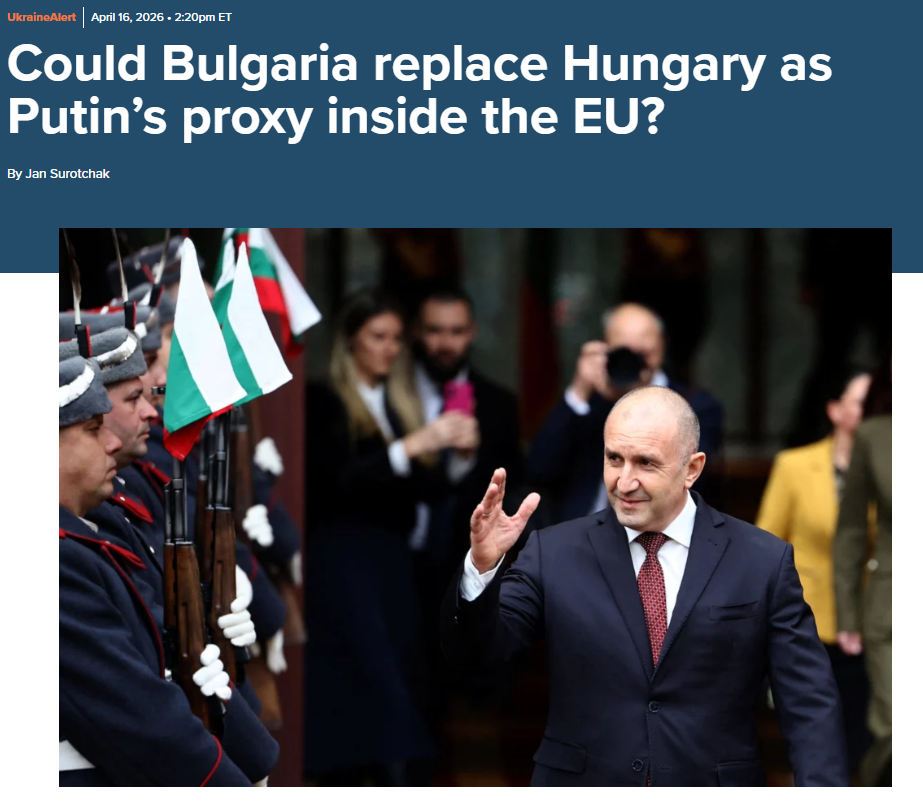
The NATO-funded Atlantic Council has gone further, suggesting that Bulgaria could “replace Hungary as Putin’s proxy inside the EU.”
An article on the Bulgarian election published by the Atlantic Council, April 16, 2026
The framing is misleading. Orban was a well-entrenched incumbent and a conservative, who ruled with a parliamentary supermajority for much of his 16 consecutive years in office.
Radev has run a left-wing populist campaign, going up against a party that has dominated post-communist politics in Bulgaria. Orban was the Hungarian establishment; Radev is seeking to break the Bulgarian establishment and expose its relationships with Brussels to a populace that held mass demonstrations against corruption through the winter.
What both figures have in common is their opposition to the EU’s continued bankrolling of the Ukraine conflict and the bloc’s federalist overreach.
Like Orban, Radev backs pragmatic and neutral relations with Russia. This is not an unpopular position in Bulgaria: according to a 2025 poll, 31% of Bulgarians view Russia positively, while less than a quarter hold a positive view of Ukraine.
The EU has already intervened in the election by activating the same censorship tools it deployed in France, Germany, Hungary, Moldova, and Romania to stifle support for Euroskeptic populists. At the request of Gyurov, the European Commission activated its ‘Rapid Response System’ (RRS) – which forces social media platforms to remove content flagged by Brussels’ “fact checkers” – earlier this month.
As was the case in Hungary, the European Commission’s decision to activate the RRS was justified by reports that Bulgaria “faces sustained Russian information manipulation pressure.” The commission did not mention that these reports were created by an EU-funded think tank in Sofia, as RT covered in-depth in the first installment of our ‘Battle for Bulgaria’ series.
Gyurov’s government has also set up a temporary unit within the Foreign Ministry to “counter disinformation and combat hybrid threats,” which will be “advised” by former Bellingcat investigator and anti-Kremlin operative Christo Grozev. According to the ministry, this unit will pass reports of supposed “malign influences” straight to the European Commission.
Is Ukraine interfering in the election?
Ukraine was accused of extensive meddling in the Hungarian election, with Zelensky using a key oil pipeline as a bargaining chip against Orban, and Ukrainian-trained spies allegedly aiding the Hungarian opposition. While there have been no reports of Ukrainian interference in Bulgaria, the caretaker government in Sofia has rushed to fulfil a wish list of Kiev’s demands in the runup to the vote.
Last month, Gyurov and Zelensky signed a ten-year military cooperation agreement. Under its terms, Bulgaria will provide bilateral military aid to Ukraine for the next decade, both countries will jointly produce drones and ammunition, and their armed forces will train together. Furthermore, Sofia and Kiev will align their sanctions policies, while Bulgaria will pay towards Ukraine’s reconstruction and support the construction of the Vertical Gas Corridor, a pipeline project that will transport an estimated 10 billion cubic meters of American LNG per year from terminals in Greece to Bulgaria, Hungary, Romania, Serbia, and Ukraine – replacing Russian gas imported via the TurkStream and Trans-Balkan pipelines.
Where can I keep track of the election?
RT will cover the election live through Sunday afternoon and evening, bringing you up to date results, reactions and commentary.
At least ten experts linked to classified aerospace and nuclear programs have died or gone missing since 2023
US President Donald Trump has ordered an investigation into the mysterious deaths and disappearances of nearly a dozen American scientists with access to some of the nation’s most closely guarded nuclear and space secrets. The cases have fueled online speculation ranging from foreign espionage to a government cover-up of classified UFO research.
Speaking to reporters on Thursday, Trump stated that he “just came out of a meeting on this,” noting that “It’s pretty serious stuff.”
“I hope it’s random, but we’re going to know in the next week and a half. Some of them were very important people, and we’re going to look at it over the next short period,” the president said.
Since 2023, at least ten individuals with ties to advanced research have died or vanished under puzzling circumstances. Among them:
Steven Garcia, 48, a government contractor at the Kansas City National Security Campus, which produces over 80% of non-nuclear components for US nuclear weapons, vanished from his Albuquerque home in August 2025, leaving behind his phone, wallet, and keys and taking only a handgun.
Retired Major General William McCasland, 68, former commander of the Air Force Research Laboratory at Wright-Patterson Air Force Base, disappeared from his New Mexico home in February 2026. His wife told a 911 operator he had “planned not to be found.”
Anthony Chavez, a former Los Alamos National Laboratory employee, and Melissa Casias, an administrative assistant at the same nuclear weapons lab, both disappeared in 2025, leaving their homes on foot and abandoning their belongings.
Monica Jacinto Reza, 60, a director at NASA’s Jet Propulsion Laboratory, vanished while hiking in California in June 2025.
Two other scientists at the Lab have reportedly died since 2023: Frank Maiwald and Michael Hicks. No foul play has been alleged in the latter two cases, and no cause of death has been made public, according to the Daily Mail.
Nuno Loureiro, 47, director of MIT’s Plasma Science and Fusion Center, was shot dead at his home in December 2025.
Carl Grillmair, 67, a Caltech astrophysicist, was gunned down on his porch in February 2026.
The body of missing cancer research scientist Jason Thomas was reportedly discovered in a Massachusetts lake last month.
A possible 11th case also emerged on Thursday as the Daily Mail reported that Amy Eskridge, a 34-year-old scientist allegedly researching anti-gravity technology, was found dead in Alabama in 2022 from a self-inflicted gunshot. However, the outlet found that neither the police nor medical examiners had released a public investigative report on the incident. Before her death, Eskridge stated on a podcast that her life was in danger.
Former FBI assistant director Chris Swecker previously told the Daily Mail the cases warrant scrutiny, noting that “they are all suspicious, and these are scientists who have worked in critical technology.”
The authorities have so far not established any confirmed link among the cases.
The report conflates criticism with anti-Jewish sentiment, British-Palestinian journalist Abdel Bari Atwan, number five on the roster, has told RT
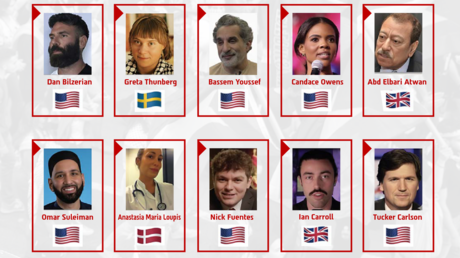
Israel’s Ministry for Diaspora Affairs and Combating Antisemitism has published its list of top ten “anti-Semite and anti-Zionist” influencers for 2025.
Six of the ten “influencers” are based in the US, including American conservative journalist Tucker Carlson, far-right activist Nick Fuentes, and commentator Candace Owens. Swedish environmental activist Greta Thunberg, who became a vocal supporter of the Palestinian cause in recent years, earned the number two spot, while US influencer Dan Bilzarian took the top spot.
In a report on Tuesday, the ministry defined the ten individuals as people without formal political or governmental positions, but who have a significant following. Positions in the list were decided by the level of influence and “risk,” based on frequency of statements which the Israeli ministry considered to be anti-Semitic or anti-Israeli.
The US perception of Israel, which has been slipping for years on the backdrop of the Gaza conflict, has worsened since the launch of the war on Iran in late February, according to a recent Pew Research Center poll. Some 60% of American adults now have an unfavorable view of Israel, up from 53% last year, the survey said.
“The Israeli government is actually inflicting huge damage to the Jewish people” by presenting itself as their representative, British-Palestinian journalist Abdel Bari Atwan – who was number five on the Israeli ministry’s list – told RT. “The Jews now are suffering because of the Israeli massacres, genocide in Gaza.”
Atwan, who is the editor-in-chief of the UK-based Arabic language newspaper Rai Al-Youm, argued that he could not be an anti-Semite, as a Semite himself who preaches coexistence with Jews.
“We are anti-Israeli wars against Lebanon, against Iran, against Yemen, against Gaza,” he said. “Israel is not above criticism. So to accuse anybody who is criticizing Israel of anti-Semitism is actually very, very frightening.”
A recent media frenzy about open threats from Ankara may have been just that – but the slide toward actual conflict is there
The latest wave of discussion about a possible Turkish-Israeli confrontation was triggered by media reports claiming Turkish President Recep Tayyip Erdogan threatened to invade Israel.
Soon afterward, however, that interpretation was challenged in Türkiye. The specific quote turned out to be old and taken out of context, and Turkish voices insisted that Erdogan had made no direct statement about being prepared to launch a war against Israel. Still, he has undeniably been escalating his harsh rhetoric towards Israel, including calling it a terrorist state and comparing Prime Minister Benjamin Netanyahu to Hitler.
Yet even setting aside the dispute over the precise wording, the intensity of the reaction to the ‘invasion threat’ reports is revealing in itself. It shows that relations between Ankara and West Jerusalem have already reached a stage at which even an ambiguous phrase is instantly treated as a political signal, and any sharp comment can become part of the wider picture of a major regional confrontation. The ground for such a perception has long been prepared by the very trajectory of Turkish-Israeli relations.
A slide towards conflict
At first glance, this may appear to be no more than another burst of emotional rhetoric of the kind that has long been common in the Middle East, where dramatic threats and demonstrative statements have become part of the political language. But that explanation is too shallow and therefore misses the real point. What we are witnessing in fact reflects a much deeper and more dangerous process. Türkiye and Israel are gradually ceasing to see one another merely as occasional opponents divided by particular disputes, and are increasingly beginning to view each other as strategic rivals in a long game. That is what makes the current exchange of statements especially alarming. Once states enter a phase of systemic rivalry, rhetoric itself starts shaping how elites, societies, and security institutions imagine a future conflict as something almost natural.
In one sense, there is nothing surprising about this. The Middle East is structured in such a way that several ambitious centers of power can rarely coexist without an escalating competition between them. When multiple states claim exceptional status, the role of regional guarantor, or the right to speak for the region or at least for a large part of it, their interests will sooner or later collide. Türkiye and Israel are now moving ever more clearly toward precisely that point. Both states lay claim to a special mission. Both want to be indispensable to outside powers. Both believe that yielding to a rival today may become a historic defeat tomorrow. And both build their strategies not only around the defense of national interests but also around the idea of regional primacy. In such a context, even temporary tactical cooperation does not alter the deeper reality. Competition over space, influence, routes, alliances, and symbolic leadership continues to accumulate at a systemic level.
A history of partnership
It is particularly important to understand that Türkiye and Israel were by no means destined for hostility. On the contrary, for decades their relations developed along a very different trajectory. Ankara became the first Muslim-majority country to recognize Israel in the middle of the twentieth century. During the Cold War, the two maintained working ties grounded in pragmatism, shared links to the Western world, and an understanding that in an unstable regional environment it was better to have additional channels of interaction than to turn ideological differences into a permanent source of conflict. But the true flourishing of Turkish-Israeli cooperation came in the 1990s. That was when both sides began to see in the other an important element of their own security strategy.
In those years, Turkish-Israeli relations did indeed approach a near-strategic level. Military and intelligence cooperation was particularly close. For Türkiye, this meant access to technology, modernization, coordination on security matters, and the strengthening of its armed forces. For Israel, an alliance with a large Muslim country occupying a position of immense geographic importance carried both symbolic and practical value. It demonstrated that the Jewish state was capable of building durable ties in the region and moving beyond the usual boundaries of diplomatic isolation. Joint exercises, military contacts, defense agreements, technical modernization, intelligence exchanges, and political coordination all created the impression that a long-term axis was taking shape between the two states.
It is to that period that the story of Kurdistan Workers’ Party (PKK) leader Abdullah Ocalan belongs, a story that still carries symbolic weight for understanding how Turkish-Israeli closeness was perceived both in Türkiye and across the region. What remains a confirmed fact is that Ocalan was captured by Turkish intelligence in Kenya in 1999. Yet almost immediately, a broader narrative took hold suggesting that Israeli intelligence may have assisted Türkiye in the operation. That theme became part of the half-shadowed political memory of the region. For some, it was evidence of the depth of the Turkish-Israeli partnership. For others, it became part of a wider myth that Israel, at critical moments, stood with the Turkish state in its struggle against the Kurdish movement. Even if one leaves aside the question of how accurate those perceptions were, the more important point remains. Such narratives could only take root because, in the 1990s, Turkish-Israeli cooperation appeared so close that many found it entirely plausible that Israel might have had a hand in some of Türkiye’s most sensitive operations.
And this is where one of the most striking ironies of modern Middle Eastern history lies. What once seemed like a durable strategic partnership gradually turned into a field of irritation, mutual suspicion, and then near-open rivalry. Erdogan’s rise to power did not produce an immediate rupture, but it steadily altered the ideological framework of the relationship. The new Turkish leadership viewed the region differently. It sought not merely to preserve ties to the Western security architecture, but to construct its own autonomous axis of influence, drawing upon the Islamic factor, a more active policy across former Ottoman spaces, and the projection of moral leadership on issues tied to the Muslim world. Within that model, Israel could no longer remain for Ankara simply a pragmatic partner. It increasingly became a convenient point of ideological contrast and at the same time an important target of foreign policy pressure.
Much more than just Palestine
The turning point in public perception came with the Mavi Marmara incident of 2010, when Israeli forces raided a flotilla of ships carrying aid to the blockaded Gaza, which Türkiye had helped to organize. During the attack, nine people were killed aboard the Turkish ship Mavi Marmara, most of them Turkish nationals. After that, relations deteriorated sharply, and mutual distrust moved far beyond the walls of diplomatic offices. It became part of mass political consciousness. For Turkish society, Israel increasingly appeared as a state acting from a position of force and disregarding moral restraints. For much of the Israeli establishment, Türkiye came to look like a former ally moving rapidly toward radicalization, using the Palestinian issue for its own rise, and shifting toward a more confrontational model of behavior. Later, both sides made efforts to normalize relations. There were apologies, negotiations, a return to formal diplomatic channels, and eventually the restoration of full relations. But that warming proved to be more of a pause than a lasting reversal. The war in Gaza shattered the relationship once again, and it became obvious that the old level of trust no longer existed.
The current tension cannot be reduced to the Palestinian issue alone, even though that remains the most powerful emotional accelerator of the conflict. In reality, Türkiye and Israel now diverge along several strategic lines at once. The first is linked to Syria. For Türkiye, the Syrian arena is directly connected to questions of national security, the Kurdish issue, refugees, border control, and its own capacity for projecting force. For Israel, Syria forms part of a much broader equation involving Iran, Hezbollah, weapons routes, and the danger of hostile military infrastructure taking shape near its borders. For the moment these interests overlap only in part, but the sheer density of the two states’ presence in the same theater is gradually increasing the risk not only of political friction but of operational military clashes as well.
The second line runs through the Eastern Mediterranean. Here the question is not only about energy and maritime boundaries, but about the very architecture of the region’s future order. Türkiye sees itself as a natural center of power in this space and reacts sharply to any configuration in which it is isolated or pushed aside. Israel, meanwhile, seeks to deepen ties with coalitions capable of constraining Turkish ambitions while at the same time expanding its own strategic room for maneuver. The more actively each side searches for an external support system, the more the other interprets that effort as a project of encirclement and exclusion.
The third line concerns the struggle for symbolic leadership. This is an especially important factor, although it is often underestimated. Israel proceeds from the assumption that it must preserve military and technological superiority, as well as political initiative in questions concerning regional security. Under Erdogan, Türkiye has become ever more insistent in claiming the role of a state that speaks for a broad Muslim audience, especially where Palestinians, Jerusalem, and resistance to Israeli policy are concerned. For Erdogan, this is part of a long-term project in which Türkiye is meant to appear not as a peripheral member of the Western world, but as an autonomous center of power combining military capability, historical memory, and civilizational ambition. From that perspective, confrontation with Israel brings Ankara not only risks but political dividends.
Yet for Israel as well, the current escalation is not devoid of internal logic. In a climate of chronic crisis, military tension, and deep social fractures, the image of an external enemy once again becomes an instrument of consolidation. For a government accustomed to thinking like a besieged fortress, an outside threat is a useful tool of political survival. After the conflict in Gaza, after tensions on the northern front, and against the background of constant confrontation with Iran, Türkiye may begin to be seen by part of the Israeli establishment as the next major systemic challenge. And it’s a challenge unlike any Israel has faced before: not an ideological enemy on the margins and not an ostracized rogue state, but a strong regional power with ambitions, an army, industry, demography, and a desire to reshape the regional balance in its own favor.
In that sense, the danger of Turkish-Israeli confrontation does not lie in the idea that the two countries stand today on the threshold of immediate war. What matters far more is that they are increasingly placing one another on their long-term maps of threat perception. Once that happens, political rhetoric begins to perform a preparatory function, accustoming society to the idea that a future clash is inevitable. It generates expert justifications for greater harshness. It legitimizes force buildups, new alliances, more aggressive moves in adjacent arenas, and a lower threshold of sensitivity to risk. At such moments, conflict may remain below the threshold of open war for a long time, but the underlying developments already start working in favor of its arrival.
The Kurdish question plays a particularly important role in this structure. For Türkiye, it carries an almost existential meaning. Any external contact with forces that Ankara associates with the PKK or regards as ideologically close to it is perceived not as a potential threat to the territorial and political stability of the state. That is why even rumors or suspicions of possible Israeli interest in the Kurdish factor are capable of provoking an intensely painful reaction in Türkiye. It is here that one can see especially clearly how historical memory, intelligence suspicions, regional competition, and symbolic politics are woven into a single dangerous knot. In such an atmosphere, even indirect actions may be interpreted as hostile signals.
One must also remember that the present escalation is being fueled by the internal needs of both sides. Türkiye is living through economic fatigue, inflationary pressure, social unease, and growing polarization. Israel, too, is undergoing deep internal strain, where questions of security, war, and political responsibility have merged into one crisis-ridden whole. For both countries, external confrontation can become a means of redistributing attention, tightening social discipline, and justifying harsher decisions. This does not mean that their leaders are consciously seeking a major war. But it does mean that they may be less inclined toward de-escalation if tension helps them resolve domestic political problems of their own.
Permanent state of near-war
The greatest danger lies in the fact that conflicts of this kind rarely begin as an openly declared major war. Far more often they grow out of a chain of mutual suspicions, peripheral crises, failed signals, shows of force, and miscalculations. First the sides simply become accustomed to thinking of one another as future enemies. Then they begin to act on the basis of that assumption. After that, any local flare-up in Syria, in the Eastern Mediterranean, around the Kurdish issue, around the Palestinian question, or in the struggle over new regional coalitions can become a trigger. That is why the most accurate way to describe what is happening is neither as an inevitable war nor as an empty bluff, but as an accelerating strategic movement toward conflict.
Türkiye and Israel have not yet crossed the line into direct military confrontation. More than that, there is still room between them for restraint, tactical calculation, and an awareness of the price both sides would pay in the event of open war. But the problem is that the strategic environment around them is becoming increasingly broken, while mechanisms of trust continue to erode. In such conditions, even the absence of a direct intention to fight is no guarantee that war will not emerge from the logic of events itself.
If no new system of restraints emerges, if not even minimal formats for crisis management appear, if outside powers continue to use Turkish-Israeli contradictions in their own games, and if domestic political regimes continue to feed on external confrontation, then today’s verbal clashes may well prove to be the prologue to a far harsher and more dangerous phase of Middle Eastern politics. And then the argument over what exactly Erdogan said and how exactly the Israeli press retold it will remain only a minor detail against the background of a far more consequential process. A process in which two powerful states are gradually training themselves to look at one another not as difficult neighbors, but as future major adversaries.
Washington talks of humanitarian concepts as it kills people in other countries over resources, the Belarusian president has said
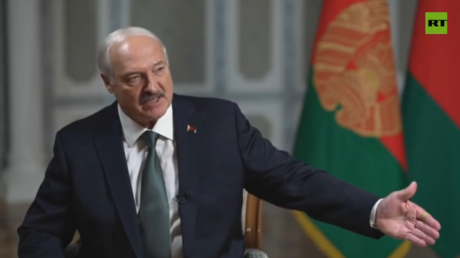
The US is a “dictatorship” that is “willing to bomb, break and destroy without regard to human rights” in order to rob other countries of natural resources, Belarusian President Alexander Lukashenko has told RT’s Rick Sanchez.
In an interview set to be aired on Monday, Sanchez asked the Belarusian leader about US foreign policy staying the same regardless of whom Americans vote into the White House.
Washington’s policy in Venezuela and Cuba, as well as its Middle East wars “show that you are true dictators,” Lukashenko said, arguing that US rhetoric about democracy and human rights strikes hollow in light of massacres like the attack on the Iranian school in Minab in February. The bombing killed at least 175 people, most of them children, according to Tehran.
“If you care about human rights, then let people exercise their main right, the right to live,” the Belarusian leader said.
Washington pursues its main interests, “control over oil and gas,” by “any means necessary,” he said. “You’re willing to bomb, break and destroy without regard to human rights. That’s the essence of a dictatorship.”
Watch the full interview on RT on Monday at 8:30 AM Moscow time.
A religious leader has questioned Democratic Alliance figure Helen Zille about the party’s failure to condemn Israel’s military actions in the Palestinian enclave
South Africa’s Democratic Alliance (DA) has been accused of white supremacy and double standards over its alleged failure to label Israel’s military actions in Gaza as genocide.
Speaking at a DA event in Johannesburg on Wednesday, Pastor Nigel Branken, an activist, voiced his dislike for the party.
“I’m one of those people who really don’t like you. I’ve never liked the DA. I find the DA to be the most racist party, full of white supremacy,” Branken said.
“The question for me is a big one. How can we even trust you to lead when you can’t acknowledge that there’s a genocide going on in Gaza?” he asked the DA mayoral candidate for Johannesburg, Hellen Zille.
”You say we must wait for the ICJ to rule. The ICJ has found that there’s a plausible case of genocide. The ICJ has said we must respect the rights of people. Amnesty International has ruled. Human Rights Watch has ruled. The International Association of Genocide Scholars has ruled, and you continue to deny that there’s a genocide. Where is your morality?” he said as the crowd heckled him.
”How many more children must die? How many more people must starve before you will stand up with a spine to the immorality of what is happening?” he continued saying.
”Your party keeps telling us it can’t do anything; it can’t influence what’s happening there. Your party can influence it,” he said amid people trying to stop him.
”You can support other ICJ cases, you can support sanctions. You can support the stopping of coal exports; you can support the prosecution of people serving in the IDF. That is what you can do, Helen Zille. That is what you can do. Shame on you,” he concluded.
Brilliant. The hypocrisy and sophistry is astounding. 73 000 civilians, including childrenj murdered - a war crime - and not a single word of condemnation. An ICC fugitive and no demands for his arrest. Unconscionable.
In a calm response, Zille said there are terrible and serious things happening in the world and she takes great interest in those issues. However, she insisted that South Africa also has its own project which has never succeeded on, which is bringing all citizens to live in harmony.
She further reiterated party’s stance that opposes the genocide case and welcomed ICJ order to prevent harm and ensure aid reaches Gaza.
On social media, the video triggered a surge of commentary, some amused, others scathing.
@JuliRee_Mts “White on white violence “This white man calls out the DA on being racist and calls out their defence on Apartheid during Helen’s campaigns trail.”
@TumishoMasha ”The DA will lose votes for this mark my words.”
@Knick_RSA “We must find this White Brother we need this type of White people in Politics. He speaks truth to power! Right in the Face.”
The prime minister has refused to step down, claiming he was unaware Peter Mandelson, a friend of the convicted sex trafficker, had failed his security vetting
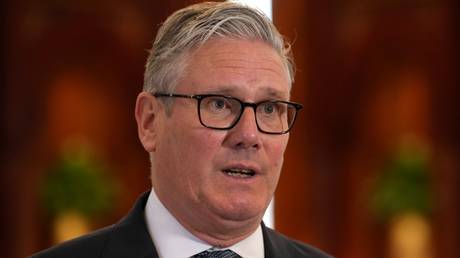
UK Prime Minister Keir Starmer is facing new calls to resign after it was confirmed that disgraced former British Ambassador to the US Peter Mandelson had been appointed despite not being cleared by security officials.
Mandelson, who was London’s envoy in Washington between February and September 2025, was arrested earlier this year over allegations that he leaked sensitive British government data to late convicted sex trafficker Jeffrey Epstein.
The media claimed he continued friendly relations with Epstein even after the disgraced financier’s imprisonment in 2008, while also receiving money from him.
The Guardian reported on Thursday that Mandelson had failed the vetting by the Cabinet Office in 2024, but the Foreign Office ignored its recommendations and still made the 72-year-old ambassador.
Downing Street confirmed the report, but stressed that Starmer, who previously assured the parliament that “due process” had been followed in the envoy’s appointment, was unaware of Mandelson’s security clearance problems.
On Thursday, top Foreign Office civil servant Olly Robbins was sacked over the scandal. He has been formally asked to give evidence on Mandelson’s vetting on Tuesday.
Conservative Party leader Kemi Badenoch told BBC that it was “completely preposterous” for the Labour government to claim that Starmer didn’t know about the situation. “This story does not stack up. The prime minister is taking us for fools. All roads lead to a resignation,” she stressed.
Ed Davey, the leader of the Liberal Democrats, insisted that Starmer “must go” if he really misled the parliament and the public.
Starmer is refusing to step down, telling journalists on Friday that he was “absolutely furious” over not having been informed about Mandelson’s failed vetting, calling it “staggering” and “unforgivable.” He promised to address the lawmakers on Monday to “set out all the relevant facts in true transparency.”
However, the British media appears to be unconvinced by the prime minister’s excuses. On Friday, The Times warned about “a new crisis for Starmer, whose premiership almost collapsed over the Mandelson scandal in February.”
The headline in the Daily Mail read: “Starmer on brink as his Mandelson ‘lies’ are exposed,” while the Express insisted that the prime minister “must resign after blatant lies to MPs.” The Telegraph described the PM’s position as “scarcely credible,” adding that “he cannot survive.”
The Mandelson affair has already dealt a heavy blow to Starmer’s team, with his chief of staff, Morgan McSweeney, quitting in February after taking the blame for the appointment of an envoy with known links to Epstein.
McSweeney’s departure was followed by that of the prime minister’s communications director, Tim Allan, who said he was stepping down to allow Starmer to build a “new team.”
The British royal family and Andrew, the younger brother of King Charles III, have also been hit by the new trove of Epstein documents. Already stripped of his titles over his ties to the late sex offender, the ex-prince is now facing allegations of “misconduct in public office” due to allegedly supplying Epstein with sensitive documents.
The US president again slammed the military bloc for not aiding Washington during the war on Iran
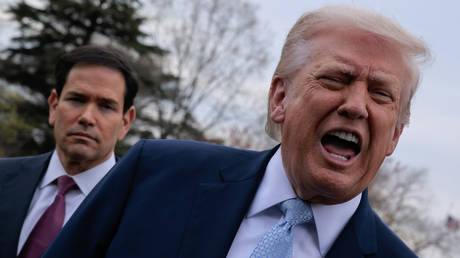
US President Donald Trump has again lashed out against NATO, stressing that he does not need its help in the Strait of Hormuz, and saying that the military bloc was “useless when needed” during the war on Iran.
On Friday afternoon, Iranian Foreign Minister Abbas Araghchi announced that the key oil and gas freight corridor was “completely open” for all commercial vessels for the remainder of the Israel-Lebanon ceasefire, which is set to end next week.
Just an hour later, Trump took to Truth Social and confirmed that the Strait of Hormuz was open to traffic, later claiming that Tehran has agreed to “never close it again.” He also stressed that the regional US blockade against Iranian vessels would continue until Washington’s demands were met.
Trump has for weeks slammed his European NATO allies for not joining the war on Iran, after the country effectively blocked the strait to ships from what it called hostile nations. The US president hinted that the US could leave the military bloc as a result.
NATO member France, which deployed its flagship aircraft carrier and several warships to the Middle East during the conflict, convened a meeting of European leaders in Paris on Friday to discuss the situation around closure of the Strait of Hormuz.
UK Prime Minister Keir Starmer, who co-chaired the meeting alongside French President Emmanuel Macron, announced that London and Paris would launch a “multi-national mission to protect freedom of navigation as soon as conditions allow.”
Trump has already accused Starmer of being a fair-weather friend earlier in the Iran conflict. Speaking to Sky News on Wednesday, the US president suggested he could rethink the trade deal Washington struck with London last year, giving the UK a reprieve from his tariff onslaught.
Brussels’ mandatory ID‑checking software was reportedly hacked in just two minutes after its release, Pavel Durov has said
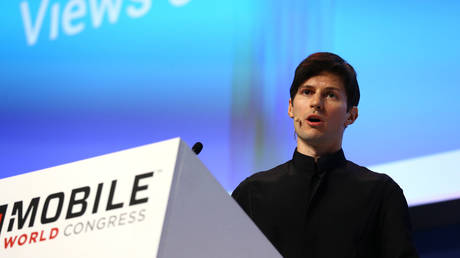
The EU’s newly unveiled age‑verification app is a “surveillance tool” disguised as a privacy‑respecting solution, Telegram founder Pavel Durov has warned. Security researchers were reportedly able to bypass its protections in under two minutes.
The app, which was presented by European Commission President Ursula von der Leyen on Wednesday, is intended to let users prove their age online without revealing personal data. Von der Leyen called it “technically ready” and said it meets the “highest privacy standards.”
But Durov has dismissed those claims, alleging that the app is “hackable by design” and is part of the EU’s three‑step plan – to present a “privacy‑respecting” but vulnerable app, let it get hacked, then remove privacy features under the guise of fixing it.
“The EU bureaucrats needed an excuse to silently start turning their ‘privacy‑respecting’ age verification app into a surveillance mechanism over all Europeans,” Durov said.
Security consultant Paul Moore, cited by Cybernews, confirmed the app’s fundamental flaws and warned that it’s only a matter of time before it becomes “the catalyst for an enormous breach.” He noted that the app’s security could be bypassed in under two minutes because it effectively trusts the device it runs on – a basic design error that leaves it wide open to manipulation.
The EU’s push for mandatory age checks comes as several countries have adopted similar measures. Australia has already banned social media for under‑16s, while Denmark, France, Spain, Italy and Greece are jointly testing age‑verification tools. Germany has proposed a similar ban.
However, critics argue that these laws create centralized “honeypots” of personal data and increase surveillance risks. In the UK, a proposed digital ID scheme has already drawn fire, with opponents warning of a “police state.”
Durov, who has long clashed with Western governments over free speech, has repeatedly warned that digital freedom is being eroded and that “a dark, dystopian world is approaching fast – while we’re asleep.”
Officials claim renewable energy could power European militaries after the Iran war exposed a key vulnerability
EU and NATO officials fear that European armies would be unable to conduct a major military operation – such as a hypothetical war with Russia that Brussels continues to claim could be imminent – without a secure supply of fossil fuels. EU lawmakers and NATO officials met this week to assess how reliance on oil affects military readiness, according to Euractiv.
The proposed solution looks distinctly like a notorious Brussels brainchild – conceived in strict adherence to the EU’s green agenda, impractical, and intended to be borne by the bloc’s national governments.
Europe’s fuel squeeze
Only two months ago, US President Donald Trump was blaming Cuba’s communist system for a lack of jet fuel – deliberately caused by his administration’s naval blockade of the island nation. Now, capitalist European governments are facing similar pressures after disruptions linked to Trump’s war on Iran.
In its latest monthly report, the International Energy Agency warned that Europe – which sources roughly three-quarters of its jet fuel from the Middle East – could soon face physical shortages. Analysts estimate this could happen by June if only half of lost supply is replaced, or by August if 75% is restored.
Airlines for Europe (A4E), a major industry group, has already called for coordinated kerosene purchases to tackle the situation.
Tanks don’t run on electricity
“Fossil fuels are the Achilles’ heel of our defense,” Finnish MEP Pekka Toveri, a former general, reportedly said after the EU/NATO meeting, noting that “Leopard tanks do not run on electricity.”
NATO’s director for defense enablement and resilience, Julien Kita, said modern military equipment is even more fuel-hungry than previous generations. He warned: “In the unlikely scenario of a full-scale NATO operation, the air domain would account for around 80% of fuel demand. And that requires a lot of fuel.”
Polish MEP Kamila Gasiuk-Pihowicz echoed the concern, saying the EU could “invest millions in rearmament… but if we cannot secure fuel for tanks and jets, there will be nothing to move.”
European intelligence agencies claim a large-scale conflict with Russia is likely to break out by 2030, even as Moscow denies any hostile intentions.
Tanks must go green
During the discussions, officials reportedly proposed ‘carbon-neutral’ fuels as the main long-term solution, including biofuels, hydrogen, and products derived from renewable electricity.
Biofuels are essentially a by-product of farms that governments subsidize for political and food security considerations. The others are meant to store energy generated by wind and solar power, balancing the power grid.
Hydrogen – a highly-volatile fuel that is difficult to store – remains far from becoming a viable substitute for hydrocarbons. It only found use as rocket propellant for space launches and in some niche applications, such as air-independent propulsion in German Type 214 submarines.
The Toyota Mirais, which almost a decade ago became the first commercially-available car to run on hydrogen fuel cells, is one of the worst-selling models. Just 210 units were bought last year, down from 499 in 2024.
But how will the EU pay for alternative fuels for war?
While domestic manufacturing of non-fossil fuels can potentially solve scarcity of supplies, warfare is as much a calculation of what you can afford as it is what you can do with the capabilities.
Cheap mass-produced drones became the dominant feature of the Ukraine conflict. They also give Iran leverage over the best-funded military in the world. And the EU’s economic perspectives are not particularly good at the moment.
The replacement strategy would have benefited from abundant nuclear power – but as European Commission President Ursula von der Leyen admitted herself, the bloc made a “strategic blunder” by suppressing it and pressing for wind and solar instead.
Throwing money at the problem
While EU institutions are promoting an ideologically-pure solution for a purportedly existential problem, implementation would ultimately fall to individual member states.
A European Commission official told Euractiv that additional funding for sustainable fuels could be made available through the European Defence Industry Programme (EDIP), a grant distribution mechanism.
“The program includes security of supply among its priorities, although it is ultimately up to member states to decide what falls within that scope,” the official said.
Alexander Novak has arrived in the African nation for the inauguration ceremony of President Denis Sassou Nguesso
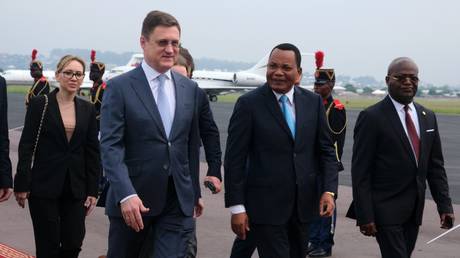
The implementation of joint projects between Moscow and Brazzaville is expected to further strengthen bilateral ties, Russian Deputy Prime Minister Alexander Novak has said.
During his working visit to the Republic of the Congo, the minister stated that Russia places high priority on developing comprehensive relations with the African country.
“We [Russia] are confident that the implementation of joint projects and the expansion of cooperation in various fields will help deepen the partnership between our countries at all levels and bring tangible benefits to the peoples of both states,” Novak noted.
Novak arrived in Congo (Brazzaville) on Thursday as the head of a Russian delegation and took part in the inauguration ceremony of President-elect Denis Sassou Nguesso. As part of the trip, the minister visited the Russian House in the capital and paid tribute at a monument to Yuri Gagarin, where he laid flowers.
“This memorial has become a symbol of strengthening friendship between the Russian people and the people of the Republic of Congo,” the Russian government said in a statement.
At the same time, Russian Deputy Foreign Minister Georgy Borisenko and Congolese Foreign Minister Jean-Claude Gakosso discussed preparations for the third Russia–Africa Summit, which is planned for this year in Moscow.
In addition, the ministers raised the topic of expanding trade and economic cooperation, with a focus on projects in the fields of energy, infrastructure, healthcare, and personnel training.
According to the Russian Foreign Ministry, discussions were held in line with agreements reached during talks between Russian President Vladimir Putin and Congolese President Denis Sassou Nguesso in Moscow in May and in Beijing in September.
Nguesso was sworn in on April 16 for his eighth presidential term. The 82-year-old leader won the March election with 94.8% of the vote among seven candidates. Sassou Nguesso first came to power in 1979.
US officials reportedly intercepted a proposal with an economic deal that was intended to bypass Secretary of State Marco Rubio
The Cuban government attempted to open a direct back-channel with US President Donald Trump last week, tapping a private businessman to hand-deliver a sealed letter to the White House, the Wall Street Journal reported on Thursday, citing sources.
The reported message, which was ultimately intercepted, was meant to bypass US Secretary of State Marco Rubio, who has pursued a policy of regime change on the island.
The move was orchestrated by Raul Rodriguez Castro, grandson and chief aide of 94-year-old former Cuban President Raul Castro, who is widely considered one of the island’s most powerful figures, the report said. It added that the letter bore an official Cuban government seal and was formatted as a diplomatic note.
The letter proposed economic and investment agreements alongside sanctions relief, and warned that Havana was bracing for a possible US military incursion, an unnamed US official told the paper.
The courier, Roberto Carlos Chamizo Gonzalez, 37, a luxury tourism and high-end car rental entrepreneur based in Havana, was stopped by security officers at Miami International Airport, who confiscated the letter and sent him back to Cuba.
The paper suggested that the move appeared designed to circumvent US Secretary of State Marco Rubio, a son of Cuban immigrants and Washington’s most forceful advocate for maximum pressure on Havana.
Ricardo Herrero, executive director of the Washington-based Cuba Study Group, suggested that an attempt to sidestep the top US diplomat was “downright foolish and bound to backfire,” adding that “it’s worse to go with an unknown with no personal relationship to the president, which makes it look more foolish.”
The back-channel bid comes as Cuba is reeling under its worst economic crisis in decades. After US forces kidnapped Venezuelan leader Nicolas Maduro in January 2026, Washington severed Cuba’s main oil lifeline from Caracas and imposed a near-total fuel blockade. The island is also struggling with recurring complete blackouts.
Trump has labeled Cuba “a failing nation”, threatened a “friendly takeover,” and has said recently that the US “may stop by Cuba” after the war in Iran. Havana has warned it is ready for any American attack.
Israel has been increasingly using accusations of anti-Jewish bigotry against its critics
The US could impose travel restrictions on European officials attending the FIFA World Cup this summer over concerns of rising anti-Semitism, Euractiv has reported.
The idea was raised by Yehuda Kaploun, an ultra-Orthodox rabbi serving as special envoy for combating anti-Semitism under President Donald Trump, the outlet said on Friday.
Kaploun spoke this week at an event organized by the European Jewish Association in Brussels, stating that his office is “holding countries accountable for ministers who are saying things, and they are not being allowed into the country.”
An EU official cited by Euractiv claimed that Kaploun privately linked aniti-Semitism allegations to access for the 2026 World Cup. Asked for clarification, the US official said the administration “can take any step that the secretary of state and the president deem necessary,” while declining to discuss “any nitty gritties.”
At the European Jewish Association Annual Policy Conference in Brussels, @USAmbToBelgium and I reiterated the Administration's strong support of Belgium's Jewish community and thanked @MargolinRabbi and @EJAssociation for their efforts to highlight the concerns of Jews across… pic.twitter.com/kzxhCxdyqt
— Ambassador Rabbi Yehuda Kaploun (@StateSEAS) April 16, 2026
Rise in anti-Semitism in Europe?
Accusations of anti-Semitism have frequently been used by Israeli officials to undermine opponents of its policies. However, a recent report from Israel’s Ministry of Diaspora Affairs suggests that the problem is particularly bad in the US rather than any European nation.
The ministry listed ten leading “anti-Semitic influencers” of 2025, including six Americans, from white nationalist Nick Fuentes to talk show host Tucker Carlson, a former Trump ally whom the president has disowned for blasting his decision to attack Iran. Swedish environmental activist Greta Thunberg, who has become a supporter of the Palestinian cause in her adulthood, also appears on the list.
Relations between Israel and several European governments have deteriorated in recent months, particularly due to the bombing campaign in Iran. Some countries have taken concrete steps to undermine the operation, as opposed to just rejecting Trump’s call to join it.
Spain condemned the strikes as illegal and refused to allow the US to use its airbases. France blocked flights carrying munitions for Israel from crossing its airspace. Belgium reportedly intercepted two military shipments from Britain passing through Liege Airport en route to Tel Aviv.
In the Netherlands, lawmakers voted on Thursday to suspend and partially scrap an EU-Israel association agreement. The proposal to sanction West Jerusalem this way faced opposition from Hungarian Prime Minister Viktor Orban but gained momentum after his recent electoral defeat.
World Cup marred by chaos
The economic impact of the 2026 World Cup – to be hosted by the US, Canada, and Mexico – remains uncertain. Just this week, the Financial Times reported that US hotels have begun lowering summer prices amid fears of weak demand. Owners fear inflation, anti-American sentiments, and high ticket costs could discourage international visitors.
FIFA was partially responsible by canceling thousands of hotel reservations intended for teams and technical staff. While overbooking is common for large events, the scale in this case exceeded expectations, the report said.
Fans have also expressed frustration over ticketing practices, as detailed by the Los Angeles Times. It described a backlash against a newly introduced premium tier above Category 1, misleading some buyers who will be receiving less favorable seating than anticipated.
The tournament has also been directly affected by the US-Israeli war on Iran. Tehran has no intention to send a team to compete on enemy territory. Football federation president Mehdi Taj suggested relocating matches involving Iran to Mexico, though FIFA chief Gianni Infantino has signaled that the schedule will remain unchanged.
The IRGC insists Tehran “has not pursued nuclear weapons” and will “firmly defend” its territory
President Donald Trump said on Friday that the US would work alongside Iran, using “a lot of excavators” to recover Iran’s stockpile of enriched uranium and bring it to the United States. Iranian Foreign Ministry spokesman Esmaeil Baghaei, however, reiterated that Iran would not give up the stockpile, which he described as “as sacred as Iranian soil.” Tehran maintains it is not seeking nuclear weapons, a claim disputed by the US and Israel.
The US and Iran continue behind-the-scenes talks as the two-week ceasefire is set to expire next week.
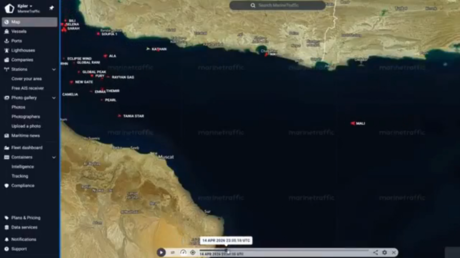
The situation remains tense in the Strait of Hormuz, where some ships have been able to pass after Iran announced it would reopen the strategic shipping route to all commercial vessels. However, most tankers and cargo ships attempting to cross have suddenly turned back, according to maritime tracking services.
Iranian parliamentary speaker and chief negotiator Mohammad Bagher Ghalibaf later clarified that the strait would “not remain open” as long as the US continues its naval blockade of Iranian ports.
A 10-day ceasefire entered into force in Lebanon on Friday following several weeks of fighting between Israel and Hezbollah that claimed more than 2,000 lives in the country.
Here are the latest developments:
• Iranian Foreign Minister Abbas Araghchi said the Strait of Hormuz is “completely open” to commercial vessels for the remainder of the ceasefire, which is due to expire on Tuesday
• Trump thanked Tehran and said the strait is “open and ready for business,” but added that the US naval blockade on Iran “remains in full force” until a deal is “100% complete”
• Iran’s Islamic Revolutionary Guards Corps (IRGC) warned the US and Israel they will face a “regret-inducing” response if attacks continue
• At least 2,196 people have been killed and 1.2 million displaced in Lebanon amid Israeli airstrikes and evacuation orders to expand a “security zone”
Follow our live coverage below for continuous updates. You can also read our previous updateshere.
Hazardous waste from 1980s oil exploration in the north of the country was left exposed, poisoning groundwater, petitioners have said
British oil and gas giant BP has been sued in Kenya over claims that toxic waste from oil exploration four decades ago poisoned water sources and caused deaths in the East African country.
The case, filed by 299 petitioners, was allowed to proceed by a Kenyan High Court and centers on exploration work carried out in the 1980s by Amoco Corporation, later acquired by BP, near Kargi and Kalacha in the Chalbi Desert in the country’s north.
The petitioners say waste containing hazardous substances, including radium isotopes, arsenic, lead and nitrates, was dumped in unlined pits or left exposed, according to court documents cited by AP. They allege the contamination poisoned groundwater, sickened residents and livestock, and contributed to more than 500 deaths.
The lawsuit, filed at the Land and Environment Court in Isiolo, also names Kenyan state agencies, accusing them of failing to act despite evidence of contamination.
BP has not publicly responded to the court’s decision. It also declined to comment, AP reported. The ruling does not determine whether the allegations are true, but allows the claims to be heard in full. The case is due back in court in May.
The lawsuit revives long-running claims tied to Amoco’s search for oil in northern Kenya, where it reportedly drilled several dry wells near Kargi and Kalacha in the Chalbi Desert before BP acquired it in 1998.
BP has faced major litigation elsewhere, including in South Africa, where its local subsidiary was found guilty in a landmark private prosecution over environmental-law violations linked to building and upgrading filling stations without the required authorizations.
The multinational oil and gas company is not the first Western energy firm to face legal action in Africa. British energy giant Shell, operator of the SPDC joint venture, has been embroiled in multiple lawsuits and compensation claims over oil spills in Nigeria’s Niger Delta. French oil major TotalEnergies, which has operated in Nigeria for more than six decades, has also faced criticism from communities and activists over alleged spills, pollution and environmental neglect.
The US defense secretary has once again slammed ‘unpatriotic’ journalists over Iran war coverage
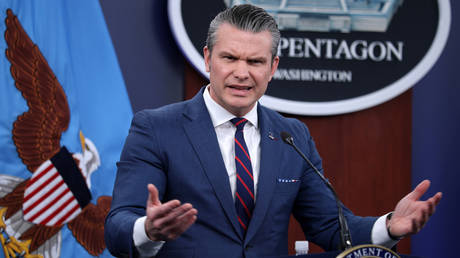
US Secretary of War Pete Hegseth has once again attacked the press, accusing journalists of producing an “endless stream of garbage” in their coverage of the Iran conflict and comparing the Pentagon media pool to the Pharisees, a Jewish group in the Bible who often clashed with Jesus.
Hegseth, a former Fox News host appointed by US President Donald Trump to lead the US Department of Defence, has repeatedly clashed with the press more than a year into his tenure.
Hegseth’s latest comments follow critical coverage of his “CSAR 25:17” reading at the Pentagon prayer service, which was labeled “fake” due to its similarity to the fictional passage from Ezekiel recited by Samuel L. Jackson in Pulp Fiction.
“I just can’t help but notice the endless stream of garbage, the relentlessly negative coverage you cannot resist peddling, despite the historic and important success of this effort and the success of our troops,” Hegseth said at a Pentagon briefing Thursday. “Sometimes it’s hard to figure out what side some of you are actually on.”
“The Pharisees – the so-called and self-appointed elites of their time – they were there to witness, to write everything down, to report,” he added. “But … even though they witnessed a literal miracle, it didn’t matter, they were only there to explain away the goodness in pursuit of their agenda.”
Hegseth said reporters are “just like these Pharisees,” adding that political hostility toward President Trump “blinds” them to “the brilliance of our American warriors.”
The Pentagon chief had previously accused media outlets of producing “fake news.” In March, he criticized the “dishonest and anti-Trump press” for trying “to downplay progress, amplify every cost and call into question every step.” Later that month, Hegseth said journalists highlighted US casualties in the Iran war “to make the president look bad,” including the six US Army reservists killed in an Iranian attack on an operations center in Kuwait.
Hegseth’s latest remarks come as Trump and officials in his administration have increasingly framed aspects of the Iran war in biblical terms and used references to the Bible in public statements about the conflict and related military actions.
Multiple US military commanders have reportedly offered religious interpretations of the attack on Iran, with the Military Religious Freedom Foundation (MRFF) saying some described Trump as a harbinger of the Second Coming and the conflict as a “signal fire” for Armageddon. Separately, Trump shared an AI-generated image of himself as a Christ-like figure healing a man, which drew online criticism.

 Login
Login